Imagine a creature that can survive being frozen, losing nearly all the water in its body, and even being exposed to the vacuum of outer space.
Now imagine that creature is smaller than a grain of sand.
It sounds like something from a science-fiction movie, but it’s real.
Meet the tardigrade, also known as the water bear.
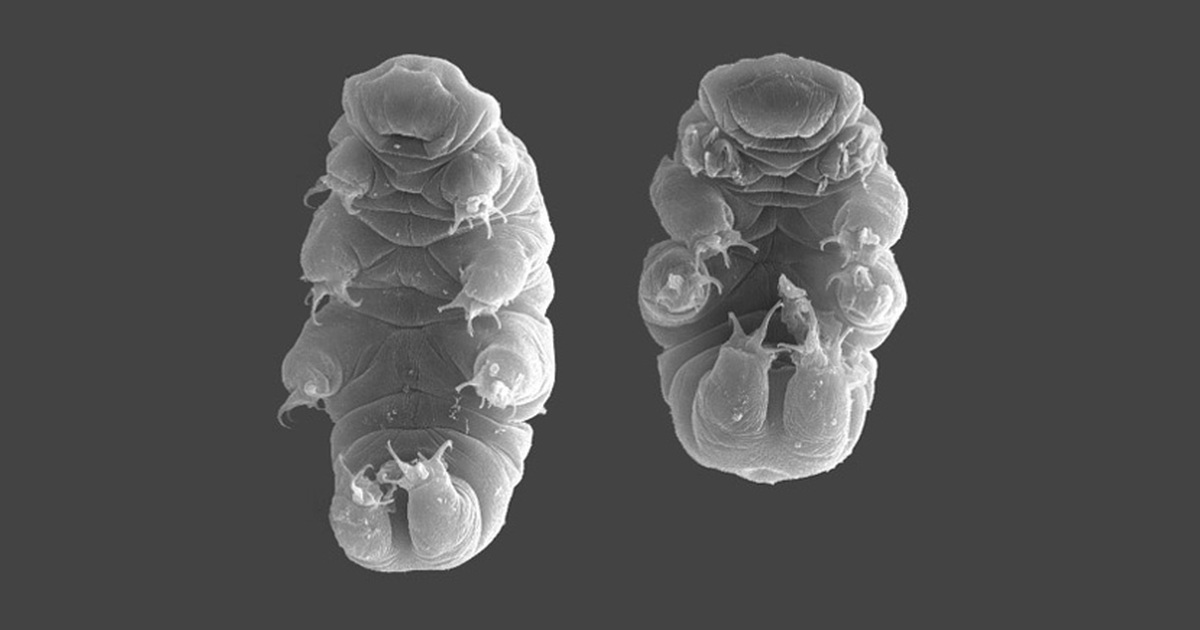
This microscopic animal has eight stubby legs, tiny claws, and a body that looks almost comically harmless under a microscope.
Yet some tardigrades can endure conditions that would kill nearly every other animal.
They can survive extreme cold, intense radiation, and prolonged periods without liquid water. Scientists have even sent them into space to see just how much they can withstand.
But perhaps the most remarkable thing about tardigrades isn’t what they can survive.
It’s how they do it.
A Tiny Creature Hiding Almost Everywhere
You don’t need to travel to a remote jungle or the bottom of the ocean to find a tardigrade.
There could be some living in the moss growing outside your home.
Tardigrades inhabit environments around the world, including forests, freshwater ponds, oceans, and polar regions.
Most are less than a millimetre long, making them extremely difficult to see without magnification.
Under a microscope, they look surprisingly unusual.
Their rounded bodies are supported by four pairs of short legs, each equipped with tiny claws or other gripping structures. Their slow, lumbering movements earned them the nickname water bears.
Despite their strange appearance, tardigrades are ordinary animals in many ways.
They eat, grow, reproduce, and need suitable environmental conditions to remain active.
Some feed on algae or plant cells. Others consume microorganisms or even smaller animals.
But when their environment becomes dangerously hostile, certain tardigrades have an extraordinary survival strategy.
They can almost shut themselves down.
What Happens When a Tardigrade Runs Out of Water?
For most animals, losing nearly all the water in their bodies would be fatal.
Water is essential for the chemical reactions that keep cells functioning. Without it, proteins and other cellular structures can become damaged, and normal metabolism cannot continue.
But some tardigrades have a remarkable way of dealing with dehydration.
As their surroundings dry out, they can retract their legs, contract their bodies, and enter a compact state known as a tun.
Inside this tiny, barrel-shaped form, their metabolic activity drops to extremely low levels.
This is part of a survival process called cryptobiosis.
The tardigrade is no longer moving around, feeding, or behaving like an active animal.
To an observer, it might appear dead.
But it isn’t necessarily dead at all.
If the animal survives the stressful conditions and water becomes available again, it may rehydrate, resume normal biological activity, and begin crawling around.
Imagine finding a creature that looks completely lifeless, adding water, and watching it slowly begin moving again.
That’s one of the extraordinary things scientists have observed in tardigrades.
But there’s an important distinction.
Tardigrades do not come back from the dead. They survive by entering a state of extremely reduced biological activity.
And that ability helps explain some of their other remarkable survival feats.
Scientists Actually Exposed Them to Outer Space
If surviving without water sounds impressive, consider what happened when scientists sent tardigrades into space.
In 2007, researchers conducted an experiment aboard the European FOTON-M3 spacecraft.
Dehydrated tardigrades were exposed to conditions outside the spacecraft while it orbited Earth.
Some experienced the vacuum of space. Others were also exposed to solar radiation.
The researchers wanted to know whether these tiny animals could survive an environment completely unlike their natural habitats.
After the experiment, the tardigrades were brought back to Earth and rehydrated.
The results were astonishing.
Some survived direct exposure to the space vacuum. A smaller number also recovered after exposure to solar radiation.
However, intense solar ultraviolet radiation significantly reduced survival.
The experiment did not prove that tardigrades could live indefinitely in space.
They weren’t crawling around on the outside of the spacecraft, searching for food or reproducing in the vacuum.
They survived a limited period of exposure while in a dehydrated state.
Nevertheless, the fact that any of these tiny animals could recover after direct exposure to space was an extraordinary scientific discovery.
Radiation That Would Be Deadly to Humans
Radiation can damage living cells, including the DNA that carries genetic information.
When that damage becomes severe enough, cells may stop functioning or die.
Humans can tolerate limited amounts of radiation, but sufficiently high doses can cause serious illness or death.
Certain tardigrade species, however, can withstand radiation doses far beyond those that would be fatal to humans.
How is that possible?
Scientists have discovered that tardigrades possess several mechanisms that may help protect their cells or repair damage.
One particularly interesting discovery involves a protein called Dsup, short for damage suppressor.
Researchers studying certain tardigrades found that this protein can help protect DNA against some forms of damage.
Experiments have even shown that Dsup can reduce certain kinds of radiation-related DNA damage when produced in cultured human cells.
That doesn’t mean scientists have discovered a way to make humans radiation-proof.
The biology is much more complicated, and not every tardigrade has the same protective mechanisms.
But these discoveries have raised fascinating questions about how living cells might be better protected from damage.
Could They Survive Being Frozen?
Imagine being exposed to temperatures so low that ordinary biological activity becomes impossible.
For most animals, extreme freezing can damage cells and tissues, particularly when ice crystals form.
Yet some tardigrades have survived extraordinarily low temperatures in scientific experiments.
Their ability to enter dormant states can help them endure conditions that would normally be fatal.
But there’s a catch.
Surviving a brief period of extreme cold is not the same as being able to live normally in it.
An active tardigrade still needs suitable conditions to feed, move, and reproduce.
Its survival also depends on the species, its physiological state, and how long the exposure lasts.
And while tardigrades are often described as capable of surviving almost any temperature, extreme heat can be a serious weakness.
Studies have shown that prolonged exposure to high temperatures can kill them, even when they are otherwise remarkably resilient.
So despite their reputation, tardigrades are not indestructible.
They simply possess survival abilities that are highly unusual for animals.
Can a Tardigrade Really Survive for Decades?
Perhaps one of the strangest questions about tardigrades is how long they can remain inactive.
Some species can survive extended periods without liquid water.
Others have been recovered after spending years in frozen conditions.
In one remarkable experiment, scientists revived Antarctic tardigrades that had been frozen for more than 30 years.
After thawing, surviving animals gradually resumed activity, and one eventually reproduced.
Think about that.
An animal that had spent decades frozen was able to become active again.
But that doesn’t mean every tardigrade can survive decades without water, or that freezing and dehydration are interchangeable.
Different species have different abilities, and survival depends heavily on the conditions.
Claims that tardigrades can survive indefinitely, or routinely remain dormant for a century, go beyond what scientists have demonstrated.
Even when their metabolism is extremely low, damage can accumulate over time.
Eventually, that damage may become impossible to repair.
Still, the ability of some tardigrades to recover after years of dormancy is remarkable enough without exaggeration.
Are Tardigrades the Toughest Animals on Earth?
It’s tempting to declare tardigrades the toughest animals alive.
After all, how many other animals have survived experiments involving extreme dehydration, radiation, freezing, and the vacuum of space?
But the answer depends on how we define toughest.
Some microorganisms can survive conditions that tardigrades cannot.
Even among tardigrades, different species have different tolerances.
And despite their extraordinary abilities, they can still die from heat, prolonged environmental stress, physical damage, or other threats.
They aren’t immortal.
They aren’t immune to every kind of radiation.
And they certainly couldn’t survive forever floating through space.
What makes them extraordinary is their ability to endure a remarkably wide range of hostile conditions, particularly when they enter specialized dormant states.
For an animal with a complex body, nervous system, muscles, and digestive tract, that is an astonishing achievement.
Could Their Survival Secrets Help Humans?
Scientists aren’t studying tardigrades simply because they’re unusual.
Their biology could eventually help researchers develop better ways to protect sensitive biological materials.
For example, understanding how certain tardigrades tolerate dehydration might contribute to improved techniques for preserving cells, medicines, or other biological products.
Their protective proteins have also attracted interest from scientists studying DNA damage and radiation resistance.
Some researchers are investigating whether mechanisms inspired by tardigrades could have applications in medicine, biotechnology, or space exploration.
However, these possibilities remain areas of ongoing research.
Scientists cannot simply copy a tardigrade’s survival abilities and give them to humans.
The mechanisms involved are complex, and discoveries made in laboratory experiments don’t automatically translate into practical treatments or technologies.
Nevertheless, studying how these animals protect themselves could reveal new approaches to problems that researchers have been trying to solve for decades.
The Most Extraordinary Survivors Might Be Right Outside Your Door
When we imagine animals capable of surviving extreme conditions, we usually picture creatures living deep beneath the ocean, in scorching deserts, or near the frozen poles.
We rarely think about something so small that it can hide among the leaves of a patch of moss.
Yet tardigrades demonstrate just how surprising life on Earth can be.
Some can survive losing nearly all their body water. Others can tolerate extreme cold or radiation. A few have even recovered after direct exposure to the vacuum of space.
And they accomplish these feats without powerful muscles, thick armour, or any of the physical features we normally associate with survival.
Their greatest strength lies in the remarkable biology hidden inside their microscopic bodies.
Perhaps the most fascinating thing about tardigrades isn’t that they can survive conditions that would kill almost anything else.
It’s that scientists are still discovering exactly how they manage to do it.
SOURCES: NASA, Current Biology, Scientific Reports, PLOS ONE, Nature Communications, National Institutes of Health.