Artificial intelligence is everywhere these days. It helps write emails, answer questions, create art, and even drive cars. But while AI feels magical on our screens, it runs on very real, very physical resources. Keeping AI systems working requires electricity to power the computers, water to keep them cool, and materials to build the hardware. One of the biggest surprises for many people is how much water AI uses. Let’s break it down in simple terms.
The Heart of AI: Electricity and Data Centers
AI doesn’t live in the cloud—it lives in huge buildings called data centers. These are like giant warehouses packed with thousands of powerful computers called servers. When you ask AI a question or use it to generate something, those servers do millions of complex calculations in seconds. All that work creates a lot of heat, like a car engine running full speed.
To handle this, data centers need massive amounts of electricity. As more people use AI every day, the power demand keeps growing. Data centers already use a notable share of the world’s electricity, and AI is one of the main reasons why.
The Cooling Challenge: AI’s Thirst for Water
Here’s where water comes in. Servers get hot fast, and if they overheat, they can slow down or break. Data centers use several cooling approaches. Many rely on air cooling, while water-based and liquid-cooling systems are increasingly important for high-density AI workloads.
A typical data center might use 300,000 gallons of water a day for cooling. Larger ones can use up to 5 million gallons daily—that’s enough to supply a small town of 10,000 to 50,000 people. Across the United States, data centers together use billions of gallons of water each year. And because AI tasks make the servers work harder (and get hotter), water use is rising right along with AI’s popularity.
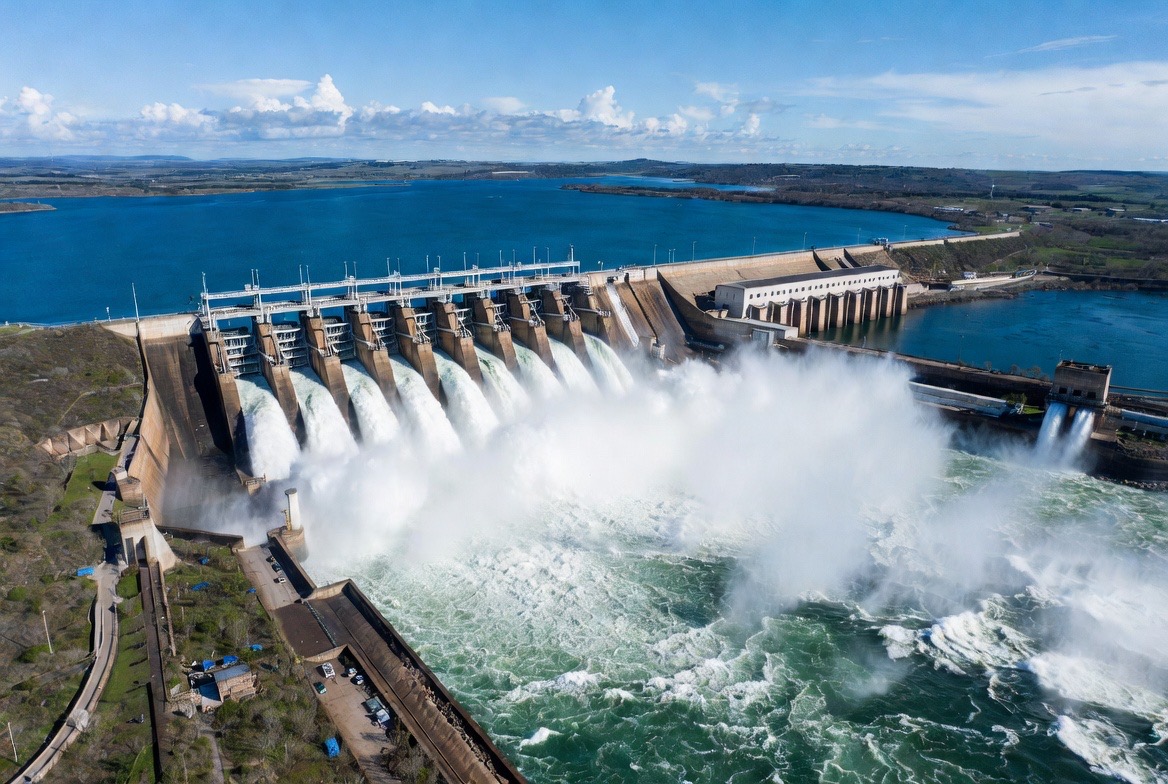
There’s also indirect water use. Much of the electricity for data centers comes from power plants that need water to make steam or cool their own equipment. Electricity generation can require water for cooling or other processes, meaning an AI workload can have both direct water use at the data center and indirect water use associated with the electricity it consumes.
Some research has estimated that generating roughly 10–50 medium-length AI responses can consume about 500 milliliters of water, depending on where and when the model runs. It doesn’t sound like much by itself, but when AI is used at massive scale, the total can add up quickly.
Other Resources AI Needs
Water and electricity aren’t the whole story. Building the special chips and servers for AI requires raw materials like copper, rare earth elements (such as neodymium), gallium, and other metals. Mining and manufacturing these parts also use water and energy. Data centers take up land, too, sometimes in places where water is already limited.
Why This Matters
In some areas, especially drier parts of the world, data centers can put extra pressure on local water supplies. This raises important questions about sharing resources with homes, farms, and nature. At the same time, the electricity used for AI can increase carbon emissions if it comes from fossil fuels.
Hope for the Future
The good news? Innovation is happening. Some data centers now use recycled water, air cooling instead of water, or smarter designs that waste less. Companies are also building centers in cooler climates or next to renewable energy sources. New hardware that runs cooler or more efficiently can help, too.
As AI keeps growing, balancing its amazing benefits with smart resource use will be key. Understanding the real costs—like water—helps all of us make better choices about how we use this powerful technology.
SOURCES: Communications of the ACM (Li et al., 2025); International Energy Agency (Energy and AI, 2025; Key Questions on Energy and AI, 2026); Lawrence Berkeley National Laboratory (2024 United States Data Center Energy Usage Report); U.S. Department of Energy; U.S. Geological Survey.