In 1925, a con artist named Victor Lustig reportedly convinced a businessman that the French government was secretly planning to dismantle the Eiffel Tower.
The businessman believed him.
And according to the famous account, he paid Lustig for the right to purchase the tower’s scrap metal.
There was just one problem: the Eiffel Tower wasn’t for sale.
Lustig didn’t own it, the French government hadn’t authorized the deal, and the entire transaction was an elaborate fraud.
Yet the story doesn’t end with the money changing hands. Lustig reportedly escaped without being reported to the police, then returned to Paris and attempted the same scheme again.
How could anyone fall for something so extraordinary?
The Eiffel Tower Wasn’t Always Loved
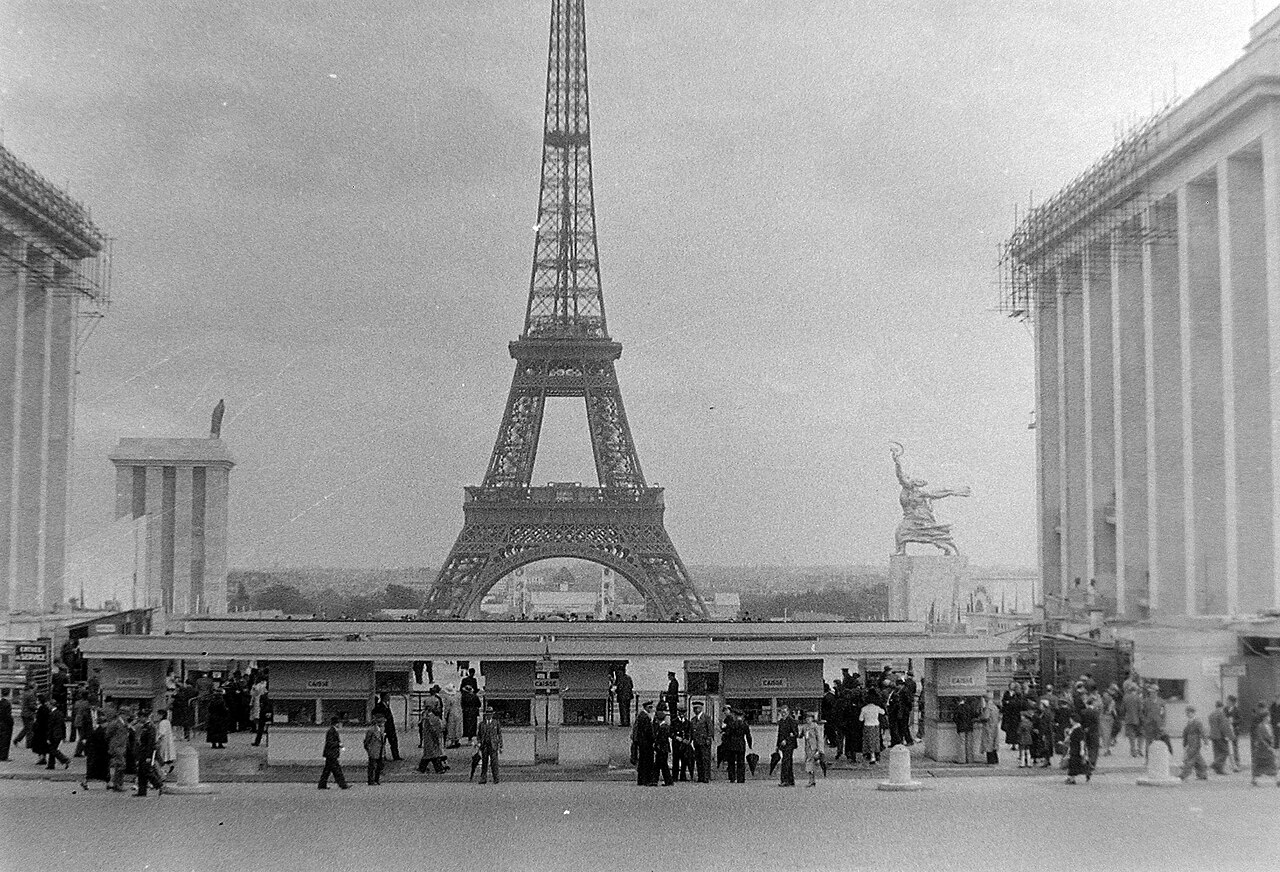
Today, the Eiffel Tower is one of the world’s most recognizable landmarks. But when it was built for the 1889 Exposition Universelle in Paris, its appearance provoked fierce criticism.
Some prominent artists and writers considered the enormous iron structure an eyesore.
The tower had originally been conceived as a temporary attraction, and its long-term survival was not guaranteed. Its usefulness for scientific experiments and radio communications eventually helped secure its future.
By the 1920s, the structure was still relatively expensive to maintain.
According to accounts of Lustig’s scheme, reports about maintenance costs gave him the inspiration for an audacious deception.
What if he could convince someone that the government had decided the tower was no longer worth keeping?
A Fake Government Official With an Extraordinary Proposal
Victor Lustig was an experienced confidence trickster who operated in Europe and the United States.
He understood that a convincing fraud often depended on appearing respectable, authoritative, and trustworthy.
For the Eiffel Tower scheme, Lustig reportedly posed as a senior French government official.
Using forged government stationery, he contacted several scrap-metal dealers and invited them to a confidential meeting.
The supposed purpose was an important government transaction.
France, he claimed, was preparing to dismantle the Eiffel Tower and sell its metal.
The proposal was extraordinary, but Lustig had an explanation for why nobody had heard about it.
The decision was supposedly being kept secret because officials feared public opposition.
It was a clever detail. Rather than allowing the absence of a public announcement to undermine his story, Lustig made secrecy part of the explanation.
The Meeting That Made the Scam Believable
According to the traditional account, Lustig arranged to meet the prospective buyers at the Hôtel de Crillon, one of Paris’s prestigious hotels.
The setting helped reinforce his invented identity.
A meeting in an elegant hotel, official-looking documents, and the promise of a lucrative government contract created the appearance of legitimacy.
Lustig reportedly presented the sale as a confidential opportunity available to a small number of qualified businesses.
The dealers were not simply being asked to believe a stranger’s outrageous claim.
They were being shown what appeared to be an official government process.
And one businessman was particularly interested.
The Man Who Thought He Was Buying the Eiffel Tower
The businessman most commonly identified in retellings of the story was André Poisson, a scrap-metal dealer.
Poisson reportedly saw the opportunity as a way to secure a valuable contract and improve his standing in the industry.
But he also had doubts.
Lustig allegedly recognized that uncertainty and introduced another element into the deception.
He hinted that, like a corrupt government official, he expected a private payment in exchange for helping Poisson secure the contract.
The request for a bribe might seem like an obvious warning sign.
But according to the story, it had the opposite effect.
Poisson supposedly interpreted the request as evidence that he was dealing with a real official who was willing to abuse his position for personal gain.
The fraud had turned suspicious behaviour into something that appeared to confirm the lie.
Poisson reportedly handed over money for the supposed transaction, including the illicit payment.
The precise amount is difficult to establish from reliable contemporary documentation, and later accounts differ in their details.
What matters to the central story is that Lustig allegedly obtained the money without possessing any authority to sell the tower.
Then Lustig Disappeared
After receiving the payment, Lustig reportedly left Paris.
Poisson eventually discovered that the supposed government transaction was fraudulent.
But according to the widely repeated account, he did not report the incident to the authorities.
The reason was embarrassment.
Having been deceived into attempting to purchase one of France’s most famous landmarks, Poisson supposedly feared the public humiliation that might follow.
This is an important part of the story, although the details are largely preserved through later retellings rather than a complete, independently verifiable contemporary record.
The absence of a police complaint reportedly allowed Lustig to escape immediate consequences for the scheme.
And then came an even more remarkable claim.
He Allegedly Tried to Sell It Again
According to popular accounts, Lustig returned to Paris after realizing that his first victim had remained silent.
He supposedly repeated the scheme, approaching another group of scrap-metal dealers with the same story about the government’s plans to dismantle the Eiffel Tower.
This time, however, the deception reportedly attracted suspicion.
One prospective buyer contacted the authorities, and Lustig fled before he could be arrested.
The story that he attempted the fraud twice is a familiar part of the Lustig legend, but it is less securely documented than his later criminal activities in the United States.
That distinction matters because Lustig’s reputation has grown through decades of storytelling, and not every colourful detail can be independently confirmed.
Who Was Victor Lustig?
The Eiffel Tower story became the defining legend of Victor Lustig’s criminal career, but it was not his only alleged deception.
Born in Europe in 1890, Lustig became notorious for confidence schemes involving wealthy individuals, fraudulent investments, and counterfeit money.
His activities eventually brought him into conflict with American law enforcement.
Unlike many details of the Eiffel Tower episode, Lustig’s later American criminal history is documented in official records.
He was convicted in connection with counterfeiting operations and ultimately imprisoned at Alcatraz.
Lustig died in federal custody in 1947.
His career illustrates how confidence schemes can depend less on complicated technology than on the manipulation of trust, authority, and human expectations.
Why Would Anyone Believe the Eiffel Tower Was for Sale?
From a modern perspective, the idea of secretly purchasing the Eiffel Tower sounds absurd.
But the alleged scheme combined several psychological techniques that remain familiar today.
Authority: Lustig presented himself as a government official, making his claims appear credible.
Exclusivity: He supposedly invited only a handful of dealers, creating the impression of a valuable opportunity.
Secrecy: The lack of public information was explained as a necessary precaution rather than evidence of fraud.
Financial incentive: Scrap-metal dealers had a commercial reason to be interested in an enormous iron structure.
Corruption: The alleged request for a bribe made the fictional official seem more believable to the intended victim.
Each element reinforced the others.
The fraud did not require the victim to believe something impossible without explanation. It provided a series of explanations that made an extraordinary claim appear increasingly plausible.
That is one reason the story has remained so memorable.
How Much of the Story Is Actually Proven?
There is an important distinction between the historical Victor Lustig and the legend surrounding his most famous alleged scam.
Lustig was a real criminal, and his involvement in counterfeiting and other fraudulent activities is well documented.
The Eiffel Tower scheme, however, is known primarily through biographical accounts and later retellings.
Details such as the precise payment, the conversations with André Poisson, the meeting arrangements, and the supposed second attempt are difficult to verify independently from contemporary official records.
That does not establish that the episode never happened.
It means the story should be treated as a widely reported historical account rather than a fully documented transaction whose every detail is certain.
The distinction makes the tale no less fascinating. It simply separates what can be established from what has become part of the legend.
The Greatest Part of the Scam Wasn’t the Sale
The Eiffel Tower never changed ownership.
It remained standing in Paris, where it continues to attract visitors from around the world.
Yet the story of Victor Lustig has endured for a century because it reveals something extraordinary about deception.
He reportedly persuaded a businessman to accept that one of the world’s most recognizable structures could be sold through a confidential government arrangement.
The forged authority, the secrecy, the promise of profit, and even the suggestion of corruption all worked together to make the unbelievable seem credible.
And if the traditional account is accurate, Lustig accomplished something even more remarkable than convincing someone to buy the Eiffel Tower.
He convinced his victim to remain silent after discovering the truth.
SOURCES: Federal Bureau of Investigation, National Park Service, Encyclopaedia Britannica, Société d’Exploitation de la Tour Eiffel.