Autopilot technology has evolved from relatively simple mechanical controls into sophisticated electronic systems that help operate aircraft, ships and road vehicles. Originally developed to reduce the effort required to maintain stable flight, automatic control systems now help pilots follow flight paths, ships maintain headings and drivers manage certain aspects of driving. Although these technologies share a common purpose, they do not all offer the same capabilities. Understanding how autopilot developed, how it works in different forms of transportation and where its limitations remain helps explain its growing influence on modern travel.
Where Did Autopilot Technology Begin?
The history of practical autopilot technology is closely connected to the early development of aviation.
During the first decades of powered flight, pilots had to make constant adjustments to keep their aircraft stable. Early airplanes could be difficult to control, and maintaining a consistent direction or altitude required continuous attention.
Inventors began exploring ways to use gyroscopes and mechanical controls to help stabilize aircraft automatically.
Some early experiments predated Lawrence Sperry’s famous demonstration. Sir Hiram Maxim, known for his work in engineering and aviation experiments, developed a gyroscopic stabilization system during the 1890s. His work is described in NASA’s historical research on the beginnings of aircraft automation.
However, Lawrence Sperry helped bring practical automatic aircraft stabilization to public attention.
Working with his father, inventor Elmer Sperry, Lawrence developed an automatic gyrostabilizer in 1913. On June 18, 1914, he demonstrated the technology in France during an aviation safety competition.
The demonstration showed that an aircraft could maintain stable flight while the pilot released the controls. The system used gyroscopes to detect changes in the aircraft’s position and mechanisms that made corrective adjustments.
The demonstration became an important milestone in aviation history. Sperry’s automatic pilot helped establish the foundation for more advanced aircraft control systems. His invention received first prize at the competition, attracting considerable attention to the possibilities of automatic flight control.
During the 1920s, Sperry automatic pilots became commercially available. As aviation expanded, the technology became increasingly useful for longer journeys, where continuous manual control placed considerable physical and mental demands on pilots.
How Did Aircraft Autopilots Become More Advanced?
Early autopilots concentrated on keeping an aircraft stable and maintaining a relatively consistent flight path. Over time, improvements in electrical controls, navigation equipment and computing allowed these systems to perform increasingly complicated tasks.
The development can be understood through several broad stages.
Early mechanical and gyroscopic systems
The first practical systems relied heavily on gyroscopes and mechanical components. They helped maintain an aircraft’s attitude and reduced the amount of constant manual adjustment required from the pilot.
Electrical and analog control systems
As aviation developed, electrical servos and more sophisticated control mechanisms expanded what autopilots could accomplish. Systems became capable of maintaining selected headings and altitudes rather than simply helping stabilize the aircraft.
Integrated navigation and flight management
Later systems began working with navigation equipment and flight computers. Instead of maintaining only a particular direction, an autopilot could follow navigation signals and programmed routes.
Modern digital flight control
Today’s aircraft can integrate autopilot functions with flight management systems, satellite navigation, inertial reference systems and other onboard equipment.
The result is a system that can manage significant portions of a flight’s routine control tasks while pilots monitor its operation.
The Federal Aviation Administration explains that aircraft autopilots range from relatively simple single-axis systems to more advanced three-axis systems that control an aircraft’s roll, pitch and yaw.
Importantly, improvements in autopilot technology have not removed the need for pilots. They have changed how pilots manage and supervise aircraft operations.
How Does Modern Aircraft Autopilot Work?
An aircraft autopilot uses information from onboard instruments and navigation systems to determine whether the airplane is following its intended flight path.
It compares the aircraft’s actual movement with the conditions selected by the pilot. If the airplane moves away from the desired heading or altitude, the system can make corrective adjustments.
For example, a pilot may select an altitude and heading before engaging the autopilot. The system then uses information from aircraft sensors to maintain those settings.
More advanced systems can follow navigation routes and manage climbs, descents and approaches.
Autopilot systems may control three primary aircraft movements:
Roll: Tilting the aircraft’s wings using the ailerons.
Pitch: Raising or lowering the aircraft’s nose using the elevator or other pitch-control surfaces.
Yaw: Moving the aircraft’s nose from side to side using the rudder.
Not every aircraft has the same autopilot capabilities. A small recreational airplane may have a relatively basic system, while a commercial airliner can use highly integrated automatic flight controls.
Some modern aircraft also integrate automatic throttle systems, which can adjust engine thrust as part of managing flight conditions.
The pilot remains responsible for selecting appropriate settings, monitoring the system and responding when conditions require manual control.
An autopilot does not independently decide where an airline should fly or replace the pilot’s responsibility for operating the aircraft.
Can Commercial Airplanes Take Off and Land Automatically?
One common misconception about autopilot technology is that modern passenger aircraft can perform every phase of flight without pilot involvement.
In reality, different aircraft have different levels of automation.
Commercial aircraft generally take off under direct pilot control. During the flight, autopilot can manage much of the routine flight-path control, allowing pilots to concentrate on monitoring the aircraft, communicating with air traffic control and managing the flight.
Landing is more complicated.
Some suitably equipped aircraft can perform an automatic landing, commonly called an autoland. These systems use precision approach guidance and automatic flight-control functions to manage the aircraft’s final approach and landing.
However, automatic landing is not available in every aircraft or at every airport. The aircraft must have the appropriate equipment, the runway and approach must meet the necessary requirements, and weather and operating conditions must be suitable.
Even when autoland is used, pilots remain responsible for monitoring the system and being prepared to intervene.
The distinction matters because an aircraft capable of automatic landing is not necessarily capable of independently completing every phase of flight.
How Did Autopilot Technology Expand Into Ships?
Aviation was an important early area of development, but automatic steering also became valuable in maritime transportation.
Ships travelling long distances must maintain a suitable heading despite wind, waves and changing sea conditions. Keeping a vessel on course manually for extended periods can require considerable attention from the crew.
Marine autopilots address this problem by automatically controlling a vessel’s steering system.
A ship’s autopilot typically uses heading information from a compass or other navigation equipment. It compares the vessel’s current direction with the heading selected by the operator and adjusts the rudder when necessary.
For example, if a ship begins drifting away from its selected course, the autopilot can make a small rudder adjustment to bring it back toward the intended heading.
This is particularly useful on long voyages, where maintaining a consistent heading can otherwise require frequent manual steering corrections.
The International Maritime Organization’s GreenVoyage2050 initiative identifies autopilot adjustment as one way to improve ship energy efficiency.
Large or unnecessary rudder movements create additional resistance in the water. More efficient steering adjustments can reduce this resistance and potentially lower fuel consumption.
The IMO estimates that effective autopilot adjustment and rudder settings can reduce main engine fuel consumption by approximately 0.1% to 1.0%, depending on the vessel and operating conditions.
However, a ship’s autopilot does not replace the crew’s responsibility for navigation.
Officers must continue monitoring surrounding vessels, weather, navigational hazards and traffic conditions. They must also ensure the vessel follows applicable maritime safety requirements.
An autopilot can maintain a heading, but it cannot be treated as a complete collision-avoidance or navigation system.
How Did Autopilot Technology Enter the Automotive Industry?
Automotive automation developed differently from aircraft and maritime systems.
Early vehicle automation concentrated on individual driving functions rather than allowing a car to control its entire journey.
Cruise control was an important development because it allowed a vehicle to maintain a selected speed without the driver continuously pressing the accelerator.
Later developments introduced electronic systems that could monitor road conditions and assist with braking, steering and acceleration.
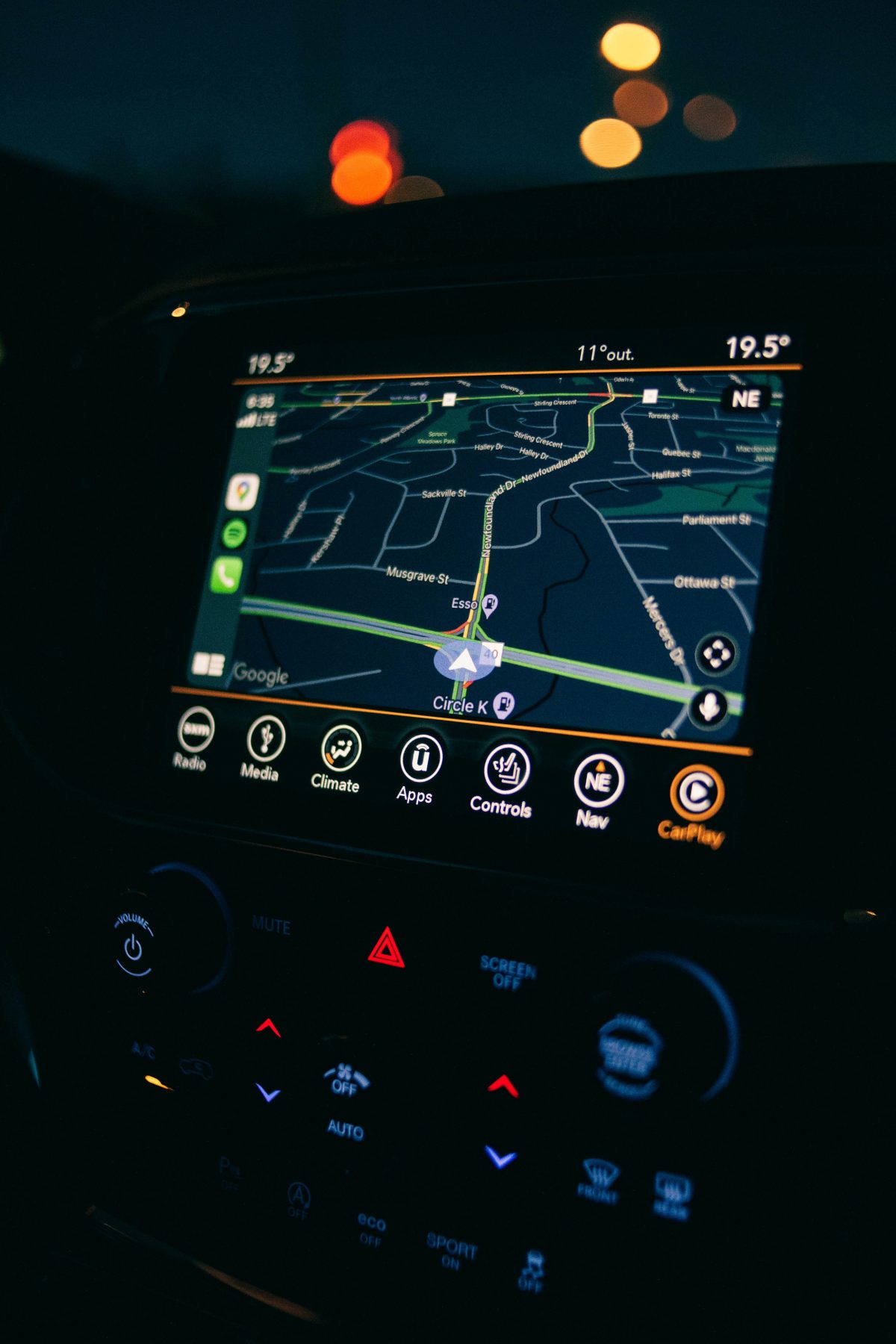
Modern vehicles may include several automated driving features:
Adaptive cruise control: Adjusts vehicle speed to maintain a selected distance from traffic ahead.
Lane-keeping assistance: Helps prevent unintended movement outside a marked lane.
Lane centering: Helps keep the vehicle positioned within lane markings.
Automatic emergency braking: Can apply the brakes when a potential collision is detected.
Automated parking: Assists with steering and, depending on the system, other parking movements.
These technologies use combinations of cameras, radar, ultrasonic sensors and onboard computers to interpret information about the vehicle’s surroundings.
Some systems can combine several functions, allowing a car to control steering and speed under certain conditions.
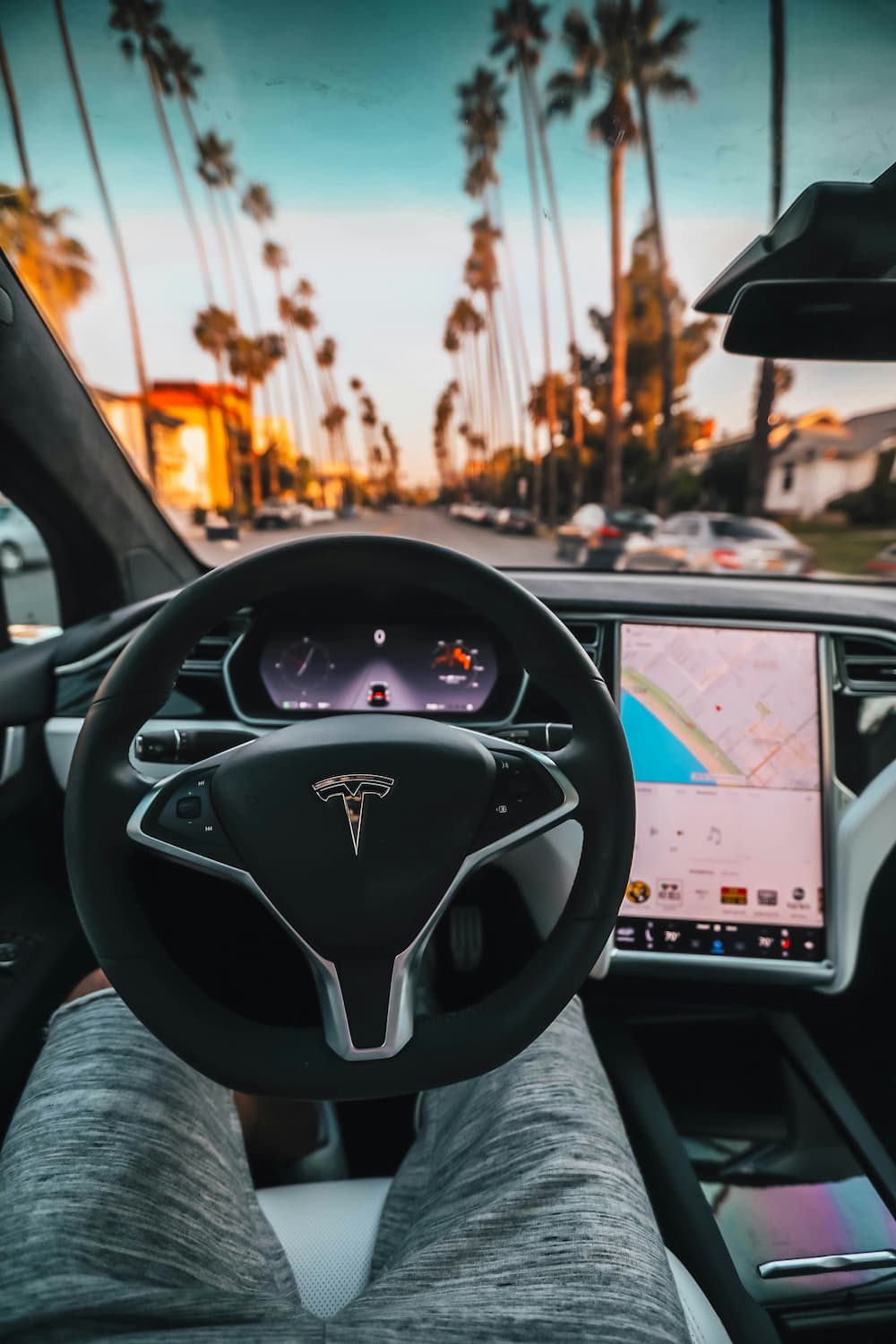
Tesla’s Autopilot is a well-known example of modern driver-assistance technology. Despite the name, Tesla’s supervised driving features require the driver to remain attentive and responsible for the vehicle.
The distinction between driver assistance and autonomous driving is important because a system that controls steering and speed may still depend on a human to monitor the road and respond to unexpected situations.
What Are the Six Levels of Vehicle Automation?
SAE International developed a classification system that describes six levels of driving automation, ranging from Level 0 to Level 5.
The levels explain how much of the driving task is performed by the vehicle and how much responsibility remains with the human operator.
Level 0 – No Driving Automation
The human performs the driving task. The vehicle may provide warnings or momentary safety interventions, but it does not continuously control the driving task.
Level 1 – Driver Assistance
The vehicle can assist with either steering or speed control under specific conditions. The human driver remains responsible for monitoring the environment and managing the rest of the driving task.
Level 2 – Partial Driving Automation
The vehicle can assist with both steering and speed control simultaneously. However, the driver must continuously monitor the road and remain responsible for driving.
Level 3 – Conditional Driving Automation
The automated system can perform the driving task, including monitoring the driving environment, under specific conditions. The human must be available to take over when requested.
Level 4 – High Driving Automation
The vehicle can perform the driving task without human intervention within its defined operating conditions. These conditions may restrict where, when or how the system can operate.
Level 5 – Full Driving Automation
The system is designed to perform the entire driving task under all conditions in which a human driver could reasonably operate a vehicle. A human driver is not required.
The most important distinction for everyday drivers is between Levels 2 and 3.
At Level 2, the driver remains responsible for monitoring the driving environment, even when the vehicle controls steering and speed simultaneously.
At Level 3, the automated driving system takes responsibility for the driving task within its operating conditions. The human must still be available to take control when requested.
Transport Canada uses this six-level classification to explain the differences between driver assistance and automated driving.
Most familiar consumer driver-assistance features fall within Levels 0 through 2. The existence of more advanced experimental or limited commercial systems does not mean that fully autonomous passenger vehicles are generally available to consumers.
What Are the Main Differences Between Aircraft, Ship and Car Autopilots?
Although all three technologies automate aspects of vehicle control, their operating environments and responsibilities differ.
Aircraft autopilot
Aircraft autopilots primarily help maintain a selected flight path. They can control heading, altitude, climb, descent and other flight functions depending on the equipment installed.
Their operating environment is three-dimensional airspace, where pilots must account for weather, aircraft performance, terrain and air traffic.
Ship autopilot
Marine autopilots primarily control a vessel’s steering and heading. They help ships maintain a selected course while reducing the need for constant manual rudder adjustments.
Their operating environment includes wind, waves, currents, other vessels and navigational hazards.
Automotive automation
Automotive systems can assist with steering, acceleration and braking. More advanced systems are designed to perform additional parts of the driving task under defined conditions.
Their operating environment is particularly dynamic. Vehicles must account for pedestrians, cyclists, construction zones, road markings, traffic signals and the unpredictable behaviour of other road users.
These differences help explain why the same word, autopilot, can describe technologies with very different capabilities.
An aircraft maintaining a flight path, a ship maintaining a heading and a car assisting with steering are not necessarily performing equivalent tasks.
Understanding what each system actually controls is more useful than judging its capabilities by its name.
Has Autopilot Technology Made Transportation Safer?
Automation can improve safety by reducing workload, maintaining consistent control and helping human operators manage routine tasks.
In aviation, autopilot reduces the physical demands of manually controlling an aircraft during long flights. It can also help maintain precise flight conditions and follow planned routes.
However, automation introduces its own safety challenges.
Pilots must understand which automatic modes are engaged and what the system is expected to do. If they misunderstand a setting or rely too heavily on automation, they may have difficulty recognizing when the aircraft is not behaving as expected.
The Federal Aviation Administration emphasizes the importance of understanding individual aircraft systems and their operating limitations.
In maritime transportation, automatic steering can reduce the need for continuous manual rudder adjustments. But it does not remove the need for watchkeeping, lookout duties or collision avoidance.
Automotive automation has similar limitations.
Driver-assistance systems can help manage speed, steering and braking, but drivers may become overconfident in their capabilities. A driver who assumes a vehicle can handle every situation may stop paying sufficient attention.
The National Highway Traffic Safety Administration emphasizes that consumer driving automation still requires full driver engagement and attention.
The important lesson is that automation can reduce certain types of human workload, but it can also create new risks when people misunderstand the technology or fail to supervise it properly.
Can Autopilot Reduce Fuel Consumption and Transportation Costs?
Autopilot can contribute to operational efficiency, although the benefits depend on the transportation system and how it is used.
For ships, the International Maritime Organization identifies efficient autopilot adjustment as one way to reduce unnecessary rudder movements and the additional resistance they create.
In aviation, automatic flight control can help maintain planned routes and selected flight conditions. However, overall fuel consumption also depends on aircraft design, weather, payload, speed, routing and other operational decisions.
In road transportation, adaptive cruise control and related features can help maintain smoother speeds in some conditions. However, the presence of these systems does not guarantee lower fuel consumption.
Traffic, acceleration patterns, vehicle weight, road conditions and driving behaviour all influence efficiency.
Automation should therefore be viewed as one part of a broader effort to improve transportation efficiency, rather than a guaranteed solution to fuel costs or emissions.
What Challenges Could Limit the Future of Autopilot Technology?
Despite decades of progress, several challenges remain.
System reliability
Automatic control systems depend on sensors, software, electrical components and mechanical equipment. Failures or incorrect information can affect their performance.
Human supervision
People must understand what an automated system can and cannot do. Overreliance can create dangerous gaps in awareness.
Unpredictable environments
Weather, road hazards, sea conditions and unexpected equipment problems can challenge automated systems.
Regulation and responsibility
Governments and transportation authorities must establish appropriate safety requirements for increasingly capable automated systems. Responsibility also becomes more complicated when automated systems make decisions traditionally handled by human operators.
Cybersecurity
As transportation systems become more connected, protecting software, communication systems and onboard equipment becomes increasingly important.
These challenges do not mean autopilot technology has reached its limits. They demonstrate why improvements in automation must be accompanied by testing, regulation, training and careful system design.
What Does the Future of Autopilot Technology Look Like?
The future of autopilot technology will likely involve greater integration between sensors, navigation systems, artificial intelligence and automated control.
In aviation, more sophisticated flight management and monitoring systems may continue reducing routine workload and improving the precision of aircraft operations.
In maritime transportation, improved navigation integration and more efficient automatic steering may help vessels manage routes and fuel consumption more effectively.
In automotive transportation, advances in computer vision, artificial intelligence and sensor technology may allow vehicles to handle increasingly complex driving situations.
However, progress will not be identical across industries.
Aircraft, ships and cars operate in different environments, face different safety requirements and have different levels of human supervision. Fully autonomous operation is therefore a much broader challenge than simply improving an existing autopilot.
The future will depend not only on what machines can control, but also on how reliably they operate, how people interact with them and how regulators establish appropriate safeguards.
Conclusion
Autopilot technology has developed from early gyroscopic aircraft stabilization into a broad collection of automated control systems used across modern transportation.
In aviation, it helps pilots maintain flight paths and manage routine aircraft control. At sea, it can maintain a vessel’s heading and reduce unnecessary steering movements. In cars, driver-assistance systems can help control speed, steering and braking under specific conditions.
These developments have improved convenience and operational efficiency, but they have not eliminated the need for human responsibility.
The most important change is not simply that machines can control more aspects of transportation. It is that the relationship between human operators and automated systems continues to evolve.
As technology advances, understanding the capabilities and limitations of autopilot will remain essential to making transportation safer, more efficient and more reliable.
SOURCES: NASA, Federal Aviation Administration (FAA), Transport Canada, National Highway Traffic Safety Administration (NHTSA), SAE International, International Maritime Organization (IMO), Smithsonian National Air and Space Museum.