Cannabis laws around the world have changed considerably in recent years, but there is still no single global approach to the drug.
A small number of countries have legalized cannabis for non-medical use, while others allow limited possession or home cultivation, operate medical-cannabis programs, tolerate certain forms of retail sales, or have reduced criminal penalties for possession.
That makes the question “Is cannabis legal?” more complicated than it may initially appear.
In 2026, Canada and Uruguay remain the clearest examples of countries with nationwide legal frameworks for non-medical cannabis, while Germany, Malta, Luxembourg and South Africa have adopted more limited models. In the United States, cannabis remains illegal under federal law even though numerous states permit medical or recreational use. The Netherlands operates a long-standing tolerance system alongside a controlled-supply experiment rather than nationwide legalization.
What is the difference between legalization and decriminalization?
The terms are often used interchangeably, but they describe different legal situations.
Legalization generally means that certain cannabis activities that were previously prohibited are now permitted under a legal framework. Depending on the country, this can include possession, cultivation, production, distribution and commercial sales.
Decriminalization does not necessarily make cannabis legal. Instead, it reduces or removes criminal penalties for particular conduct, usually possession of small quantities for personal use. The substance can remain technically prohibited while possession is handled through warnings, fines or administrative measures rather than criminal prosecution.
Medical legalization is another distinct category. A country may permit cannabis-based medicines or cannabis prescribed by healthcare professionals while continuing to prohibit recreational possession and use.
There is also a fourth model that can be confusing: tolerated markets. The Netherlands is the best-known example. Cannabis sales in coffeeshops are tolerated under strict conditions, but the broader production and supply system has historically remained illegal. The country is now testing a regulated supply chain in selected municipalities.
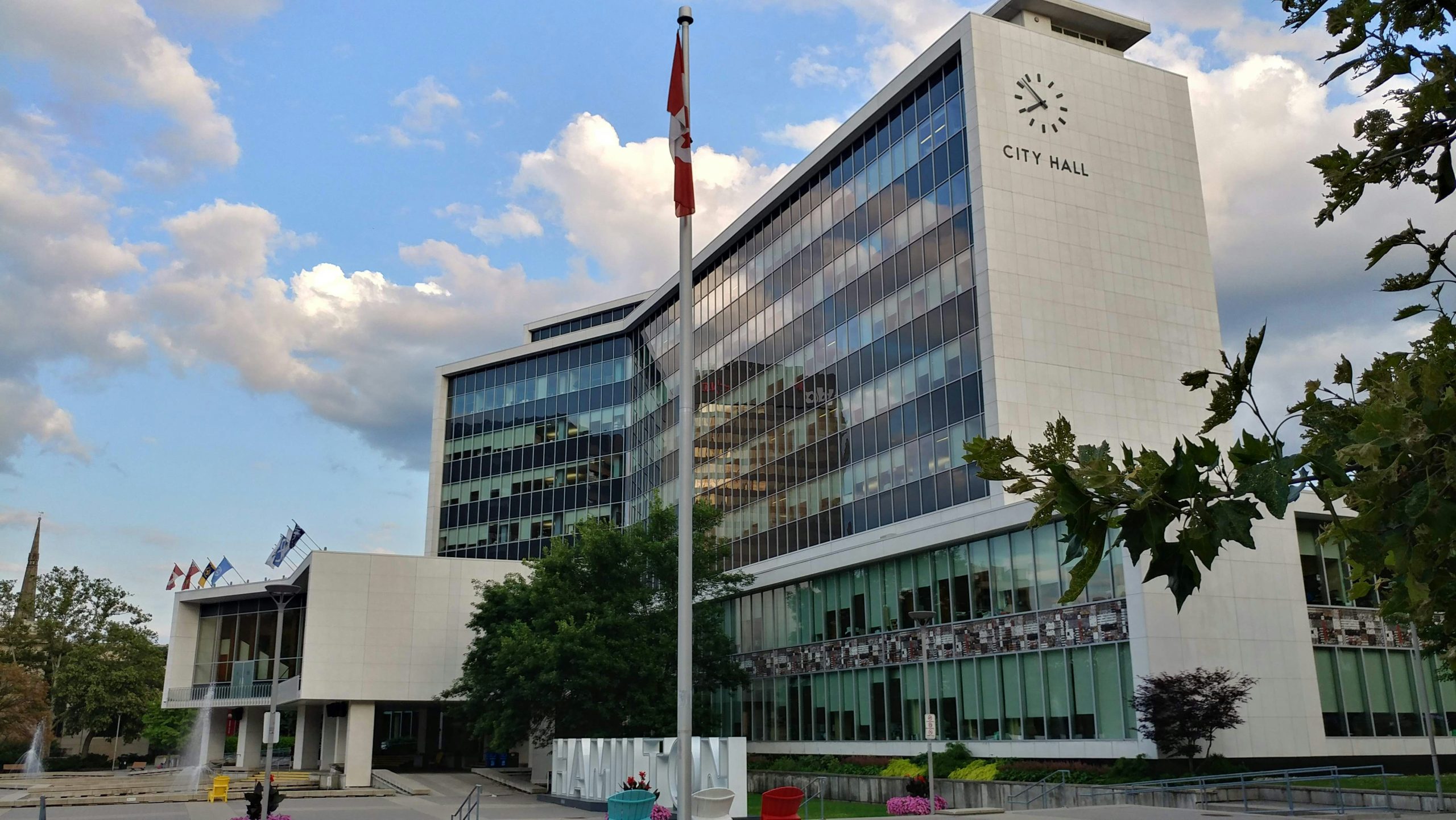
Cannabis laws in Canada
Canada has one of the world’s most comprehensive national cannabis legalization systems.
Cannabis for non-medical use became legal for adults on October 17, 2018, under the federal Cannabis Act. Adults can purchase cannabis from authorized retailers, possess up to 30 grams of legal dried cannabis or its equivalent in public, and grow up to four plants per household, subject to federal, provincial, territorial and local restrictions.
The system is highly regulated rather than unrestricted.
Provinces and territories determine important details such as the minimum legal age and retail structure. For example, the legal age is 18 in Alberta, while Quebec’s minimum age is 21. Many other provinces and territories set the legal age at 19.
Legal cannabis products are also subject to rules covering packaging, labelling, promotion and product quality. Edible cannabis products, for example, are subject to strict THC limits.
Canada also maintains a separate framework for medical cannabis. Authorized patients can access cannabis for medical purposes through federally regulated channels and can, under certain conditions, produce cannabis for their own medical use.
Canada therefore represents a regulated national legalization model, rather than simply decriminalization.
Uruguay
Uruguay became the first country in the world to establish a nationwide legal framework for recreational cannabis.
Its approach differs considerably from Canada’s commercial model. The state regulates access through several channels, including home cultivation, membership-based cannabis clubs and purchases through authorized pharmacies.
Access through the regulated system is subject to registration requirements, and the model has historically been designed around Uruguay’s resident population rather than unrestricted access for international visitors.
Uruguay’s system is therefore better described as a state-regulated legal market with significant controls, rather than a completely free commercial cannabis market.
Germany
Germany introduced a major change to its cannabis laws in 2024.
Adults can possess limited quantities of cannabis, grow a limited number of plants for personal use and obtain cannabis through non-commercial cultivation associations. Medical cannabis remains available through the healthcare system.
The German system is notably different from Canada’s.
There is no nationwide recreational retail market comparable to Canada’s licensed dispensaries. Instead, the law focuses on personal cultivation and regulated, non-commercial cultivation associations.
Adults may possess up to 25 grams of dried cannabis in public and may cultivate up to three plants for personal consumption, subject to the requirements of the law.
Germany therefore provides an example of limited adult legalization without a conventional commercial retail market.
Malta
Malta is another European country that has moved away from full prohibition, but calling cannabis simply “legal” can be misleading.
Malta’s cannabis framework is based on partial decriminalization and regulated access rather than unrestricted legalization.
Adults can possess limited quantities, grow a limited number of plants for personal use and participate in licensed Cannabis Harm Reduction Associations. Possession of larger quantities, public consumption and unauthorized supply can still result in penalties or criminal consequences.
Malta’s regulator has emphasized that the country’s reforms did not fully legalize cannabis use. Instead, they removed criminal status from certain forms of possession, cultivation and regulated access while retaining restrictions on other conduct.
Luxembourg
Luxembourg has adopted another limited model.
Adults may cultivate up to four cannabis plants per household, provided the plants are grown from seeds at a home or usual residence and are not visible from public areas. Personal consumption in the private sphere is permitted under the country’s framework.
Public possession and use remain considerably more restricted.
For adults, possession, transport, acquisition or consumption in public of up to three grams for personal use is subject to a simplified procedure and reduced penalties rather than the same treatment as larger-scale drug offenses. Public consumption itself remains prohibited.
Luxembourg therefore represents a limited private-use legalization model, rather than a nationwide commercial recreational market.
South Africa
South Africa has taken a different route, based heavily on the constitutional right to privacy.
Following a landmark Constitutional Court ruling, adults were permitted to use, possess and cultivate cannabis in private for their own personal consumption. Parliament subsequently enacted the Cannabis for Private Purposes Act in 2024 to establish a statutory framework for private adult use, possession and cultivation, while prohibiting dealing in cannabis. However, the Act has not yet been brought into force by presidential proclamation. In February 2026, the government published draft regulations for public comment as part of the process of implementing the Act.
The 2024 legislation is focused on private purposes and does not establish a general commercial cannabis market. Activities such as buying and selling for commercial purposes remain outside its private-use framework, while the government continues to develop separate measures for the commercial cannabis sector.
South Africa is therefore an important example of a system that permits private adult cannabis use without establishing full commercial legalization.
Czechia
Czechia has long had a relatively more permissive approach to personal cannabis possession and cultivation than many European countries.
In 2026, Czechia introduced a limited personal-use legalization framework. Adults aged 21 and over can grow up to three cannabis plants and possess up to 100 grams of dried cannabis at home, with a lower public-possession limit. Commercial sales remain prohibited.
The distinction between personal possession and commercial supply remains important. Czechia has not simply created a nationwide recreational cannabis retail market comparable to Canada.
Its approach is better understood as limited personal-use legalization without a commercial retail market, rather than full commercial legalization.
The Netherlands: tolerated, not simply “legal”
The Netherlands is frequently described as a country where cannabis is legal, but that description is overly simplistic.
The country’s famous coffeeshops operate under a policy of tolerance. Under the traditional system, coffeeshops can sell cannabis to consumers under strict conditions without being prosecuted, even though the production and supply of cannabis have historically remained illegal.
The Dutch government has been testing a different approach through its Controlled Cannabis Supply Chain Experiment.
The experiment entered its experimental phase in April 2025 and involves selected municipalities where coffeeshops can sell cannabis supplied by designated growers. The objective is to examine whether a controlled supply chain can improve quality and provide useful evidence about effects on crime, public safety and health.
This makes the Netherlands a particularly useful example of why the terms “legal,” “tolerated” and “regulated” should not be treated as synonyms.
Thailand
Thailand provides one of the clearest examples of how quickly cannabis policy can change.
After liberalizing cannabis rules in 2022, Thailand moved toward tighter controls. By 2025 and 2026, the government had shifted toward a framework emphasizing medical use, with stricter controls on possession, sales, processing and advertising.
Thai authorities classify cannabis flower as a controlled herb and have introduced requirements intended to limit cannabis use to medical purposes. Medical use can involve authorization and documentation from qualified healthcare professionals.
Thailand therefore should not be described in 2026 as a country with unrestricted recreational cannabis legalization. Its recent policy illustrates how a country can move from liberalization toward tighter regulation.
The United States
The United States has one of the world’s most complicated cannabis legal systems because state and federal law conflict.
A growing number of states allow cannabis for recreational use, while others permit medical cannabis or maintain stricter prohibition. At the same time, non-medical cannabis remains prohibited under federal law, although federal marijuana policy is changing and certain medical marijuana products are now subject to a different federal scheduling framework.
As of December 2025, 28 U.S. jurisdictions had enacted legal provisions allowing cultivation, production and sale of cannabis for non-medical use, according to the United Nations Office on Drugs and Crime.
This means it is inaccurate to simply say that cannabis is “legal in the United States.” Whether an activity is legal depends heavily on the state and, in some circumstances, local rules.
The U.S. therefore represents a state-by-state legalization model operating alongside continuing federal restrictions on non-medical cannabis.
Portugal and decriminalization
Portugal is another country that is often misunderstood in discussions about cannabis.
Portugal is widely associated with drug decriminalization, but decriminalization is not the same thing as legalization.
Under a decriminalization approach, possession of limited amounts for personal use can be handled as an administrative or health matter rather than as a criminal offense. This does not create a legal commercial cannabis market where adults can freely purchase cannabis from licensed recreational retailers.
Portugal is therefore better used as an example of decriminalization and public-health-oriented drug policy, rather than recreational legalization.
Medical cannabis around the world
Medical cannabis is much more widespread than recreational legalization.
Many countries that prohibit recreational cannabis permit some form of medical access. However, the rules can differ dramatically.
Some countries allow prescription cannabis medicines or standardized cannabis products. Others permit specific cannabinoid-based medicines but place significant restrictions on plant-based cannabis. Some systems allow specialist doctors to prescribe cannabis, while others restrict it to particular conditions or products.
The existence of a medical cannabis program therefore does not mean that recreational possession is legal.
New Zealand, for example, maintains a regulated medicinal cannabis system with licensed producers and approved or authorized medicinal products.
Australia similarly has an established medicinal cannabis framework while recreational cannabis remains illegal under national law.
The United Kingdom allows cannabis-based medicines in specific circumstances, but recreational cannabis remains prohibited.
Why cannabis laws differ so much
Countries do not make cannabis policy decisions for exactly the same reasons.
Several factors influence national approaches:
- Public health concerns
- Criminal justice policy
- Historical drug laws
- Cultural attitudes
- Concerns about youth access
- Organized crime
- Taxation and economic policy
- Medical research
- International drug-control obligations
- Political attitudes toward legalization and harm reduction
Even countries with similar political systems can therefore reach very different conclusions.
Some governments believe strict prohibition is the best way to reduce consumption and related harms. Others argue that prohibition creates its own problems by pushing consumers and production into illegal markets.
Legalization itself also comes in many forms. A government can permit possession without allowing commercial sales, permit home cultivation without retail stores, or create a tightly controlled state-run market rather than allowing a private industry.
A closer look at the major legal models
Rather than dividing the world into simply “legal” and “illegal” countries, cannabis laws are easier to understand as a spectrum.
Full or broad adult-use legalization allows adults to possess cannabis and typically creates some form of regulated production and sales. Canada and Uruguay are the clearest national examples.
Limited adult-use legalization allows certain activities such as possession, home cultivation or membership in non-commercial associations without creating a conventional retail market. Germany is an example.
Private-use legalization focuses on what adults may do in their own homes while continuing to restrict commercial activity. South Africa’s framework falls into this category.
Decriminalization reduces criminal penalties for certain possession or personal-use offenses without establishing a legal recreational market. Portugal is a prominent example.
Tolerance systems allow certain cannabis activities to occur without normal criminal enforcement even though parts of the underlying supply chain remain illegal. The Netherlands has historically operated this way.
Medical-only systems permit cannabis or cannabis-derived medicines for qualifying patients while continuing to prohibit recreational use.
These distinctions matter because two countries can both be described as having “liberal cannabis laws” while giving their residents very different legal rights.
Is the world moving toward legalization?
There has clearly been a long-term movement away from uniform prohibition, but it would be misleading to describe the trend as a straightforward march toward worldwide legalization.
The United Nations Office on Drugs and Crime reported that, as of December 2025, Canada, Uruguay and 28 U.S. jurisdictions had enacted legal provisions allowing cultivation, production and sale of cannabis for non-medical use. It also identified European models in Malta, Luxembourg and Germany and noted South Africa’s private-use framework.
At the same time, many countries continue to prohibit recreational cannabis, while others have chosen decriminalization or medical-only models.
Thailand’s policy reversal is an important reminder that cannabis reform is not necessarily a one-way process. Countries can loosen restrictions and later tighten them when governments reassess public health, enforcement or social concerns.
What does “legal cannabis” actually mean?
When comparing countries, the most useful question is not simply whether cannabis is “legal.”
A better set of questions is:
Can adults possess it?
Can they grow it at home?
Can they buy it legally?
Can businesses sell it?
Is medical cannabis available?
Are small amounts decriminalized?
Are cannabis clubs or associations permitted?
Can tourists legally obtain it?
The answers can be completely different even in countries commonly described as having “legal cannabis.”
Canada, for example, has a regulated commercial market. Germany permits personal possession and cultivation but does not operate the same type of commercial retail system. The Netherlands tolerates coffeeshop sales while testing regulated production. South Africa permits private adult use while continuing to prohibit dealing. Malta combines partial decriminalization with regulated associations.
What travelers should know
Cannabis laws can be particularly confusing for travelers because rules that apply to residents do not necessarily apply to visitors.
A country may allow possession but prohibit bringing cannabis across its border. Another may permit domestic sales but impose strict rules on where cannabis can be consumed. Some countries have registration requirements or residency restrictions that make legal access unavailable to tourists.
Travelers should therefore never assume that cannabis is legal simply because a destination is known for having relaxed drug laws.
Crossing an international border with cannabis can also create serious legal problems, even when cannabis is legal on both sides of the border.
The safest approach is to check the current laws of the specific country and any relevant local jurisdiction before traveling.
The bottom line
Cannabis laws around the world in 2026 are becoming more diverse, not necessarily more uniform.
Canada and Uruguay have established nationwide legal frameworks for adult non-medical cannabis, while Germany, Malta, Luxembourg, South Africa and Czechia have adopted more limited forms of legalization or decriminalization. The Netherlands continues its distinctive tolerance model while experimenting with regulated supply, and the United States remains divided between state legalization and federal prohibition. Thailand, meanwhile, demonstrates that liberalization can be reversed or narrowed.
The biggest mistake when comparing cannabis laws is treating every reform as equivalent.
Legalization, decriminalization, medical access, tolerance and private-use rights are different policies with different consequences.
For anyone traveling, researching drug policy or comparing countries, the exact local rules matter. Possession may be permitted while sales remain illegal. Home cultivation may be allowed while commercial cultivation is prohibited. Medical cannabis may be available while recreational use remains a criminal offense.
The global cannabis landscape is therefore best understood not as a simple divide between countries where cannabis is legal and countries where it is illegal, but as a spectrum of increasingly different regulatory models.
Frequently Asked Questions
Is cannabis legal worldwide?
No. Cannabis remains prohibited for recreational use in many countries. A smaller group of countries have legalized or partially legalized adult non-medical use, while many others allow medical cannabis or have decriminalized possession of small quantities.
Which countries have legalized recreational cannabis?
Canada and Uruguay have nationwide legal frameworks for adult non-medical cannabis. Germany, Malta, Luxembourg and South Africa have adopted more limited models, while the United States has state-level legalization in many jurisdictions.
Is decriminalization the same as legalization?
No. Decriminalization generally reduces or removes criminal penalties for specified conduct, such as possession of a small quantity for personal use. Legalization goes further by creating legal permission for activities that were previously prohibited.
Is cannabis legal in Germany?
Germany permits limited adult possession and home cultivation and allows non-commercial cultivation associations under its cannabis laws. It does not have a nationwide commercial recreational retail system like Canada.
Is cannabis legal in the Netherlands?
Not in the same way it is in Canada. Cannabis sales through coffeeshops have traditionally been tolerated under strict conditions, while production and supply have remained illegal. A government experiment is now testing a controlled supply chain in selected municipalities.
Is cannabis legal in Thailand?
Thailand has moved toward a more tightly controlled medical-use framework. Cannabis flower is regulated as a controlled herb, and authorities have introduced stricter rules governing possession, sales and medical use.
Does medical cannabis mean recreational cannabis is legal?
No. A country can permit cannabis medicines while continuing to prohibit recreational possession and use.
Can cannabis laws change?
Yes. Cannabis policy is changing in several countries, and reforms can move in either direction. Thailand is a recent example of a country that moved from relatively broad access toward tighter medical-focused controls.
SOURCES: Government of Canada, Health Canada, United Nations Office on Drugs and Crime, German Federal Ministry of Health, Government of Uruguay, Government of Malta, Government of Luxembourg, Government of South Africa, Government of the Netherlands, Government of Thailand, Government of Czechia, Government of Portugal, New Zealand Ministry of Health, Australian Government Department of Health and Aged Care, UK Government.