What if a compound found in psychedelic mushrooms could influence how quickly our cells age?
It sounds like something out of science fiction, but researchers have reported a result that is difficult to ignore. In laboratory experiments, human cells treated with a compound produced when the body processes psilocybin continued dividing up to 57% longer than untreated cells.
The discovery became even more interesting when scientists moved beyond laboratory dishes and tested psilocybin in older mice. After months of treatment, the animals showed a significantly higher survival rate than those that received no active treatment.
The research, published in July 2025 in the scientific journal npj Aging, raises an unexpected question: could a psychedelic compound have effects that reach far beyond the brain?
The findings do not mean magic mushrooms can extend human life. But they suggest that a substance better known for altering perception may also interact with some of the biological processes involved in aging.
The Unexpected Connection Between Psychedelics and Aging
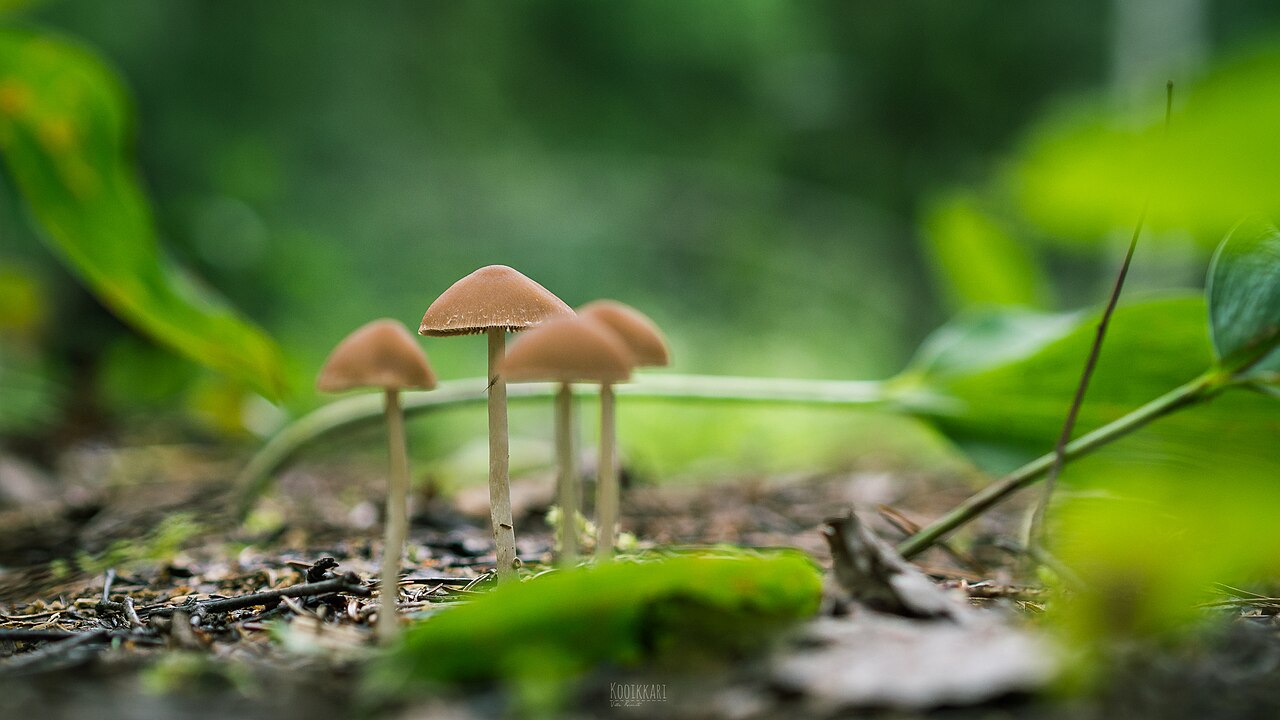
Psilocybin is a naturally occurring compound found in several species of psychedelic mushrooms. Once consumed, the body converts it into psilocin, the substance responsible for much of its psychedelic activity.
For years, scientific interest in psilocybin has focused largely on its effects on the brain, particularly its potential applications in treating depression, anxiety and other mental health conditions.
But researchers have increasingly become interested in what happens elsewhere in the body.
Aging is a complicated biological process. Over time, cells accumulate damage, become less efficient at repairing themselves and gradually lose some of their ability to function normally. Some eventually enter a state known as cellular senescence, in which they stop dividing.
Researchers at Emory University and Baylor College of Medicine wanted to investigate whether psilocybin could influence some of these processes.
Their experiments produced results that were more surprising than the researchers might have expected.
Human Cells Continued Dividing for Longer
The first part of the investigation focused on human fibroblasts, cells responsible for producing and maintaining connective tissue.
Fibroblasts are particularly useful in aging research because scientists can observe how they change as they divide repeatedly in laboratory conditions.
Most normal human cells cannot divide indefinitely. Each time they reproduce, they go through biological changes that eventually contribute to a state in which they can no longer continue dividing.
Researchers call this replicative senescence.
To investigate whether psilocin could affect this process, scientists exposed cultured human cells to different concentrations of the compound and monitored how long they continued dividing.
The results were striking.
At a concentration of 10 micromolar, psilocin extended the replicative lifespan of human lung fibroblasts by approximately 29% compared with untreated cells.
At a higher concentration of 100 micromolar, the extension reached 57%.
The researchers also repeated the experiment using adult human skin fibroblasts. In that case, the higher concentration extended the cells’ replicative lifespan by approximately 51%.
In other words, the treated cells continued dividing for substantially longer before reaching senescence.
This was not evidence that the cells had become immortal. They eventually stopped dividing, just as untreated cells did. The difference was that the onset of this process was delayed.
That distinction is important. Scientists were not observing cells escaping aging altogether, but rather a possible change in how quickly certain aging-related processes developed.
What Was Happening Inside the Cells?
The next question was why the treated cells behaved differently.
Researchers examined several biological processes associated with aging, including oxidative stress, cellular senescence and the preservation of telomeres.
One area of interest was oxidative stress.
Cells naturally produce reactive molecules as part of normal metabolism. When these molecules accumulate beyond the body’s ability to control them, they can damage DNA, proteins and other cellular structures.
Over time, this damage can contribute to declining cellular function.
In the experiments, psilocin-treated cells showed reduced levels of oxidative stress compared with untreated cells.
Researchers also observed changes in SIRT1, a protein involved in regulating metabolism, cellular stress responses and aging-related processes. SIRT1 levels increased in the treated cells.
Another interesting finding involved telomeres.
Telomeres are protective structures located at the ends of chromosomes. They help protect genetic material during cell division, but they generally become shorter as cells divide repeatedly.
Eventually, critically shortened telomeres can contribute to cellular senescence.
The researchers found that telomeres were better preserved in psilocin-treated cells than in untreated cells of comparable age.
Taken together, these observations suggest that psilocin may influence several biological pathways involved in cellular aging.
However, scientists still do not know exactly which mechanisms are responsible for the effects or how they might interact inside a living organism.
Then Came the Mouse Experiment
The laboratory cell experiments were intriguing, but they raised a much bigger question.
Would similar effects appear in living animals?
To investigate, the researchers turned to older mice.
The experiment involved female mice that were 19 months old when treatment began. The researchers considered this approximately comparable to 60–65 years of human age, although such comparisons are only estimates.
The animals were divided into two groups. One received psilocybin, while the other received a control treatment without the active compound.
The treatment continued once a month for 10 months.
The results attracted particular attention.
By the end of the experiment, 24 of the 30 mice receiving psilocybin were alive, compared with 14 of the 28 mice in the control group.
That translated into a survival rate of 80% in the treated group and 50% in the control group.
The difference was statistically significant.
Researchers also noticed changes in the animals’ appearance. The treated mice appeared to have better fur quality, more hair growth and less white hair than the untreated animals.
These appearance-related observations were not formally quantified, so they should be interpreted cautiously.
Nevertheless, the survival findings provided another reason to investigate whether psilocybin could influence biological aging beyond its effects on the brain.
There was an important limitation, however: the experiment involved a relatively small group of female mice. It remains unknown whether the same results would occur in male mice, other animal species or humans.
Could a Psychedelic Compound Affect the Whole Body?
One reason the findings are particularly interesting is that psilocybin’s effects may not be limited to the nervous system.
Psilocybin and psilocin interact with serotonin receptors, especially the 5-HT2A receptor. These receptors are well known for their role in brain activity, but they are also found in various other tissues and cell types throughout the body.
This creates the possibility that the compound could influence biological processes outside the brain.
The researchers suggested that interactions involving serotonin receptors and proteins such as SIRT1 might help explain some of the observed changes.
SIRT1 has attracted considerable attention in aging research because it helps regulate cellular responses to stress and metabolic activity. Previous studies have linked its activity to processes involved in cellular maintenance and longevity.
The possibility that psilocybin could influence these pathways gives researchers another direction to explore.
It also raises a broader question: could compounds traditionally studied for their neurological effects eventually contribute to research into age-related diseases?
That possibility remains speculative, but the experiments provide a starting point for investigating it.
The 50% Result Comes With Important Limitations
A 57% extension in cellular lifespan and an 80% survival rate in treated mice sound remarkable. But neither result means that scientists have discovered a way to make people live longer.
The distinction between laboratory cells, animals and humans is essential.
The human cells were grown in controlled laboratory conditions and continuously exposed to psilocin. The concentration that produced the largest effect was 100 micromolar, an experimental concentration that cannot simply be translated into a dose someone could take.
The mouse experiment also used a specific treatment schedule involving repeated doses of psilocybin. It does not establish what would happen in people or whether similar treatment could be safe over many years.
There are other questions researchers need to investigate.
For example, cellular senescence is not always harmful. Although senescent cells can contribute to aging-related problems, the process also serves protective functions, including helping prevent damaged cells from continuing to divide uncontrollably.
Any treatment that changes this process must be examined carefully to determine whether it could have unintended consequences.
Scientists also need to establish whether the survival results can be reproduced in larger studies, whether the effects differ between sexes and whether treatment actually improves health throughout the aging process.
Most importantly, there have been no clinical trials demonstrating that psilocybin extends human lifespan.
The research is an early scientific finding, not an established anti-aging treatment.
Could Magic Mushrooms Change the Future of Aging Research?
The idea that a compound produced by psychedelic mushrooms could influence cellular aging would have sounded unusual only a few years ago.
Now, researchers have experimental evidence suggesting that psilocin can delay the onset of senescence in certain human cells, while psilocybin treatment can improve survival in older mice.
The findings do not provide a shortcut to longer life, and there is still a considerable distance between laboratory discoveries and treatments that could safely be used in people.
But they do introduce an intriguing possibility: substances known for their effects on the brain may also influence some of the biological processes that determine how cells age.
The next challenge is to understand exactly how these effects occur and whether they can be reproduced safely in humans.
For now, the most remarkable part of the discovery is not that scientists have found a way to slow human aging. They haven’t.
It is that a compound found in psychedelic mushrooms has revealed a potential connection between cellular aging, stress responses and a field of research that scientists are only beginning to explore.
SOURCES: Kato et al., National Library of Medicine.