An airplane can be travelling hundreds of miles per hour, thousands of feet above the ground, and suddenly begin dropping toward the earth. To someone watching from the ground, it can look as though the aircraft simply fell out of the sky. But airplanes do not need to lose an engine to experience a catastrophic descent.
Several different problems can cause an aircraft to lose lift, become difficult to control, or descend faster than its pilots can recover. Severe icing, aerodynamic stalls, structural damage and flight-control failures can all affect an airplane’s ability to remain airborne.
Understanding how these problems develop also helps explain why some aircraft emergencies are recoverable while others become impossible to survive.
How Does an Airplane Stay in the Air?
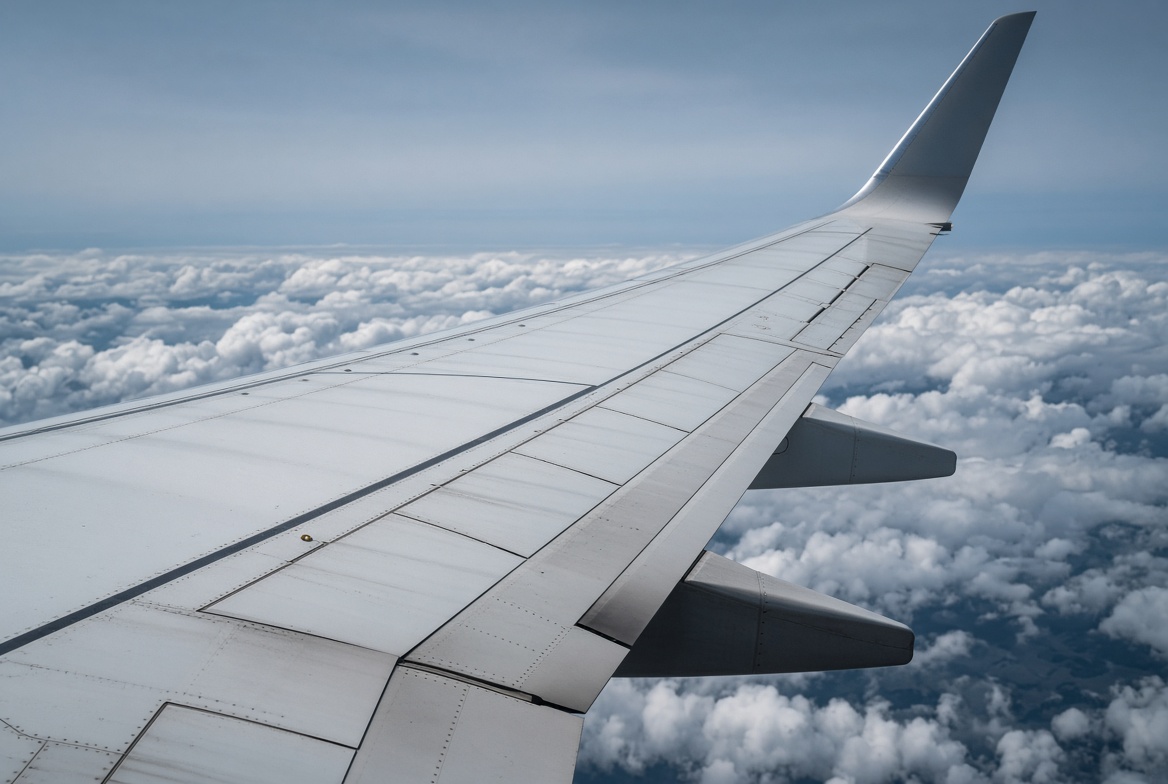
An airplane stays airborne because its wings generate lift as they move through the air.
As an aircraft travels forward, air flows around its wings. Their shape and angle relative to the incoming airflow help create a pressure difference and redirect air downward, producing an upward aerodynamic force called lift.
For an aircraft to maintain level flight, lift must approximately balance its weight. Its engines provide thrust to overcome drag and maintain the airspeed needed for flight.
Four main forces act on an airplane:
Lift: The aerodynamic force that acts generally upward.
Weight: The force of gravity pulling the aircraft downward.
Thrust: The force produced by the engines that moves the aircraft forward.
Drag: The resistance created as the aircraft moves through the air.
When these forces are properly balanced, an aircraft can maintain a steady altitude and airspeed.
However, if something significantly reduces lift or disrupts the aircraft’s ability to maintain controlled flight, it can begin descending.
Importantly, an airplane does not need its engines to keep generating lift. As long as it has sufficient airspeed and functioning aerodynamic surfaces, it can continue flying without engine power.
What Happens When an Airplane Loses Lift?
One of the most important aerodynamic problems pilots train to recognize is a stall.
An aerodynamic stall occurs when a wing exceeds its critical angle of attack. The angle of attack is the angle between the wing’s chord line and the airflow approaching it.
As this angle becomes too steep, airflow can no longer follow the wing’s upper surface effectively. It separates from the surface, causing lift to decrease and drag to increase.
The aircraft may begin to lose altitude, shake, roll or pitch downward.
A common misconception is that a stall happens simply because an airplane is travelling too slowly. Low airspeed can contribute to a stall, but an aircraft can stall at many different speeds if its angle of attack becomes too high.
For example, a pilot pulling back too aggressively on the controls during a climb or turn can cause a stall even when the aircraft is travelling relatively fast.
A stall does not automatically mean an airplane is falling uncontrollably. In many situations, pilots can recover by reducing the angle of attack, allowing airflow to reattach to the wings and restoring lift.
However, recovery becomes more difficult if the aircraft is close to the ground, in an extreme attitude or experiencing additional mechanical problems.
How Can Ice Affect an Airplane?
Ice accumulation is a serious aviation hazard because even relatively small amounts of ice can change how air flows over an aircraft’s wings.
Aircraft wings are carefully designed to produce lift efficiently. Their shape, surface condition and aerodynamic characteristics all matter.
When ice forms on a wing, it can change the wing’s shape and disrupt airflow.
This can produce several effects:
Reduce the amount of lift a wing can generate.
Increase aerodynamic drag.
Cause the aircraft to stall at a higher airspeed.
Change the aircraft’s handling characteristics.
Make it more difficult to maintain altitude.
Ice can also accumulate on other parts of an aircraft, including its tail surfaces, engine inlets, sensors and other exposed components.
In certain circumstances, icing can affect instruments or interfere with flight-control systems.
Modern aircraft designed for flight in icing conditions have protective systems. Depending on the aircraft, these may include heated surfaces, engine anti-icing systems and equipment that removes accumulated ice.
However, these systems have operating limits. Severe icing can create conditions that are difficult for an aircraft to handle, particularly if ice accumulates faster than its protection systems can manage.
Can Pilots Recover From an Aerodynamic Stall?
Yes. Recovering from an aerodynamic stall is a fundamental part of pilot training.
The general objective is to reduce the wing’s angle of attack so that airflow can reattach and the wing can generate lift again.
A typical stall recovery involves several actions:
Reduce the angle of attack: Lowering the nose helps bring the wing back within its normal operating range.
Apply appropriate engine power: Additional thrust can help restore airspeed, depending on the aircraft and circumstances.
Maintain directional control: Pilots use the appropriate controls to prevent unwanted rolling or yawing.
Recover to level flight: Once the stall is resolved, the aircraft can gradually return to a controlled flight path.
The exact procedure depends on the aircraft and the type of stall.
A particularly dangerous situation occurs when an aircraft enters a spin. A spin involves a stalled wing condition combined with autorotation, causing the aircraft to descend along a spiralling flight path.
Recovering from a spin requires specific procedures, and not every aircraft is approved for intentional spin recovery training.
Even when a stall is recoverable, the aircraft needs sufficient altitude to complete the recovery safely.
That leads to one of the biggest limitations pilots face during an emergency: time and distance.
Why Does Altitude Matter So Much?
Altitude gives pilots room to respond when something goes wrong.
An aircraft experiencing a stall, unusual attitude or loss of control may need several seconds or longer to stabilize and recover. During that time, it can lose a substantial amount of altitude.
At 30,000 feet, pilots may have considerable room to diagnose a problem and attempt recovery.
At 1,000 feet, the situation is very different.
If an aircraft is descending rapidly, even a successful recovery may not be possible before it reaches the ground.
Consider an aircraft descending at 6,000 feet per minute. That equals 100 feet every second.
At 12,000 feet per minute, it loses 200 feet every second.
At extremely high descent rates, the available recovery time can disappear remarkably quickly.
This is why an emergency that might be manageable at cruising altitude can become unsurvivable during takeoff, landing or a low-altitude loss of control.
Can an Airplane Fly Without Its Engines?
Yes. Airplanes can glide without engine power.
An aircraft does not depend on its engines to generate lift. Its wings continue producing lift as long as air flows over them at an appropriate speed and angle of attack.
Without engine thrust, however, the aircraft gradually loses altitude as it moves forward.
The distance it can travel depends on its aerodynamic efficiency, altitude, airspeed, aircraft configuration and weather conditions.
This is measured using something called the glide ratio.
For example, an aircraft with a glide ratio of 15:1 can theoretically travel 15 feet horizontally for every foot of altitude it loses in still air.
At 30,000 feet, that could represent a considerable distance.
One of the most famous examples of an aircraft gliding without engine power occurred in 1983.
Air Canada Flight 143, commonly known as the Gimli Glider, ran out of fuel while flying a Boeing 767 from Montreal to Edmonton.
The aircraft lost power in both engines, leaving the pilots without normal engine thrust.
Despite the emergency, the crew managed to glide the aircraft to a former air force base in Gimli, Manitoba, where it made an emergency landing.
All passengers and crew survived.
The incident demonstrated that losing engine power does not necessarily mean an airplane will crash.
However, an aircraft experiencing structural damage, severe aerodynamic problems or a loss of control may not be capable of gliding safely.
What Happens When an Airplane Loses Control?
An aircraft can experience a loss of control when pilots can no longer maintain its intended flight path.
This can happen for several reasons.
Mechanical failures can damage or disable flight-control systems. Severe turbulence can create sudden changes in the aircraft’s attitude. Incorrect control inputs can also contribute to dangerous flight conditions.
A particularly serious problem is an upset, which occurs when an aircraft unintentionally enters an unusual flight attitude.
For example, an airplane may suddenly roll onto its side, pitch steeply upward or downward, or enter a steep descending turn.
Recovering from an upset requires pilots to recognize the aircraft’s actual flight condition and apply the appropriate recovery techniques.
Modern aircraft have sophisticated instruments and flight-control systems designed to help pilots maintain control. However, these systems cannot eliminate every possible emergency.
If the aircraft has suffered severe structural damage or lost critical control surfaces, the pilots may have limited ability to influence its flight path.
Can a Wing or Other Part of an Airplane Break Off?
Yes. Although aircraft are designed and tested to withstand substantial aerodynamic forces, structural failures can occur.
Aircraft wings, tails and other structural components are engineered to handle the stresses expected during normal operations and specified emergency conditions.
However, extreme forces, material fatigue, corrosion, manufacturing defects, maintenance problems or other damage can contribute to structural failure.
If a critical part of an aircraft separates or becomes damaged, its ability to generate lift and maintain stability can be seriously compromised.
For example, damage to a horizontal stabilizer can affect pitch control, while damage to a wing can reduce lift and create severe handling problems.
A structural failure can develop very quickly, leaving pilots with little opportunity to respond.
Unlike a conventional aerodynamic stall, which may be recoverable, severe structural damage can make recovery physically impossible.
Why Do Some Airplane Crashes Look Like the Aircraft Suddenly Dropped?
Videos of aircraft accidents can be particularly difficult to interpret because perspective can make a descent appear different from what actually happened.
A plane viewed from a distance may appear to be falling almost vertically, even when its actual flight path is at a steep angle.
Camera position, distance, lens characteristics and the aircraft’s orientation can all affect how a descent appears.
A rapidly descending aircraft may also be experiencing several problems simultaneously.
For example, severe icing could affect aerodynamic performance while an aircraft is also experiencing a loss of control. Alternatively, a mechanical failure could damage the aircraft’s ability to maintain a stable flight path.
Without flight data, cockpit recordings, wreckage examinations and other investigative evidence, it is generally impossible to determine the exact cause of an accident from video alone.
Aircraft accident investigators examine multiple sources of evidence before reaching conclusions.
The Difference Between Losing an Engine and Losing the Ability to Fly
It is important to distinguish between losing engine power and losing the ability to maintain controlled flight.
An engine failure can be a serious emergency, but it does not automatically mean an aircraft will crash.
Pilots can often glide an aircraft toward a suitable landing area, provided the aircraft remains controllable and has sufficient altitude.
A loss of lift or control can be much more dangerous.
If the wings cannot generate sufficient lift, or the aircraft cannot maintain a controlled attitude, having functioning engines may not be enough to prevent a crash.
In other words, engines help an airplane move through the air, but the wings and flight-control systems allow it to remain airborne and maneuver safely.
The Science Behind an Aircraft Falling From the Sky
An airplane falling rapidly does not necessarily mean its engines stopped working or that something visibly broke apart.
A loss of lift, severe icing, an aerodynamic stall, structural damage or a loss of control can all lead to a rapid descent.
Some of these situations are recoverable, particularly when pilots have sufficient altitude and the aircraft remains structurally sound.
Others can develop so quickly that even experienced pilots have little time to respond.
Understanding the difference between losing engine power, losing lift and losing control helps explain why aircraft emergencies vary so dramatically.
An airplane is an extraordinarily capable machine, but its ability to remain airborne depends on a delicate relationship between aerodynamics, speed, structural integrity and control.
SOURCES: Federal Aviation Administration (FAA), Transport Canada, Federal Aviation Administration – Upset Prevention and Recovery Training, Royal Canadian Air Force.