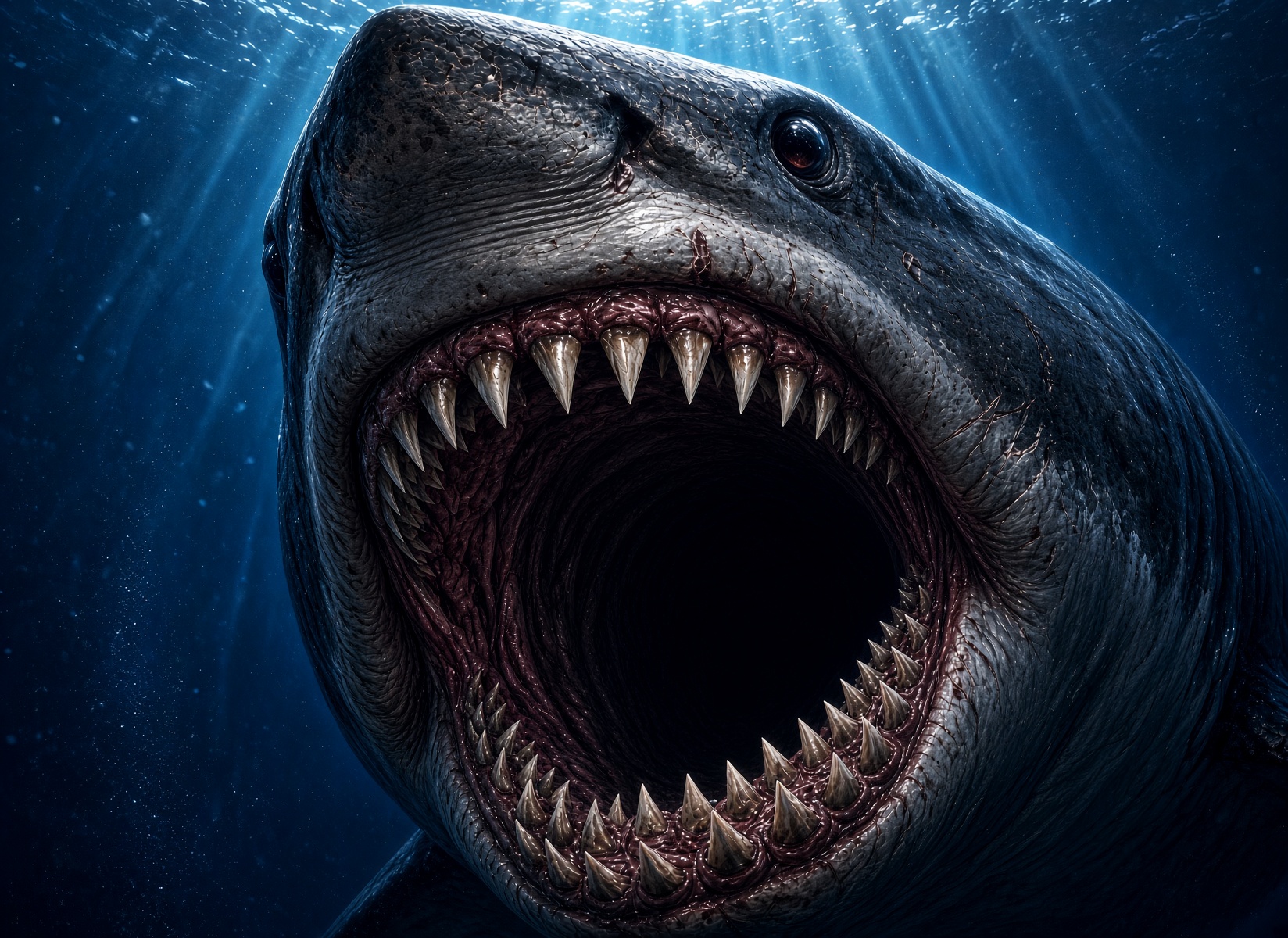
For roughly 20 million years a shark the length of a city bus patrolled warm coastal waters with teeth the size of a human hand. Otodus megalodon was not merely large. It was the dominant predator of its world, and then the fossil record goes quiet.
The last reliable teeth date to about 3.6 million years ago, early in the Pliocene. An earlier 2014 analysis had pointed to roughly 2.6 million years ago, near the start of the ice ages. In 2019 Robert Boessenecker and colleagues re-examined the youngest claimed specimens, discarded those that had been reworked from older layers or poorly dated, and ran the same statistical method again. The median extinction date shifted earlier, to around 3.5 million years ago. Teeth younger than the early Pliocene are not considered reliable. The giant was already gone well before the big ice sheets arrived.
No single event finished it. Several pressures arrived together.
The oceans were cooling and sea level was falling. Megalodon preferred warm, shallow shelf seas; those were its nursery grounds. As polar ice grew, those coastal habitats shrank and the warm-water corridors that once linked the oceans narrowed. The final closure of the seaway between North and South America around this time rearranged ocean currents further. Fossils of the shark are already scarce in colder latitudes even during warmer periods, so the cooling was more than a minor inconvenience.
At the same time its main prey was changing. Megalodon teeth are frequently found with the remains of medium-sized baleen whales. Those whale populations lost diversity through the Pliocene. The species that survived tended to grow larger and shift toward productive polar waters that a warm-water predator could not easily follow. After megalodon vanished, baleen whales continued a trend toward the gigantic sizes seen today, consistent with the removal of a major predator.
A third pressure was a new competitor. The modern great white shark had evolved in the Pacific several million years earlier and had spread into other oceans by about 4 million years ago. Zinc-isotope studies of fossil teeth show that some great-white populations shifted upward in the food chain during the early Pliocene, overlapping more closely with megalodon’s diet. Bite marks on whale bones from the same period have been attributed to both species. A 2022 study concluded that the two sharks were forced to share resources, and that the smaller, more efficient hunter may have helped push the larger one out. Early members of the killer-whale lineage may have added further pressure, though the evidence there is thinner.
Megalodon itself appears to have been at least partially warm-blooded, able to keep parts of its body warmer than the surrounding water. That physiology supported its size and activity, but it also raised its energy requirements. High metabolic costs would have made the species more vulnerable when prey became scarcer and competitors multiplied.
The fossil record is unambiguous on one point: megalodon is extinct. Sharks shed thousands of teeth in a lifetime, and megalodon teeth are common fossils. None have been found in sediments younger than the early Pliocene. A 15-to-20-metre warm-water whale hunter living today would leave bitten whales, carcasses, and unmistakable sightings. There are none.
The combination of shrinking warm nurseries, a declining supply of medium-sized whales, and competition from a smaller but highly effective predator is the current best explanation. Climate change mattered, mainly because it rearranged the habitats and the food supply. The biotic pressures—what the shark ate and what else was eating the same things—appear to have delivered the final blow.
SOURCES: PeerJ, PLoS ONE, Nature Communications, Natural History Museum, Britannica.