In 1859, the Carrington Event transformed the night sky into a canvas of unearthly splendor, bathing the world in auroras of breathtaking beauty while silently sowing chaos in the rudimentary technology of the day. Today, a similar solar storm would pair that same awe-inspiring display with potentially catastrophic disruptions. Let’s explore the dual nature of such an event—the seductive allure of its auroras juxtaposed against the real risks to our modern world—and assess the likelihood of facing this destructive beauty once more.
The Auroras of 1859: A Celestial Symphony
Eyewitness accounts from the Carrington Event paint a picture of celestial wonder that captivated observers across the globe. In Boston, contemporary newspaper reports described an intensely illuminated sky filled with vivid colors. In London, newspapers reported that the aurora was so bright that people could read by its light at midnight.
Further south, in Havana, Cuba (approximately 23°N), the aurora was visible in a region typically untouched by polar lights. Historical reports also documented sightings in Panama, near 9°N, and Montería, Colombia, at approximately 8°45′N—remarkably close to the equator. The displays shifted dynamically, with colors ranging from deep red to pale white, creating a spectacle that many observers found both beautiful and unsettling.
This wasn’t merely a visual feast; it was an experience that captured public attention. Observers across the southern United States also reported the unusual brightness of the night sky. Yet beneath this beauty lay a subtle menace: telegraph systems sparked, malfunctioned and experienced electrical disturbances, hinting at the Sun’s ability to disrupt human technology—a warning of what a modern repeat could unleash.
A Modern Display: Beauty Meets Peril
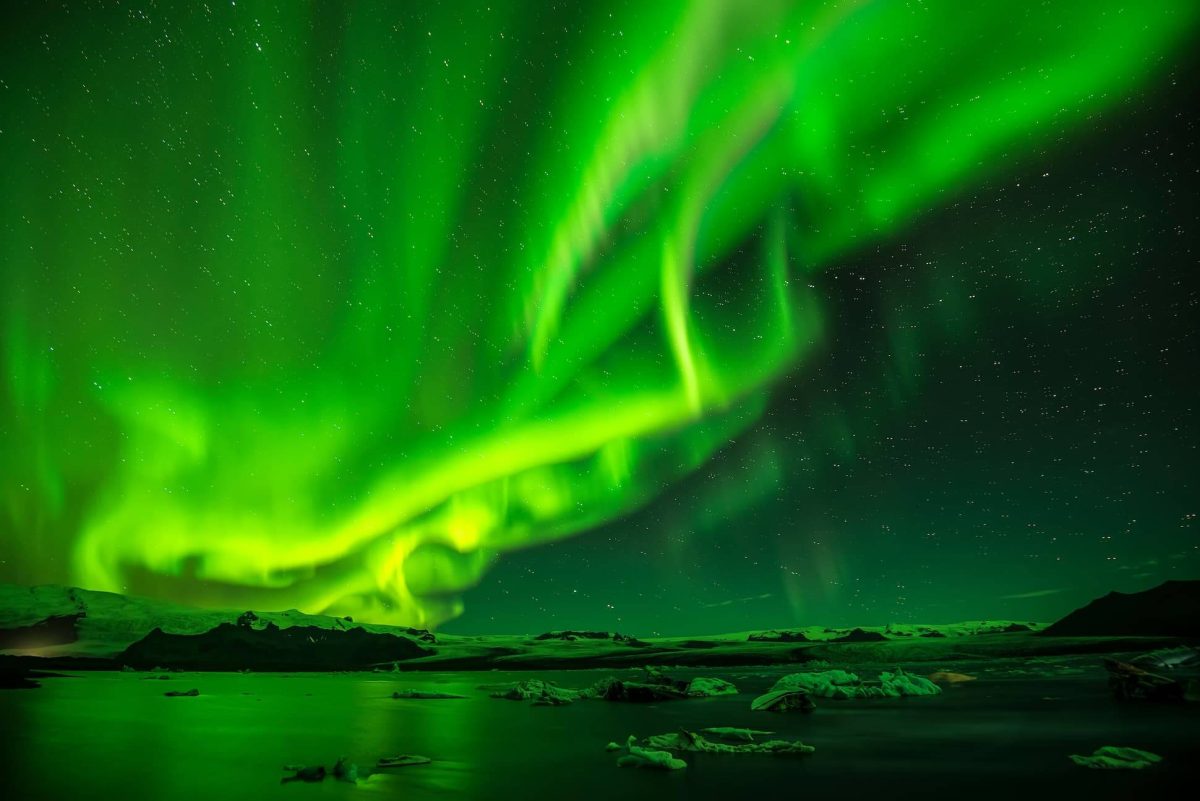
Imagine standing in Miami or Mexico City today, far below the typical auroral oval, as the sky ignites in a kaleidoscope of colors—vermilion tendrils weaving through sapphire veils, all cast by a Carrington-scale geomagnetic storm. Under sufficiently extreme conditions, auroras could become visible at latitudes far south of their usual range, potentially bringing an extraordinary display to places that rarely experience them.
Social media would likely flood with images of glowing skies over the Caribbean and other regions, creating a shared moment of global wonder.
But this beauty would come at a cost. The geomagnetic storm triggered by the coronal mass ejection (CME) could induce geomagnetically induced currents (GICs) in power grids. These currents can affect transformers, create voltage instability and trigger protective-system failures. Under severe conditions, some equipment could sustain lasting damage, potentially contributing to widespread power outages.
Satellites—vital for GPS, weather forecasting and communication—would also face risks. High-energy solar particles can damage electronic components, while geomagnetic disturbances can increase atmospheric drag on low-orbit satellites and interfere with navigation signals.
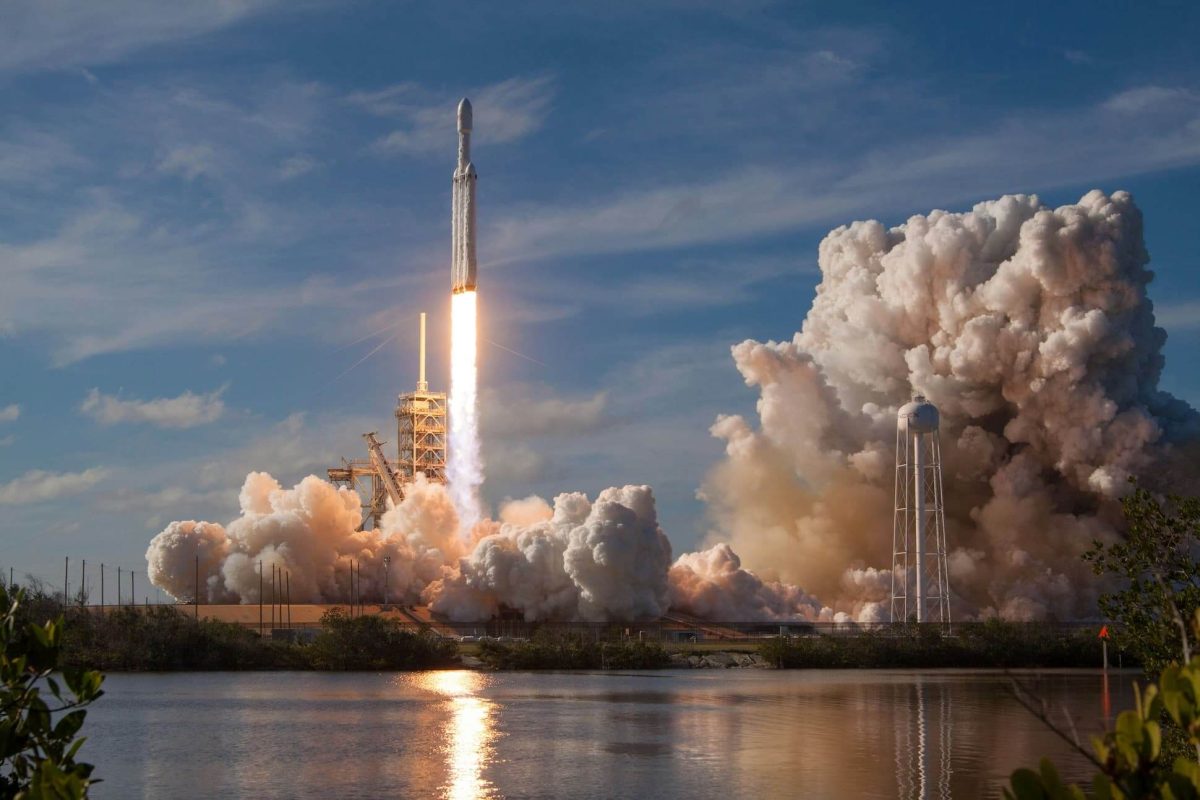
The 2022 Starlink incident illustrates one of these vulnerabilities. A geomagnetic storm increased atmospheric density, creating additional drag on newly launched satellites. SpaceX subsequently lost 38 of the 49 satellites involved. The primary mechanism was increased atmospheric drag, not the direct destruction of their electronics.
The internet, a lifeline for modern economies, could also experience disruptions if power interruptions affect data centres, telecommunications infrastructure and supporting networks. Backup generators and other emergency systems provide protection, but prolonged outages can strain fuel supplies and other essential resources.
The visual poetry unfolding in the heavens could therefore coincide with serious disruptions on the ground.
The Real Risks: Quantifying the Threat
The destructive potential of a modern Carrington Event lies in our dependence on interconnected systems:
Power Grids: GICs can disrupt electrical networks, damage transformers and contribute to cascading failures. A 1989 geomagnetic storm caused a blackout in Quebec lasting more than nine hours. A Carrington-scale event could produce much longer outages in severely affected regions, potentially lasting weeks or months under extreme conditions. Large power transformers can take many months or longer to replace, and specialized equipment faces supply-chain constraints.
Satellites: Solar energetic particles can damage spacecraft electronics, while atmospheric expansion can increase drag on satellites in low Earth orbit. Geomagnetic disturbances can also interfere with navigation and communications. The number of affected satellites would depend on the storm’s characteristics, satellite orbits and protective measures.
Economic Fallout: A 2013 Lloyd’s of London report estimated potential U.S. economic losses of $0.6–2.6 trillion under its modeled extreme solar-storm scenario. The consequences could extend internationally through disrupted supply chains, transportation, communications and food distribution, although the report’s dollar estimate is specifically for the United States.
Societal Impact: Hospitals, which depend on reliable electricity for critical care, could face operational challenges during prolonged outages. Communication failures could hamper emergency responses, while interruptions to transportation, water systems and essential services could leave communities isolated.
The beauty wouldn’t spare us the chaos. The scale of disruption would depend on storm intensity, regional infrastructure, grid design and the effectiveness of emergency preparations. Some areas could experience relatively limited effects, while others could face serious and prolonged difficulties.
How Likely Is It? A Ticking Solar Clock
The Sun operates on an approximately 11-year cycle, with solar maxima generally bringing increased sunspot activity, solar flares and coronal mass ejections. However, severe geomagnetic storms can occur at different points in the solar cycle, and not every solar eruption is directed toward Earth or produces a major geomagnetic disturbance.
We are in Solar Cycle 25. NASA and NOAA announced in October 2024 that the Sun had entered its solar maximum period. NOAA’s prediction placed the expected peak around July 2025, with an uncertainty window extending from November 2024 to March 2026. That forecast window has now passed, although significant space-weather activity can continue during the declining phase of a solar cycle.
Historical estimates of extreme geomagnetic storms vary depending on how storm intensity is classified and which statistical model is used. A 2020 study published in Geophysical Research Letters estimated an annual probability of approximately 28% for a severe geomagnetic storm and 4% for a great storm. The researchers separately estimated that an event reaching an extreme intensity threshold comparable to the 1859 Carrington Event could occur roughly once every 150 years. These estimates describe different levels of storm severity and should not be interpreted as a predictable schedule.
Other research has produced different estimates for the likelihood of a Carrington-scale event. In a 2012 study, solar physicist Pete Riley estimated approximately a 12% chance of another Carrington-level event occurring within a decade, based on a particular statistical model and historical geomagnetic data.
More recent research published in October 2025 by Riley and M. Ben-Nun examined how extreme-storm probabilities vary between solar cycles. For a Carrington-level event during the following decade, their analysis estimated a 4.76% probability using a power-law model and 0.03% using a log-normal model. Both estimates had substantial uncertainty ranges.
These figures are not directly interchangeable: the studies use different statistical assumptions, event thresholds and approaches to historical data. Their differences illustrate how difficult it is to calculate the likelihood of an extremely rare solar event. None provides a precise countdown or predicts when another Carrington Event will occur.
A particularly striking warning came in July 2012, when a powerful CME narrowly missed Earth. NASA reported that if the eruption had occurred about a week earlier, Earth would have been in its path. Scientists described the event as potentially comparable in strength to the 1859 storm. Had it struck, it could have caused substantial disruption to modern infrastructure.
Modern monitoring, including NASA’s Solar Dynamics Observatory and ground-based magnetometers, helps scientists track solar activity and assess incoming threats. Spacecraft monitoring can provide advance warning of an approaching CME, although the available time varies with its speed and when it is detected. The 1859 event was exceptionally fast, with an estimated transit time of approximately 17.6 hours.
Preparation exists, but resilience varies. Some electrical utilities monitor geomagnetic conditions and have procedures to reduce risks to their networks. Satellite operators can also use protective measures, including placing spacecraft into safe modes when necessary. However, infrastructure protection is not universal, and replacing specialized transformers or hardening electrical networks can be expensive and time-consuming.
The Duality of Nature’s Wrath and Wonder
A modern Carrington Event would remind us of nature’s capacity for both creation and destruction. The auroras—those radiant displays produced when charged particles collide with gases in Earth’s upper atmosphere—would be a masterpiece painted across improbable latitudes, a fleeting gift for people far from the poles.
Yet their arrival could signal a storm capable of disrupting the systems we take for granted, a reminder that beauty can accompany serious danger.
Mitigation offers hope. Investing in electrical-grid resilience, radiation-hardened satellites, improved space-weather forecasting and reliable emergency power systems could reduce the worst impacts.
Until then, we live under the Sun’s influence, its potential to dazzle and disrupt held in a delicate balance. Should the skies light up from Miami to Medellín, we would have every reason to marvel at the sight—and to recognize the extraordinary forces unfolding above us.
SOURCES: Green et al., Chapman et al., Riley, Riley and Ben-Nun, Lloyd’s of London, NASA, NOAA, Hydro-Québec.