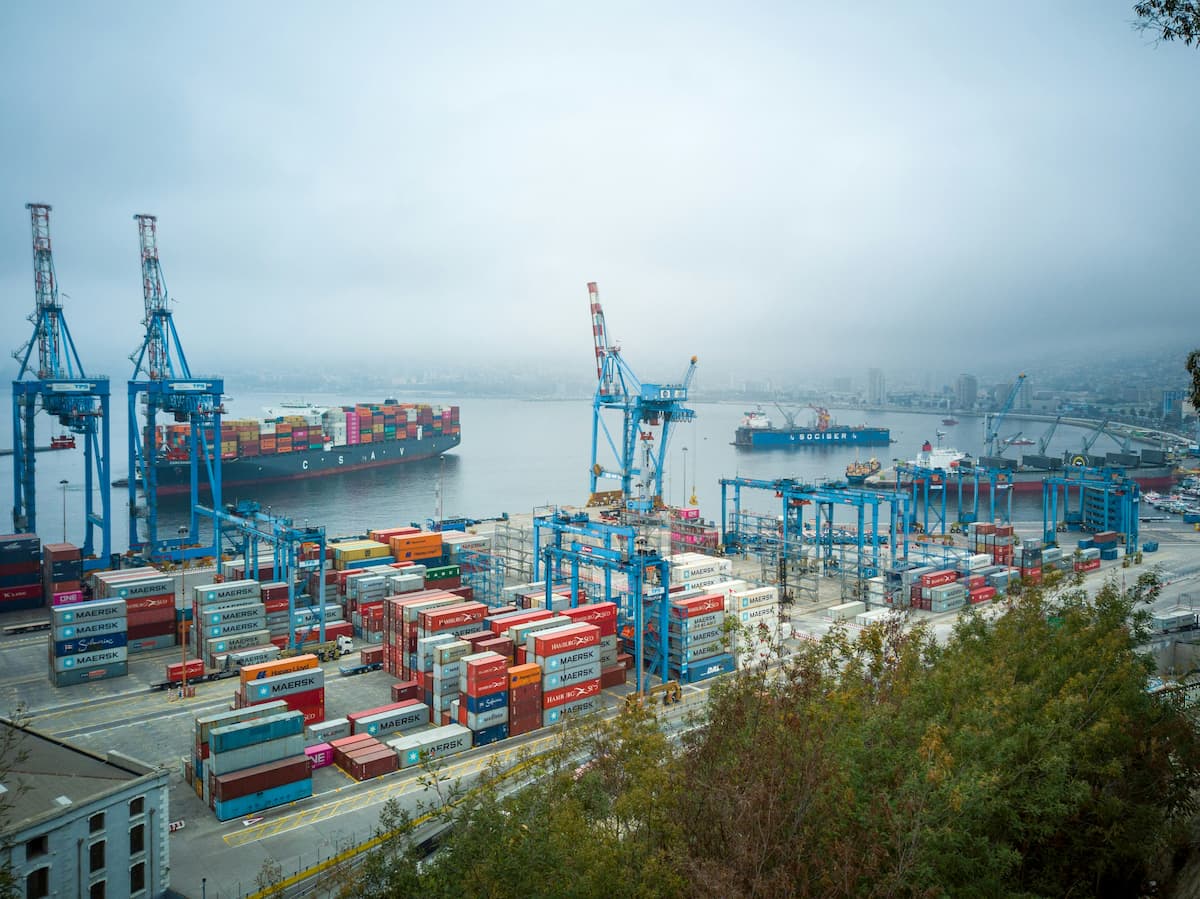
A product can cross multiple borders before it reaches the person who buys it.
Its raw materials may come from one country, its components from several others, its final assembly from another, and its journey to consumers may pass through ports, warehouses, distributors, and transportation networks spread across the world.
That interconnected system is a global supply chain.
Global supply chains have transformed how goods are produced and distributed. They allow companies to specialize, access international suppliers, reach larger markets, and combine capabilities from different countries.
But the same interconnectedness that creates efficiency can also create vulnerability.
A disruption at one factory, port, shipping route, supplier, or processing facility can affect companies and consumers thousands of kilometres away. Recent shocks have therefore changed the central question facing global supply chains.
It is no longer simply:
How can goods be produced as cheaply and efficiently as possible?
It is increasingly:
How can economies preserve the benefits of international specialization while making critical supply networks less fragile?
The answer is not necessarily to eliminate international dependence. In many cases, resilience comes from understanding where dependence is concentrated, how critical each dependency is, what alternatives exist, what buffers are available, and how quickly the system can adapt.
That distinction is becoming increasingly important as global production changes without simply disappearing. OECD evidence published in 2026 shows that global value chains remained highly globalized in 2024, with trade linked to global value chains equivalent to around 17% of global GDP in real terms. The OECD’s conclusion is not that international production has vanished, but that it is being reconfigured.
What Is a Global Supply Chain?
A global supply chain is the international network involved in sourcing, producing, transporting, distributing, and delivering goods or services.
A simplified physical supply chain might look like this:
Raw materials → processing → components → assembly → transportation → distribution → consumer
In reality, the system is rarely a simple line.
A manufacturer may depend on hundreds or thousands of suppliers, while those suppliers depend on other suppliers several tiers upstream. Several companies may depend on the same processor, port, shipping route, energy source, or specialized manufacturer.
That is why modern supply chains are better understood as networks rather than chains.
There is also an important distinction between a supply chain and a global value chain.
A supply chain focuses primarily on the sourcing, production, logistics, and physical movement of inputs and goods. A global value chain is broader: it describes how value is created across borders through activities such as design, software, investment, manufacturing, and business services.
The two concepts overlap, but they are not identical. This distinction matters because a product’s physical journey is only part of the international production system behind it.
How Global Supply Chains Work
Global production divides activities across locations according to factors such as cost, skills, natural resources, infrastructure, technology, market access, and specialization.
1. Raw materials are sourced
Production begins with resources such as oil, natural gas, agricultural products, metals, minerals, timber, and other inputs.
Some of these resources are geographically concentrated.
That can create vulnerability because a company may appear to have several suppliers while ultimately depending on a relatively small number of countries or regions for a particular input.
2. Raw materials are processed
Materials are transformed into usable industrial inputs.
Crude oil becomes fuels and petrochemical products. Minerals become refined metals. Agricultural products become food ingredients or industrial materials.
Processing can be strategically important because the country supplying a raw material is not necessarily the country performing the most important processing step.
3. Components are manufactured
Processed materials become components and intermediate goods.
A finished product can therefore contain parts produced by companies operating across many countries.
This is especially important in industries such as electronics, automobiles, machinery, pharmaceuticals, and advanced manufacturing.
4. Components are assembled
Components are combined into finished products.
Assembly often occurs near established manufacturing clusters, where firms can access specialized labour, suppliers, infrastructure, logistics, and technical expertise.
5. Goods are transported
Finished products and intermediate inputs move through shipping networks, ports, railways, roads, air-freight systems, warehouses, and distribution centres.
Maritime transport is particularly important. UN Trade and Development estimates that around 80% of the volume of international trade in goods is carried by sea.
That makes major maritime routes and chokepoints economically significant.
6. Products reach customers
The final stage connects manufacturers to retailers, businesses, and consumers.
At this point, disruptions that began far upstream can become visible as delayed deliveries, depleted inventories, higher costs, or unavailable products.
Why Are Supply Chains Global?
Globalization did not occur simply because companies wanted to move factories overseas.
It emerged from several interacting forces.
Companies can specialize in activities where they have advantages while purchasing other inputs from firms that have different capabilities.
International trade allows businesses to access larger markets and gives countries opportunities to specialize in particular stages of production.
Improvements in transportation and communications also made it easier to coordinate production across borders. The World Bank describes global value chains as a major force behind the expansion of international trade and development, while noting that technological change can alter where production takes place.
The result is a system in which value can be added in multiple countries before a product reaches its final customer.
Why Global Supply Chains Matter
Global supply chains affect much more than multinational corporations.
They influence:
- the prices consumers pay;
- which products are available;
- how quickly goods can be delivered;
- where companies invest;
- where jobs are created;
- which countries specialize in particular industries;
- how technologies and production capabilities spread;
- and how economies respond to shocks.
Global value chains remain deeply embedded in the world economy.
The OECD’s 2026 analysis found that trade linked to global value chains represented around 17% of global GDP in 2024, while real use of imported goods and services in world production remained close to its historical peak. The OECD also found that recent changes were driven more by shifts across sectors and sourcing structures than by a broad retreat from international production.
This matters because it challenges a simple narrative of widespread deglobalization.
The more accurate description is reconfiguration.
Global production is changing, but international specialization remains substantial.
The Central Trade-Off: Efficiency vs. Resilience
Global supply chains are built around trade-offs.
A company might source from one highly efficient supplier because that supplier offers lower costs, better quality, specialized technology, or greater production capacity.
But dependence on that supplier can create vulnerability.
Maintaining multiple suppliers may increase resilience, but it can also increase costs.
Holding additional inventory can protect against shortages, but inventory ties up capital.
Building factories in multiple countries can reduce geographic dependence, but duplicate capacity can be expensive.
This creates a fundamental tension:
Efficiency minimizes unnecessary cost. Resilience preserves the ability to function when conditions change.
Neither objective is automatically superior.
The economically sensible choice depends on the consequences of failure.
A cheap input that can easily be replaced is fundamentally different from a relatively inexpensive component with no short-term substitute.
That leads to a more useful way of thinking about resilience:
The question is not simply how many suppliers exist. It is how many genuinely independent ways the system has to keep functioning when one path fails.
What Is a Supply Chain Disruption?
A supply chain disruption occurs when an event interferes with the normal flow of materials, components, information, transportation, production, or distribution.
Disruptions can originate from:
- natural disasters;
- extreme weather;
- pandemics;
- wars and geopolitical conflicts;
- cyberattacks;
- transportation failures;
- port congestion;
- labour disruptions;
- energy shortages;
- supplier failures;
- export restrictions;
- sudden demand changes;
- or shortages of critical materials and components.
The important point is that the location of the disruption and the location of the economic damage can be very different.
A factory can stop producing in one country while factories, retailers, and consumers elsewhere experience the consequences.
How Supply Chain Problems Spread
The propagation mechanism can be understood as:
Shock → supplier disruption → missing input → production constraint → inventory decline → delivery delays → shortage → price or output effects
Consider a manufacturer that normally receives a critical component every week.
If the supplier stops producing, the manufacturer may initially continue operating using inventory.
Once that inventory is exhausted, production may slow or stop.
The manufacturer may then reduce deliveries to distributors. Retail inventories fall. Customers encounter shortages. Prices may rise if demand remains strong and supply becomes constrained.
But the size of the eventual effect depends on the structure of the network.
If substitutes are readily available, the shock may be absorbed.
If several suppliers share the same upstream processor, the apparent diversification may be largely illusory.
If the affected component is critical and difficult to replace, a relatively small physical disruption can have a much larger economic effect.
This is why resilience is fundamentally a network problem, not simply a supplier-count problem.
Three Levels of Supply Chain Risk
The UK Government Office for Science’s 2026 supply-chain foresight report provides a useful framework for understanding vulnerability through three interacting dimensions: firm-level factors, network-level structures, and external pressures.
Firm-level risk
A company can create vulnerability through decisions about suppliers, inventories, production capacity, geography, and contingency planning.
A business that depends on a single supplier for a critical component has a different risk profile from one with several qualified alternatives.
Network-level risk
A company may have several suppliers and still face concentrated risk.
Those suppliers might rely on the same upstream processor.
Several manufacturers might depend on the same port.
Multiple industries might depend on the same specialized producer.
This creates hidden common dependencies.
The network may therefore look diversified at the surface while remaining concentrated underneath.
External risk
External shocks include geopolitical conflict, climate events, pandemics, trade restrictions, and other developments outside the direct control of individual companies.
The greatest vulnerabilities can emerge when these levels interact.
A highly concentrated supplier network becomes more dangerous when a geopolitical or environmental event threatens the region in which that network is concentrated.
The UK report emphasizes precisely this interaction and argues that supply-chain risk cannot be understood through a single lens.
What Is Just-in-Time Manufacturing?
Just-in-time manufacturing is an approach in which companies try to receive materials and components close to the time they are needed rather than maintaining large inventories.
The advantage is efficiency.
Less inventory means less capital tied up in unused materials and less warehouse space.
But the trade-off is that there may be less time to respond when a supplier or transportation route fails.
Just-in-time systems therefore do not automatically make supply chains fragile.
Their vulnerability depends on factors such as supplier reliability, lead times, substitutes, transportation conditions, and the criticality of the affected input.
The deeper lesson is that inventory is not simply a cost.
It can also function as insurance against disruption.
The appropriate inventory level is therefore an economic decision about the cost of carrying a buffer versus the expected consequences of running without one.
Case Study: The Semiconductor Shortage
The global semiconductor shortage demonstrated how a specialized input can create effects far beyond its immediate industry.
Modern vehicles require semiconductors for systems ranging from engine management and safety functions to electronics and communications.
When semiconductor availability became constrained during the pandemic period, automakers faced a mismatch between production requirements and available components.
The result was not simply a shortage of chips.
Vehicle production itself was constrained because a missing component could prevent a completed vehicle from leaving the factory.
The example illustrates a central supply-chain principle:
The economic importance of an input depends not only on its price, but also on what happens when the input is unavailable.
A relatively inexpensive component can therefore have an enormous economic impact if it occupies a critical position in the production process.
Case Study: The Suez and Red Sea Disruptions
Shipping routes demonstrate another form of supply-chain vulnerability.
The Suez Canal connects the Mediterranean and Red Sea and is an important route between Europe and Asia.
Security disruptions in the Red Sea led many vessels to avoid the area and travel around the Cape of Good Hope instead.
That did not necessarily stop goods from moving.
Instead, it increased the distance and time required to transport many cargoes and increased the amount of shipping capacity needed to move the same trade.
UNCTAD reported that vessel rerouting pushed global ton-miles to a record increase in 2024 and that, by May 2025, tonnage passing through the Suez Canal remained 70% below 2023 levels.
This illustrates an important distinction.
A supply-chain disruption does not always look like a factory shutting down.
Sometimes the system continues operating, but at a higher cost and with less spare capacity.
Global Value Chains and Developing Economies
Global supply chains can also create opportunities, particularly for developing economies.
A country does not necessarily need to produce an entire finished product to participate in international manufacturing.
It can specialize in particular stages such as assembly, processing, components, logistics, agriculture, business services, or other activities.
Participation can provide access to foreign markets, investment, technology, skills, and production capabilities.
But the benefits are not automatic.
Countries can remain concentrated in lower-value activities while higher-value design, technology, intellectual property, and management functions remain elsewhere.
The World Bank argues that global value chains can support growth, better jobs, and poverty reduction when countries develop the capabilities and policy conditions needed to participate successfully.
The result is a central tension:
Global supply chains can spread economic opportunity while also distributing value unevenly.
Does Bringing Production Home Make Supply Chains Safer?
Not necessarily.
The intuitive argument is straightforward: if a country produces something domestically, it is less exposed to foreign disruption.
But domestic production can introduce other vulnerabilities.
A country may become dependent on a small number of domestic producers, lose access to international substitutes, face higher production costs, or become more exposed to a disruption occurring within its own borders.
The OECD’s 2025 Supply Chain Resilience Review found that broad relocalization policies could reduce global trade by more than 18% and global real GDP by more than 5% in the modelled scenario. It also found that relocalization did not consistently improve resilience and that GDP volatility increased in more than half of the economies studied.
These figures are model results under a stylized relocalization scenario, not forecasts of what will happen under every domestic-production policy.
That distinction matters.
Domestic production can make sense for strategically important goods when the consequences of foreign dependence are unusually high.
But resilience is not the same thing as self-sufficiency.
The better question is:
Where is dependence dangerous, and what combination of diversification, redundancy, domestic capacity, international partnerships, inventory, and flexibility provides the best protection at an acceptable cost?
What Does Supply Chain Resilience Mean?
Supply-chain resilience is the ability of a system to withstand disruption, adapt to changing conditions, and recover while continuing to provide important goods or services.
Resilience can come from several sources:
- multiple genuinely independent suppliers;
- geographically diversified production;
- alternative transportation routes;
- strategic inventories;
- flexible manufacturing;
- substitute materials;
- strong supplier relationships;
- visibility into lower-tier suppliers;
- contingency plans;
- and the ability to shift production when conditions change.
The OECD describes resilient supply chains in terms including agility, adaptability, and alignment, emphasizing that resilience should be pursued without unnecessarily sacrificing the benefits of international trade.
The objective is therefore not to eliminate every possible disruption.
That would be impossible.
The objective is to reduce the consequences of disruption and increase the speed of adaptation.
A Better Way to Measure Resilience
Supplier counts alone can be misleading.
Imagine a company with five suppliers.
At first glance, that looks diversified.
But suppose all five suppliers obtain a critical material from the same processor.
The company has five contractual relationships but only one meaningful upstream path.
Now consider a second company with three suppliers located in different regions, using different upstream processors and alternative transportation routes.
It may have fewer suppliers but greater actual independence.
This suggests five questions for evaluating a supply network:
1. Where is the concentration?
Which suppliers, countries, processors, ports, technologies, or routes account for a disproportionate share of the system?
2. What is the bottleneck?
Which input or node could constrain the entire production process if it failed?
3. How substitutable is it?
Can another supplier, material, technology, route, or production method replace it?
4. What buffer exists?
How much inventory, spare capacity, transportation flexibility, or financial capacity exists to absorb a temporary shock?
5. How quickly can the network adapt?
Can production be shifted, suppliers qualified, routes changed, or products redesigned quickly enough to matter?
This framework is more useful than simply asking whether a company has “global” or “domestic” suppliers.
It focuses on independence, criticality, buffers, and adaptability.
How Global Supply Chains Are Changing
The evidence increasingly points toward selective restructuring rather than a wholesale retreat from globalization.
Companies and governments are reassessing:
- alternative suppliers;
- regional manufacturing capacity;
- strategically important inventories;
- lower-tier supplier visibility;
- geopolitical exposure;
- transportation alternatives;
- and critical dependencies.
But international sourcing remains economically valuable.
The OECD’s 2026 evidence shows that global value chains remained highly globalized in 2024, while sourcing structures and sectoral patterns changed. The organization describes the current process as an evolution of international production rather than a broad collapse of it.
The emerging model is therefore neither unrestricted globalization nor complete self-sufficiency.
It is better described as managed interdependence.
How Technology Is Changing Supply Chains
Technology is changing both the efficiency and visibility of supply chains.
Digital systems can help companies monitor shipments, forecast demand, manage inventory, identify supplier risks, and coordinate activities across multiple locations.
Artificial intelligence can potentially improve forecasting and detect unusual patterns in purchasing, logistics, and production data.
Automation can also change the economics of where production occurs. The World Bank notes that technologies such as automation and 3D printing have the potential to draw some production closer to consumers and reduce demand for certain forms of labour, although technological change can also strengthen global value chains by lowering communication and trade costs and raising productivity.
Technology therefore does not point in only one direction.
It can support globalization, regionalization, or a mixture of both.
And technology does not eliminate physical constraints.
A digital system cannot manufacture a missing component, reopen a blocked shipping route, replace a destroyed factory, or instantly create a scarce raw material.
Technology can improve visibility and decision-making, but resilience ultimately depends on the physical and organizational structure of the supply network.
How Supply Chains Affect Prices
Supply chains influence prices through both production costs and scarcity.
If transportation becomes more expensive, companies may face higher costs.
If a critical input becomes scarce, manufacturers may have to compete for limited supplies.
If delivery times increase, companies may hold more inventory or pay for faster transportation.
These costs can eventually reach consumers.
But the relationship is not automatic or immediate.
Businesses may absorb higher costs, renegotiate contracts, change suppliers, reduce margins, alter product specifications, or delay price increases.
Supply-chain disruptions can therefore contribute to inflation without determining inflation on their own.
The size and duration of the effect depend on the severity of the disruption, the availability of substitutes, market power, inventories, demand conditions, and how quickly supply can adjust.
Global Supply Chains and the Environment
Global supply chains also have environmental consequences.
Producing and transporting goods requires energy and generates emissions.
Longer transportation routes can increase fuel use and emissions, while fragmented production can require additional movement of materials between countries.
The environmental picture is nevertheless more complicated than simply asking whether goods cross borders.
Production methods can differ substantially between locations. A product made in one country may have a different emissions profile from an otherwise similar product made elsewhere.
Transportation efficiency also matters.
UNCTAD reported that rerouting ships during recent maritime disruptions increased the distance travelled per tonne of cargo. In 2024, global ton-miles rose by 6%, nearly three times the growth rate of trade volume.
The environmental impact of supply chains therefore depends on how, where, and with what energy goods are produced and transported, not simply whether they cross borders.
Who Benefits From Global Supply Chains?
The benefits are distributed unevenly.
Consumers
Consumers can gain from lower prices, greater product variety, and access to goods that would be more expensive or unavailable without international production.
Firms
Companies can specialize, access suppliers with particular capabilities, expand into foreign markets, and reduce production costs.
Workers
Workers can benefit when global production creates new industries, exports, investment, and higher-productivity employment.
But workers in industries exposed to import competition can also face job losses or wage pressure.
Developing economies
Participation in global value chains can provide opportunities for industrialization, exports, investment, technology, and skills development.
But countries can remain vulnerable if they depend heavily on a narrow range of exports or remain concentrated in lower-value activities.
Governments
Governments gain from economic activity, investment, tax revenue, and access to international markets.
At the same time, they face national-security and resilience concerns when critical goods depend heavily on foreign production.
Globalization therefore produces gains and vulnerabilities simultaneously.
The Second-Order Effects of Supply Chains
The most important consequences often occur after the initial disruption.
Consider a company that experiences a shortage.
It may search for another supplier.
That supplier may be more expensive.
The company may then raise prices or accept lower margins.
Competitors may respond by securing their own alternative suppliers.
Suppliers may expand capacity.
Governments may support domestic production.
Trade patterns may shift.
Companies may permanently redesign their sourcing networks.
A disruption that initially appears temporary can therefore produce a lasting change in the structure of global production.
This creates a feedback loop:
Disruption → adaptation → new incentives → investment → changing supply networks → different future vulnerabilities
The system does not simply return to its previous state.
It evolves.
That is one reason resilience cannot be measured only by whether a company survives the first shock. The more important question is whether the system can adapt without creating an equally serious vulnerability somewhere else.
The Central Problem: Concentration
One of the most important supply-chain risks is not globalization itself but concentration.
A company can have suppliers in several countries while still depending on one critical processor.
A country can import from many partners while relying heavily on one source for a particular product.
Several companies can appear independent while depending on the same upstream facility.
The OECD’s 2025 resilience review found that approximately 30% of exported products were subject to high concentration among a small number of trading partners. It also found that cases of suboptimal import diversification were about 50% higher in the 2020s than in the late 1990s.
These figures do not mean that most global trade is dangerously concentrated. The OECD explicitly finds that most trade flows remain relatively diversified.
They do show, however, that concentration can increase in strategically important areas.
This suggests that resilience should not be measured simply by asking:
“How many suppliers do we have?”
A better question is:
“How many genuinely independent paths exist between the inputs we need and the products we deliver?”
That distinction can reveal vulnerabilities that ordinary supplier counts miss.
The Future of Global Supply Chains
The future is unlikely to be a simple return to either extreme.
Global production is too deeply interconnected for complete economic self-sufficiency to be practical across most countries and industries.
At the same time, recent disruptions have demonstrated the cost of excessive dependence on particular suppliers, routes, technologies, processing facilities, and geopolitical environments.
The likely result is a more deliberate form of globalization.
Companies will continue to seek efficiency, but critical inputs will receive greater scrutiny.
Governments will increasingly care about strategic capacity.
Businesses will invest in alternative suppliers and production locations where the expected cost of disruption is high enough to justify it.
Technology will improve visibility and forecasting.
Regional production networks may become more important in some industries without eliminating global trade.
The objective will not be to remove interdependence.
It will be to make interdependence less fragile.
Why Global Supply Chains Matter to Everyday Life
Most people rarely think about supply chains when they buy a phone, drive a car, purchase food, order clothing, or replace an appliance.
Yet almost every modern product depends on a network of decisions made far beyond the final point of sale.
The price of a product can reflect energy costs, commodity prices, transportation capacity, wages, exchange rates, tariffs, inventories, and the availability of components.
A disruption thousands of kilometres away can therefore become a local economic problem.
This is what makes supply chains so important.
They are the infrastructure connecting production decisions to everyday economic life.
The Bottom Line
Global supply chains exist because specialization and international exchange can create enormous economic value.
They allow companies and countries to combine resources, skills, technology, capital, and production capabilities across borders.
But the same network that makes production more efficient can also transmit shocks.
A factory shutdown can become a component shortage.
A component shortage can become a production stoppage.
A shipping disruption can become a delivery delay.
A concentrated supplier network can become a national vulnerability.
The central lesson is therefore not that global supply chains are good or bad.
It is that efficiency and resilience must be managed together.
The evidence does not point to the disappearance of global production. Instead, global value chains remain deeply embedded in the world economy while firms and governments increasingly reconsider where risk is concentrated and how quickly they can adapt.
The most useful question is therefore not whether the world will globalize or deglobalize.
It is:
How can economies preserve the benefits of international specialization while ensuring that critical supply networks have enough independent paths, buffers, and adaptive capacity to withstand disruption?
SOURCES: OECD, Trends in Global Value Chains (2026); OECD, OECD Supply Chain Resilience Review: Navigating Risks (2025); UN Trade and Development, Review of Maritime Transport 2025: Staying the Course in Turbulent Waters; World Bank, World Development Report 2020: Trading for Development in the Age of Global Value Chains; UK Government Office for Science, Global Supply Chains: A Foresight Report on Risk and Resilience (2026); International Monetary Fund, research on semiconductor supply-chain disruptions and global production (2022).