Renewable energy is changing how the world produces electricity. Solar panels, wind turbines, and hydroelectric dams are no longer minor alternatives to traditional power generation. They are becoming major parts of electricity systems as countries look for ways to meet growing demand while reducing greenhouse gas emissions.
In 2025, renewable energy supplied approximately 34 percent of global electricity generation, according to the International Energy Agency (IEA). This was up from 32 percent in 2024. Solar and wind together accounted for approximately 17 percent of global electricity, showing how quickly these technologies have expanded. Coal, meanwhile, still supplied roughly 34 percent of global generation.
Canada has a different starting point. Renewable sources accounted for 64.1 percent of the country’s electricity generation in 2025, with hydroelectricity responsible for most of that share, according to preliminary Statistics Canada figures released in October 2026.
The growth of renewable energy is often described as a straightforward transition from fossil fuels to cleaner alternatives. In reality, the challenge is more complicated. Producing electricity from sunlight, wind, and water is only one part of the equation. Electricity systems must also be able to store, transport, and deliver that power when consumers need it.
Understanding this distinction helps explain both the opportunities renewable energy creates and the obstacles that could shape its future.
What Is Renewable Energy?
Renewable energy comes from natural resources that replenish over time. Unlike coal, oil, and natural gas, these resources are not dependent on a finite supply of fuel.
The main renewable sources used to generate electricity include:
-
Solar energy: Converts sunlight into electricity using photovoltaic panels or concentrated solar technology.
-
Wind energy: Uses moving air to turn turbine blades connected to generators.
-
Hydroelectricity: Produces electricity by directing flowing or falling water through turbines.
-
Geothermal energy: Uses heat from beneath the Earth’s surface to generate electricity or provide heating.
-
Biomass: Produces energy from organic materials such as wood, agricultural waste, and certain forms of biological material.
Although all these sources are considered renewable under appropriate conditions, they do not have identical advantages or limitations.
Solar and wind depend heavily on weather conditions. Hydroelectricity relies on water availability and suitable geography. Geothermal power requires access to usable underground heat, while biomass depends on sustainable supplies of organic material.
The differences matter because no single renewable technology is suitable for every region or electricity system.
How Solar Energy Works
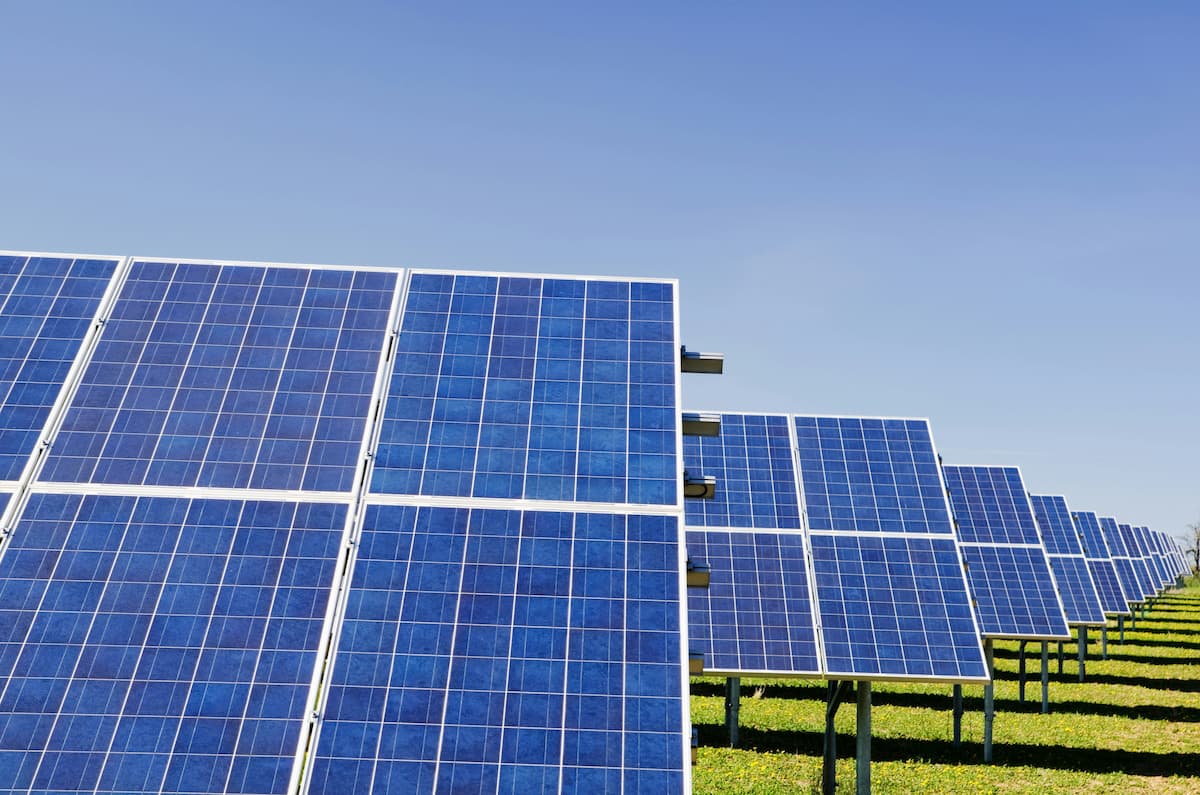
Solar power generates electricity by converting sunlight into electrical energy. Most modern solar installations use photovoltaic cells, which are commonly made from silicon.
When sunlight strikes these cells, it releases electrons that create an electrical current. An inverter then converts the electricity into alternating current, the form used by homes and connected to the electrical grid.
Solar panels can be installed on residential rooftops, commercial buildings, and large areas of land designed for solar farms. This flexibility allows electricity to be generated close to where it is consumed or at larger centralized facilities.
One of solar energy’s biggest advantages is its relatively simple operation. Once installed, panels can generate electricity without requiring a continuous supply of fuel.
However, production depends on available sunlight. Panels generate no electricity at night and produce less during cloudy weather, shorter winter days, and periods when the sun is low in the sky.
Another important consideration is the difference between a solar installation’s rated capacity and its actual electricity production. A solar farm may be capable of generating a certain amount of electricity under ideal conditions, but its average output will be lower because sunlight is not available at maximum intensity throughout the day.
This distinction is important when comparing solar power with other forms of electricity generation.
Solar energy is expanding in Canada, although it remains a relatively small part of the national electricity mix. Statistics Canada reported that solar accounted for approximately 1.4 percent of electricity generation in 2025.
How Wind Energy Works
Wind turbines generate electricity by capturing the movement of air.
As wind passes over the turbine blades, their aerodynamic shape creates lift, causing the rotor to spin. That movement drives a generator, which produces electricity.
Wind farms can be constructed on land or offshore. Onshore projects are generally less expensive to develop, while offshore turbines can access stronger and more consistent winds in suitable locations.
Wind power has several advantages. Turbines can generate substantial amounts of electricity without burning fuel, and multiple turbines can be connected to supply larger electricity networks.
However, wind production is variable. Turbines require a minimum wind speed to begin generating electricity and may shut down when winds become dangerously strong. Their output also changes as wind conditions fluctuate.
Location plays an important role in determining whether a wind project is economically practical. Areas with consistent wind resources generally offer better production potential than locations with weaker or less predictable conditions.
In Canada, wind has become an increasingly important source of electricity. Statistics Canada reported that it accounted for approximately 8.2 percent of national electricity generation in 2025.
As more wind projects are developed, transmission infrastructure becomes increasingly important. Some of the best locations for wind generation are far from major population centres, meaning electricity must travel through transmission networks before reaching consumers.
How Hydroelectric Power Works
Hydroelectricity generates electricity using moving water. It is one of the oldest and most established forms of large-scale renewable energy.
Most large hydroelectric facilities use dams to hold water in reservoirs. When water is released, it flows through large pipes and turns turbines connected to generators.
The amount of electricity produced depends on the volume of water flowing through the system and the height from which it falls.
One of hydroelectricity’s greatest advantages is its ability to respond to changing electricity demand. Facilities with reservoirs can often increase or reduce production by controlling how much water passes through their turbines.
This makes hydroelectricity particularly valuable when combined with wind and solar power. When wind and solar production falls, hydroelectric facilities can increase output, provided sufficient water is available.
Canada benefits considerably from this technology. According to Statistics Canada’s preliminary 2025 figures, hydroelectricity accounted for 54.5 percent of national electricity generation. Quebec alone produced 52 percent of Canada’s hydroelectricity.
However, hydroelectricity is not completely independent of weather conditions. Droughts and changing precipitation patterns can reduce reservoir levels and limit electricity production.
Canada experienced a practical example of this challenge in 2025. Statistics Canada reported that electricity exports to the United States declined by 11.7 percent compared with the previous year, while imports increased by 8.6 percent. Continuing drought-like conditions and increased electricity demand contributed to these changes.
This illustrates an important point: even established renewable systems can face supply pressures when environmental conditions change.
Large hydroelectric projects also carry environmental consequences. Dams can alter river ecosystems, affect fish migration, change water temperatures, and sometimes require communities to relocate. These impacts need to be considered when evaluating new projects.
Why Renewable Energy Is Growing
Several developments have contributed to the expansion of renewable energy.
One of the most important is the declining cost of solar and wind technology. Improvements in manufacturing, equipment efficiency, and installation methods have made many renewable projects more affordable than they were in the past.
Electricity demand is also increasing. Electric vehicles, heat pumps, industrial activity, and data centres are creating additional demand for electricity in many countries.
Governments are another important factor. Many have introduced emissions-reduction targets and policies designed to encourage investment in lower-emission electricity generation.
The global electricity figures for 2025 illustrate how quickly the industry is changing.
According to Ember’s Global Electricity Review 2026, solar power supplied approximately 75 percent of the growth in global electricity demand during 2025. Solar and wind together met almost all of the increase in demand.
This was a significant development because it meant that growth in electricity consumption did not automatically require an increase in fossil-fuel generation.
The International Energy Agency also reported that global renewable electricity generation increased by approximately 8.5 percent in 2025, with solar photovoltaic generation recording its largest annual increase to that point.
However, the transition remains uneven. Countries have different natural resources, electricity infrastructure, economic conditions, and energy requirements. Some can expand renewable generation relatively easily, while others face more difficult technical and financial challenges.
Why Canada’s Renewable Electricity Advantage Matters
Canada provides an interesting example of how geography and existing infrastructure can influence the development of renewable energy.
Its large hydroelectric resources have allowed the country to generate a substantial share of its electricity without relying on fossil fuels. This gives Canada a different starting position from countries where coal and natural gas supply most electricity.
Hydroelectric reservoirs can also provide flexibility that helps balance other sources of generation. When wind production decreases or solar output falls after sunset, hydroelectric facilities can sometimes increase their electricity production to compensate.
This creates opportunities to integrate additional renewable capacity without relying entirely on batteries or other storage technologies.
However, Canada’s electricity system is not uniform across the country. Provinces have different generation mixes, natural resources, and infrastructure requirements.
Quebec, Manitoba, and British Columbia have extensive hydroelectric resources. Other provinces rely on a broader combination of nuclear, hydroelectric, wind, natural gas, and other sources.
The Canada Energy Regulator has documented substantial differences in provincial electricity generation, illustrating why national renewable energy statistics do not tell the entire story.
For Canada, the next stage of renewable development will involve more than simply adding wind turbines and solar panels. Expanding transmission infrastructure, maintaining existing hydroelectric facilities, and accommodating increasing electricity demand will also be important.
The Benefits of Renewable Energy
Renewable energy offers several important advantages, particularly when it replaces electricity generated from fossil fuels.
Lower operating emissions
Solar panels and wind turbines produce electricity without burning fossil fuels during normal operation. Hydroelectric facilities also generally have relatively low operating emissions, although some reservoirs can release methane as organic material decomposes underwater.
The manufacturing, construction, transportation, and eventual disposal of renewable equipment still have environmental impacts. Nevertheless, these technologies generally produce substantially fewer lifecycle greenhouse gas emissions than conventional fossil-fuel electricity generation.
Reduced dependence on fuel supplies
Solar and wind installations do not require a continuous supply of coal or natural gas to generate electricity. This can reduce exposure to international fuel prices and supply disruptions.
Improved air quality
Replacing coal- and oil-fired electricity generation can reduce emissions of pollutants that contribute to smog and respiratory problems.
Long-term energy development
Renewable projects can create employment and investment opportunities in manufacturing, construction, engineering, maintenance, and electricity infrastructure.
The benefits vary depending on the technology and location, but together they explain why renewable energy has become an important part of energy planning around the world.
The Challenges of Renewable Energy
Despite its advantages, renewable energy faces several practical challenges.
The most widely discussed is intermittency. Solar panels cannot generate electricity at night, while wind turbines depend on changing weather conditions.
Electricity systems, however, must maintain a balance between supply and demand. Too little electricity can threaten reliability, while excess production can create its own operational problems.
This is why increasing renewable generation requires changes to how electricity networks are managed.
Energy Storage
Energy storage allows electricity produced during periods of high generation to be saved for later use.
Battery systems are increasingly being installed alongside renewable projects. They can store excess electricity during periods of strong solar or wind production and release it when generation falls or demand increases.
However, batteries do not create electricity. They shift electricity from one period to another, and some energy is lost during the storage and discharge process.
Most current battery installations are designed to provide storage over relatively short periods. Providing electricity through several consecutive days of weak wind or limited sunlight can require much larger and more expensive storage systems.
Other technologies, including pumped-storage hydroelectricity, can also store energy by moving water to a higher elevation when electricity is available and releasing it later to generate power.
Transmission Infrastructure
Renewable energy resources are not always located near the communities and industries that consume electricity.
Large wind farms may be built in areas with strong and consistent winds, while solar farms require suitable land and sunlight. Transmission lines are needed to move that electricity to population centres.
Building new transmission infrastructure can be expensive and time-consuming. Projects may require environmental assessments, land agreements, regulatory approvals, and coordination between different jurisdictions.
Without sufficient transmission capacity, some renewable electricity may be unable to reach consumers even when it is available.
Grid Reliability and Flexible Generation
Electricity grids need enough available generation to respond to changes in demand and unexpected disruptions.
Hydroelectric reservoirs, natural gas plants, nuclear power, battery storage, and other resources can each contribute to system reliability in different ways.
The right combination depends on the electricity system. A region with extensive hydroelectric infrastructure may have different requirements from one that relies heavily on wind and solar.
The goal is not simply to generate as much renewable electricity as possible. It is to build a system that can deliver dependable power under a wide range of conditions.
Environmental and Land-Use Considerations
Renewable energy projects are not entirely free of environmental impacts.
Wind turbines can affect birds and bats, solar farms require land and materials, and hydroelectric dams can significantly change waterways.
Manufacturing solar panels, batteries, and turbines also requires raw materials, energy, and industrial processes.
These impacts do not eliminate the environmental advantages of renewable energy, but they demonstrate why project location, construction methods, resource management, and end-of-life recycling matter.
What Does the Future of Renewable Energy Look Like?
Renewable energy is expected to remain an important source of electricity growth as demand increases and technology continues to develop.
Solar and wind installations are likely to expand further, while improvements in batteries, transmission networks, and electricity management will influence how much variable renewable power can be integrated into existing systems.
One of the most important developments to watch is the relationship between electricity generation and storage.
Producing large amounts of electricity during sunny or windy periods is only useful if the grid can transport, consume, or store that power. As renewable generation grows, the ability to manage periods of both surplus and shortage will become increasingly important.
Canada’s extensive hydroelectric infrastructure provides an advantage, but maintaining that advantage will require continued investment and careful management of water resources.
Other countries may need a different combination of storage, flexible generation, transmission, and renewable technologies to achieve similar levels of reliability.
The global electricity figures show that renewable energy is no longer a marginal part of the power sector. In 2025, it supplied approximately one-third of global electricity generation, while solar and wind continued to expand rapidly.
The transition is not simply about replacing one type of power plant with another. It involves reshaping how electricity is generated, stored, transported, and consumed.
Renewable energy has already changed the global electricity landscape. How far that transformation goes will depend on whether countries can build systems that combine cleaner generation with the reliability and flexibility modern economies require.
SOURCES: International Energy Agency, Ember, Statistics Canada, Canada Energy Regulator.