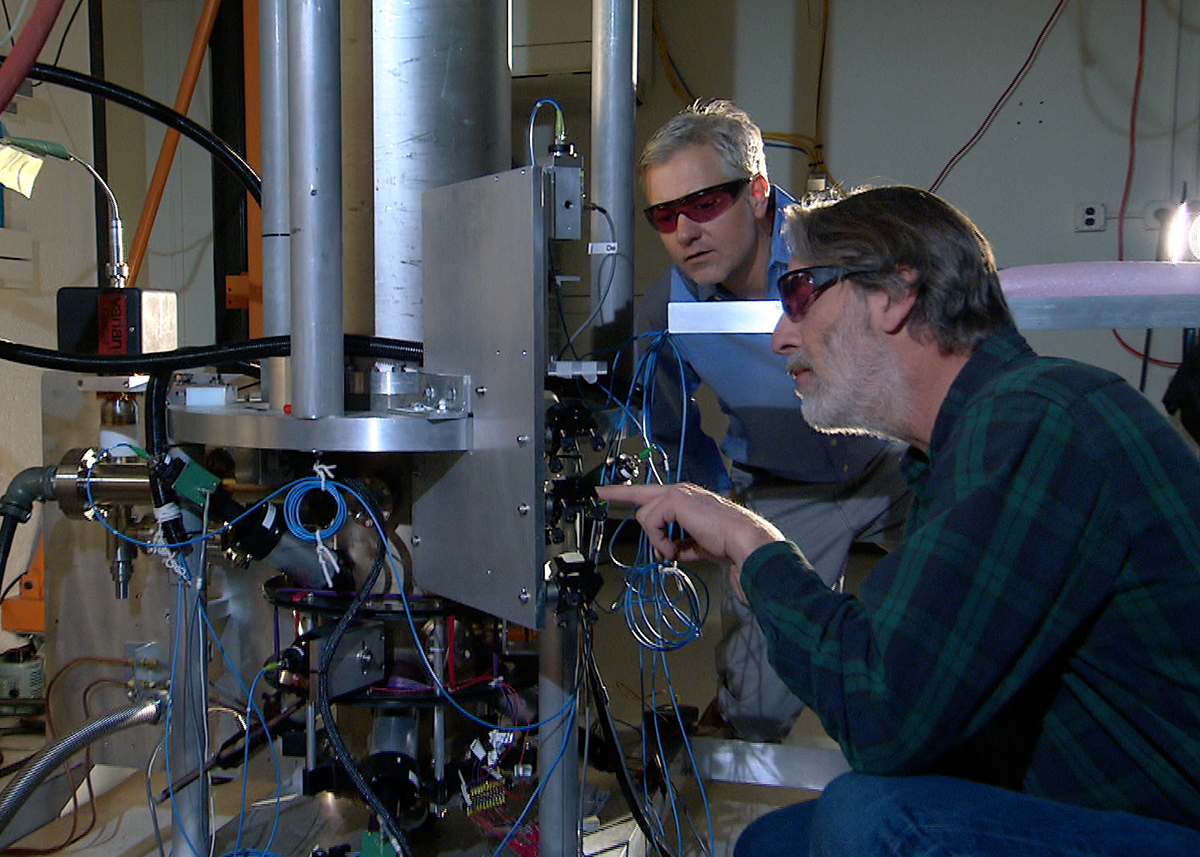
Few scientific pursuits carry as much long-term potential as nuclear fusion. Often described as the process that powers the Sun and stars, fusion represents one of humanity’s most ambitious goals: generating large-scale, clean energy by combining light atomic nuclei.
While still in the experimental and demonstration phase, fusion research has made encouraging progress in recent years, fueled by both government programs and growing private investment.
What Is Nuclear Fusion?
Nuclear fusion is the process in which two light atomic nuclei combine to form a heavier nucleus, releasing large amounts of energy. This differs from nuclear fission, which splits heavy atoms and powers today’s conventional nuclear plants. The most commonly studied fusion fuels are deuterium — abundant in seawater, and tritium — produced from lithium inside the reactor. Deuterium is abundant in seawater, while tritium is scarce and would need to be produced from lithium inside a future fusion reactor. Together, these fuels could support a sustainable long-term energy system if the technical challenges of tritium breeding and fuel management are solved.
Potential Advantages of Fusion
If successfully developed at scale, fusion could deliver extremely high energy output from small amounts of fuel, no direct greenhouse gas emissions during operation, significantly reduced long-lived radioactive waste compared to fission, and abundant and widely distributed fuel resources. These benefits make fusion one of the most attractive options for future clean baseload power.
Why Fusion Is So Difficult
Creating controlled fusion on Earth requires heating and confining an extremely hot plasma — typically around 100–150 million degrees Celsius for deuterium-tritium fusion — while maintaining sufficient density and confinement time for fusion reactions to occur. Researchers must heat and sustain plasma (super-hot ionized gas) at these temperatures, maintain stable confinement long enough for fusion to occur, minimize energy losses, and develop materials that can withstand intense heat and neutron bombardment. Even small instabilities can stop the reaction, making sustained operation one of the biggest technical challenges.
Recent Progress in Fusion Research
Fusion has seen several meaningful advances in laboratory and demonstration settings. Notable recent achievements include the National Ignition Facility (NIF) in the United States achieving a major fusion milestone in 2025, producing about 8.6 megajoules of energy from roughly 2 megajoules of laser energy delivered to the target. This showed significant energy gain at the fusion capsule level (not overall system net energy). China’s EAST tokamak and France’s WEST tokamak have set new records for sustaining very long-duration, high-temperature plasma, improving understanding of plasma stability and confinement, rather than producing net energy. Germany’s Wendelstein 7-X stellarator has demonstrated improved plasma stability and record-setting long-pulse operation, advancing stellarator design for steady-state fusion research. Private fusion companies have collectively raised billions in funding, with projects like Commonwealth Fusion Systems’ SPARC advancing the use of high-temperature superconducting magnets in compact tokamak designs aimed at accelerating fusion development. While these results are still experimental, they represent important steps toward practical fusion energy.
Global Efforts in Fusion Development
Fusion research is now a worldwide collaboration involving governments, national laboratories, and private companies. Major approaches include tokamak reactors (magnetic confinement), including the large international ITER project, stellarator designs offering potential advantages in long-term stability, laser-driven inertial confinement, and compact reactor concepts pursued by private startups. This variety of approaches reflects both the difficulty of the challenge and growing confidence that fusion is achievable.
Key Challenges Remaining
Despite the progress, major hurdles remain before commercial fusion becomes reality: extreme operating conditions and material durability under intense neutron flux, long-term plasma stability and confinement, achieving sustained net energy production (more usable electricity out than total energy put in), and engineering reliable, cost-effective power plants.
Why Fusion Matters
Successful fusion power could provide large-scale clean electricity to meet growing global demand, dramatic reductions in carbon emissions from the power sector, greater long-term energy security, and a form of nuclear energy with far less long-lived radioactive waste. For these reasons, fusion is widely regarded as one of the most important energy research efforts of our time.
Is Fusion Close to Commercial Use?
Fusion remains pre-commercial. Recent laboratory breakthroughs and increased private-sector activity are positive signs, but turning these advances into reliable grid-connected power plants will still require several more years of development and testing. Optimistic private timelines suggest demonstration devices in the late 2020s, with first commercial plants possibly appearing in the early-to-mid 2030s.
Frequently Asked Questions
What is nuclear fusion? It is the process of combining light atomic nuclei to release large amounts of energy, the same reaction that powers the Sun.
Why is fusion considered clean energy? It produces no direct greenhouse gas emissions and generates significantly less long-lived radioactive waste than fission.
Is fusion energy available today? No. It is still in the research, development, and early demonstration stage.
What is the biggest challenge? Achieving stable, sustained reactions that produce more energy than the entire system consumes, while solving the materials and engineering issues for long-term operation.
Could fusion replace fossil fuels? Potentially yes in the long term. It could provide reliable, high-density clean power at massive scale, complementing other clean energy sources.
Conclusion
Nuclear fusion remains one of the most promising long-term solutions for clean, abundant energy. While commercial power plants are still years away, steady scientific progress, record-setting experiments, and strong global collaboration continue to move the field forward. If achieved at scale, fusion could play a transformative role in the world’s future energy systems.
SOURCES: ITER, U.S. Department of Energy, International Atomic Energy Agency, U.S. Nuclear Regulatory Commission, Lawrence Livermore National Laboratory.