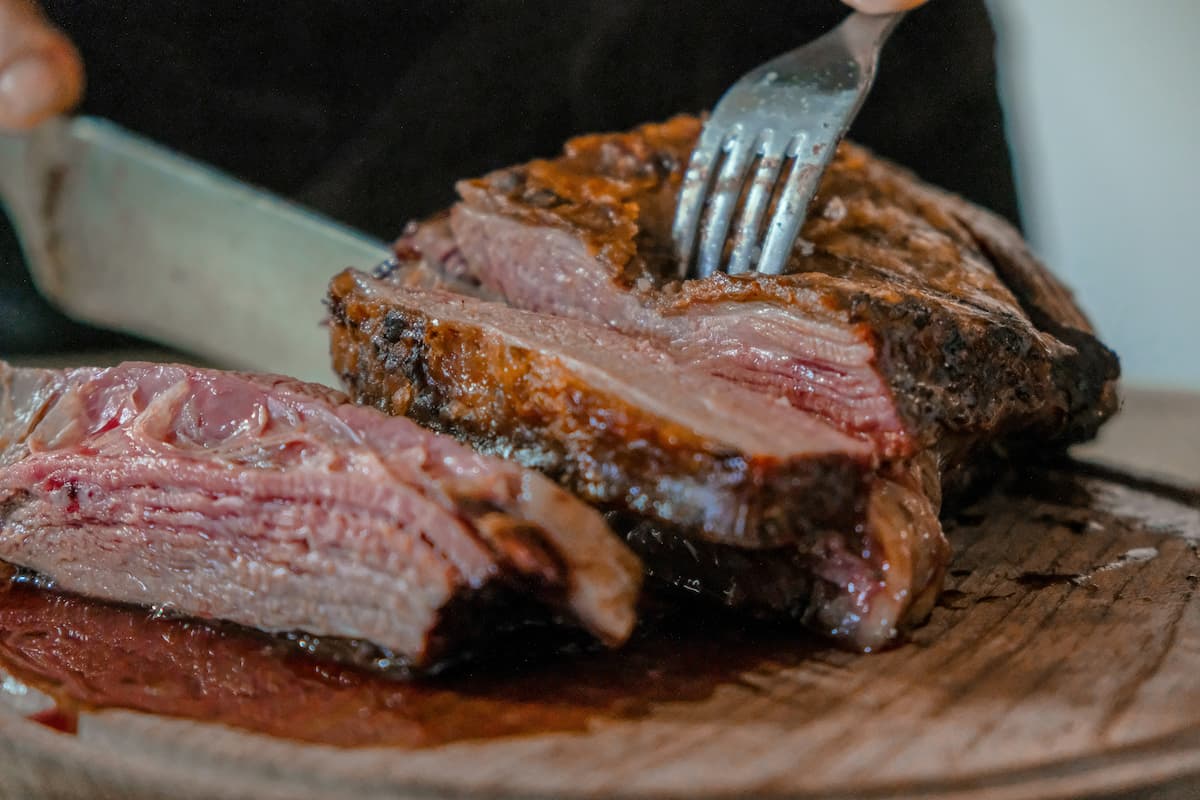
The carnivore diet has attracted a devoted following online, including people with autoimmune diseases.
The idea is straightforward: eliminate virtually all plant foods and eat primarily meat, fish, eggs and, depending on the version, dairy. Supporters often say the approach has helped with joint pain, digestive problems, skin symptoms and other issues they associate with inflammation.
Those personal experiences are real to the people reporting them. The harder question is whether the carnivore diet itself is responsible—and whether the results hold up when researchers study it systematically.
So far, the evidence is much less certain than the claims circulating online.
What is the carnivore diet?
The carnivore diet is an extremely restrictive eating pattern that eliminates plant foods.
Depending on the version, people may eat:
- Beef and other red meat
- Poultry
- Fish and seafood
- Eggs
- Animal fats
- Dairy products in some versions
Foods such as fruits, vegetables, grains, legumes, nuts and seeds are generally excluded.
Some versions are relatively broad, while others are much stricter. The so-called “lion diet,” for example, is typically limited to ruminant meat, salt and water.
That distinction matters because there is no single standardized carnivore diet. Researchers are therefore not necessarily studying the exact same diet that different people follow in the real world.
Can the carnivore diet treat autoimmune disease?
There is currently no strong clinical evidence showing that a carnivore diet can cure, reverse or reliably treat an autoimmune disease.
That does not mean nobody experiences improvements.
People with autoimmune or inflammatory conditions sometimes report that certain symptoms improve after changing their diet. The problem is that personal experiences cannot establish whether the diet caused the improvement.
Autoimmune diseases can naturally fluctuate. Symptoms can also change because of medication, weight loss, stress, sleep, exercise, other dietary changes or simply the passage of time.
Without well-controlled clinical trials, it is difficult to separate those factors.
What does the research actually show?
The most important recent evidence came in January 2026, when researchers published a scoping review examining the scientific literature on the carnivore diet.
The researchers found only nine human studies that met their criteria.
Some of those studies reported potentially positive findings, including weight loss, increased satiety and possible changes in certain metabolic or inflammatory markers.
But the evidence had major limitations. Studies generally involved small numbers of participants, short follow-up periods and, importantly, lacked strong control groups.
That means the research currently cannot tell us whether the carnivore diet produces lasting benefits or whether the reported improvements would have occurred with other dietary changes.
The review concluded that the long-term effects remain uncertain and that long-term adherence to a carnivore diet cannot currently be recommended on the available evidence.
That is a much more useful conclusion than simply saying the diet “works” or “doesn’t work.”
What about autoimmune diseases specifically?
This is where the evidence becomes even thinner.
Autoimmune disease is not one condition. Rheumatoid arthritis, psoriasis, multiple sclerosis, Crohn’s disease, lupus and type 1 diabetes involve different biological processes and can respond differently to dietary changes.
There is growing interest in how different diets might influence immune activity, metabolism and the gut microbiome. But research on broader dietary approaches should not automatically be interpreted as evidence for the carnivore diet.
Recent research into ketogenic and low-carbohydrate diets is somewhat more encouraging, but it still does not establish the carnivore diet as an autoimmune treatment.
A 2026 review of ketogenic diets in rheumatoid arthritis, psoriatic arthritis and psoriasis found the strongest human signals in psoriatic disease, particularly among people with obesity or metabolic problems. However, most of the available studies were small, relatively short and affected by factors such as weight loss. The researchers called for larger and better-controlled trials.
And a low-carbohydrate or ketogenic diet is not necessarily a carnivore diet.
Someone can substantially reduce carbohydrates while still eating vegetables, fruit, nuts, seeds and other plant foods. Eliminating virtually all plant foods is a much more extreme intervention.
Why do some people feel better on carnivore?
This is one of the more interesting questions—and there are several possible explanations.
Someone who starts a carnivore diet may simultaneously eliminate a large number of foods. That can make it difficult to identify exactly what produced a change.
For example, a person may suddenly stop eating:
- Ultra-processed foods
- Refined carbohydrates
- Added sugars
- Alcohol
- Certain foods they personally tolerate poorly
- Large amounts of highly processed fats or snacks
They may also lose weight, consume fewer calories, change their eating schedule or simply eat a much narrower range of foods.
Any of these changes could affect how someone feels.
There is also the possibility that a particular food or dietary component genuinely aggravates symptoms in an individual. Removing that trigger could produce a noticeable improvement.
But that would not necessarily mean that meat itself is treating the autoimmune disease.
It could instead mean that removing a specific trigger—or changing the overall diet—made the person’s symptoms easier to manage.
The elimination effect is important
In practice, the carnivore diet functions much like an extreme elimination diet.
If someone eats only a handful of foods, there are far fewer possible dietary triggers remaining.
That can make an improvement feel dramatic.
But it also creates a problem: if symptoms improve, it becomes difficult to know which part of the diet was responsible.
Was it the absence of gluten? Dairy? Certain fermentable carbohydrates? Ultra-processed food? Added sugar? A particular plant food? Weight loss? Or something else entirely?
A strict carnivore diet removes almost everything at once, so it is not a particularly precise experiment.
Carnivore vs. ketogenic and low-carb diets
These diets are often grouped together online, but they are not interchangeable.
A low-carbohydrate diet simply reduces carbohydrate intake.
A ketogenic diet restricts carbohydrates enough to promote nutritional ketosis, but it can still include vegetables, nuts, seeds, dairy and other plant foods.
A carnivore diet removes essentially all plant foods.
That difference is important when interpreting research.
If a study finds that a ketogenic diet may have benefits for a particular autoimmune condition, it does not prove that eliminating vegetables, fruit, legumes and other plant foods provides the same benefit.
The same caution applies to research showing that lower-carbohydrate diets may influence metabolic or inflammatory pathways. Those findings may help explain why some people report feeling better, but they do not establish that an all-animal-food diet provides the same effects.
What about inflammation?
Inflammation is central to many autoimmune diseases, which is one reason the carnivore diet has attracted so much attention.
Some people report lower joint pain, fewer digestive symptoms or improvements in skin problems after switching to the diet.
There are also plausible biological mechanisms researchers are investigating. Changes in carbohydrate intake, energy metabolism and the gut microbiome can influence immune and inflammatory pathways.
But a plausible mechanism is not the same as a demonstrated clinical benefit.
This distinction is important because it is easy to move from “this could affect an inflammatory pathway” to “this diet treats inflammation.” The research does not currently justify that leap.
And again, evidence involving low-carbohydrate or ketogenic diets more broadly should not automatically be presented as evidence for a strict carnivore diet.
The potential nutritional downside
The other side of the carnivore debate is what gets removed from the diet.
Eliminating all plant foods means eliminating major sources of dietary fiber and substantially reducing exposure to the wide variety of vitamins, minerals and other compounds found in fruits, vegetables, legumes, nuts and whole grains.
The 2026 carnivore scoping review identified potential concerns involving nutrients including vitamins C and D, calcium, magnesium and iodine, as well as fiber. It also identified concerns about elevated LDL cholesterol and total cholesterol in some reports.
That does not mean every person following a carnivore diet will become deficient or develop high cholesterol.
Food choices vary considerably. Someone eating fish, eggs, dairy and a wide variety of animal foods is not eating the same diet as someone eating only steak.
But the narrower the diet becomes, the more important nutritional adequacy becomes.
What about cholesterol and heart health?
This is another unresolved issue.
Some people experience improvements in weight, blood sugar or triglycerides while following very-low-carbohydrate diets. At the same time, carnivore diets can be high in saturated fat, and some people experience substantial increases in LDL cholesterol.
That matters because elevated LDL cholesterol is an established cardiovascular risk factor.
Health Canada currently recommends replacing foods that contain mostly saturated fat with foods containing mostly unsaturated fat because doing so lowers total and LDL cholesterol. Its dietary guidance also encourages eating a variety of foods, including vegetables and fruits, whole grains and protein foods.
This does not prove that every carnivore diet is harmful to the heart. It does mean that claims about long-term cardiovascular safety should be treated cautiously while better evidence is still being developed.
Could carnivore help some people?
Possibly—but that is different from saying it is an established treatment.
There may be individuals who experience meaningful improvements after adopting a carnivore diet. Their experiences should not simply be dismissed because the research is incomplete.
At the same time, individual success stories cannot tell us how many people improve, how many see no change and how many experience negative effects.
That is why controlled research matters.
The question is not whether anyone has benefited. Almost any diet can produce individual success stories.
The more important question is whether the diet produces consistent, clinically meaningful benefits across people with a particular disease—and whether those benefits outweigh the potential risks.
We do not have that answer yet.
Should someone with an autoimmune disease stop their medication?
The current evidence does not support replacing prescribed autoimmune treatment with a carnivore diet.
Autoimmune diseases can cause permanent tissue or organ damage when inflammation is not adequately controlled. Someone who feels better after changing their diet should not assume that the underlying disease has disappeared.
Diet can potentially be part of an overall approach to health, but it should not automatically be treated as a substitute for evidence-based medical treatment.
Anyone considering a highly restrictive diet—particularly someone taking medication or managing a chronic disease—should discuss the change with a qualified healthcare professional.
What does the evidence support right now?
The most defensible conclusion is surprisingly simple.
The carnivore diet is an interesting but poorly studied dietary intervention.
There are legitimate reasons to investigate it further. People report improvements, some low-carbohydrate and ketogenic approaches have shown promising results in certain autoimmune conditions, and researchers are increasingly interested in the relationship between diet, metabolism, the gut microbiome and immune function.
But the evidence is nowhere near strong enough to say that carnivore diets treat autoimmune disease.
The biggest problem is not that researchers have proven the diet does not work.
It is that there has not been enough high-quality research to know whether it works, for whom, and under what circumstances.
The 2026 scoping review found just nine human studies specifically examining the carnivore diet, with important limitations in study size, duration and design.
That leaves a substantial gap between the confidence of some online claims and what the scientific literature can actually support.
The bottom line
The carnivore diet may help some people feel better, but current evidence does not establish it as a treatment for autoimmune disease.
Some of the improvements people report could come from losing weight, eliminating ultra-processed foods, removing individual dietary triggers, reducing carbohydrates or making other lifestyle changes at the same time.
There is also a genuine research question about whether certain low-carbohydrate or ketogenic approaches could benefit particular autoimmune conditions. Early evidence is interesting, but it remains preliminary.
The carnivore diet is a much more restrictive approach, and the specific evidence supporting it is currently very limited.
For now, the fairest conclusion is neither that carnivore is a miracle cure nor that every person who feels better on it is imagining the improvement.
The evidence simply is not strong enough yet to know.
As research into diet and autoimmune disease continues, larger and longer clinical trials will be needed to determine whether the reported benefits are real, which patients might benefit, and what the long-term trade-offs may be.
SOURCES: Lietz et al., Nutrients, January 2026 (carnivore scoping review); Autoimmunity Reviews, 2026 (ketogenic diets in RA, PsA and psoriasis); Health Canada (saturated fat and Canada’s Food Guide).