Spain’s independent rail accident authority said on 29 October that a collision near Urda two days earlier had killed 69 people, with the figure expected to change. The Autoridad Administrativa Independiente para la Investigación Técnica de Accidentes e Incidentes Ferroviarios, Marítimos y de Aviación Civil (AITAT) issued its first technical note after the first 24 hours, stating that a Renfe AVE had struck a stopped Iryo train from behind on the Madrid–Seville high-speed line.
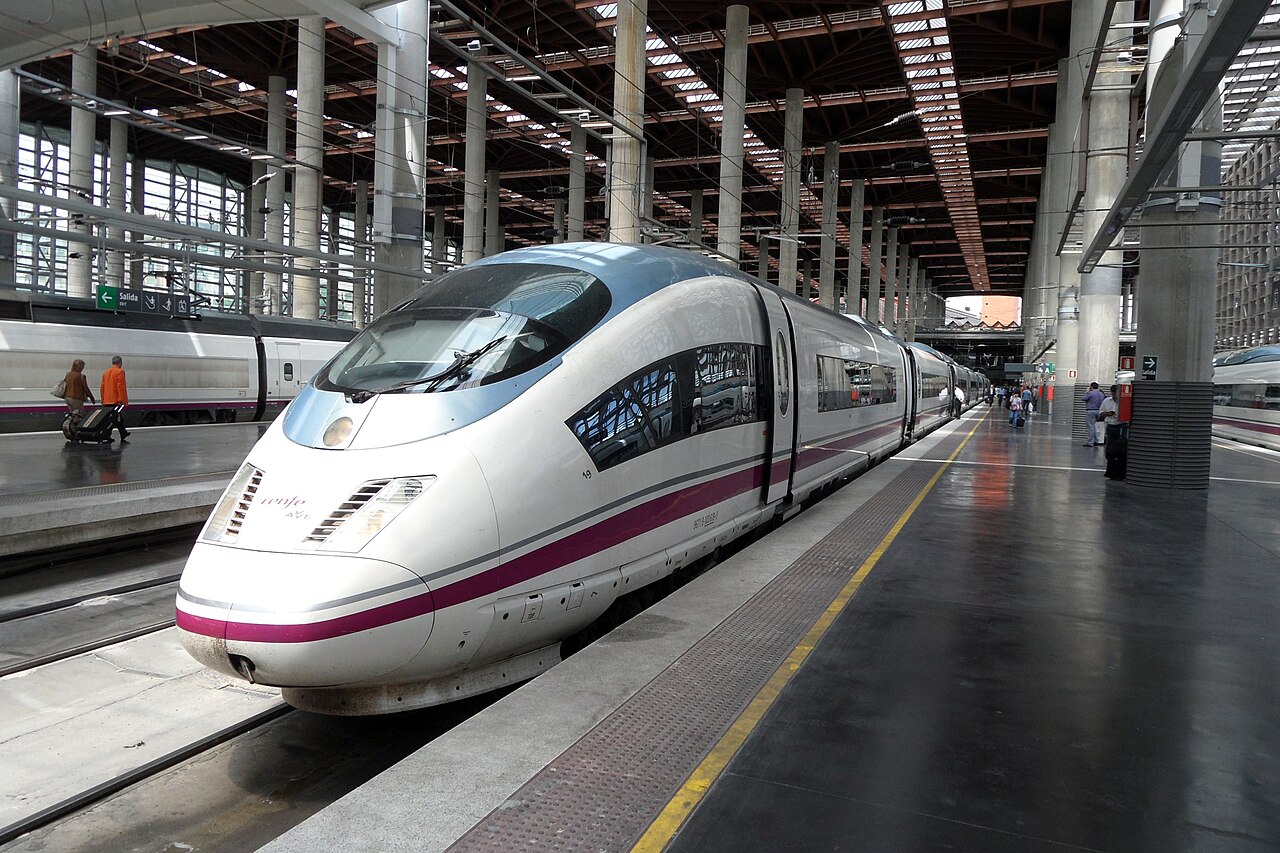
The note placed the collision at 8:53 a.m. on 28 October at kilometre point 118+800 on track 2, at the entrance to Urda station in Toledo province. Iryo train 6076, a Hitachi ETR1000 carrying 147 passengers and five crew, was stopped at entry signal E242. Renfe AVE 2080, a Siemens set carrying 379 passengers and seven crew, struck it. AITAT estimated the impact speed at between 160 and 200 km/h and said the precise figure would not be known until data were extracted from the trains’ on-board legal recorders.
The AITAT note said the leading car of the Renfe train embedded itself in the rear car of the Iryo, after which both cars overturned at the foot of the embankment. The rest of the Renfe train derailed, with six cars remaining on the track platform and one falling down the slope; all but the two leading cars of the Iryo also derailed, and three of its cars went down the embankment. Investigators recovered the trains’ on-board legal recorders on 29 October; the devices are in the custody of the Civil Guard. The note recorded significant damage to the infrastructure and said the Madrid–Seville high-speed line remained closed with no reopening date given at the time of writing.
Castilla-La Mancha President Emiliano García-Page confirmed on 30 October that the official toll remained 69 complete bodies verified by judicial and Civil Guard authorities—68 recovered at the site and one person who died in hospital—while 70 missing-person reports had been filed. He said partial human remains had also been recovered and that the number of dead could rise. Of 110 people initially hospitalised in the region, 71 had been discharged and 39 remained in hospital, some in intensive care. The regional emergency level was reduced to Situation 1.
Public statements from AITAT and the regional government do not confirm the exact impact speed, the precise sequence of control-room instructions, or a final cause for these two named trains. AITAT said a failure of the LZB train-control system began at 8:31, after which trains operated under the lateral signalling block, and that a chain of faults, instructions and actions had led to the collision without mitigating barriers acting. It described the note as preliminary.
In January 2026 an Iryo train derailed near Adamuz in Córdoba province and was struck by an oncoming Renfe Alvia, killing 46 people, according to official tallies reported at the time. That earlier figure is a background count of a separate incident and is not a tally of the objects involved near Urda on 28 October.
Spain has declared three days of national mourning. The Madrid–Seville high-speed line remains closed. AITAT has opened case 146/2026 and said its final report is due within one year.
SOURCES: AITAT, Castilla-La Mancha regional government, Reuters, BBC, AP.