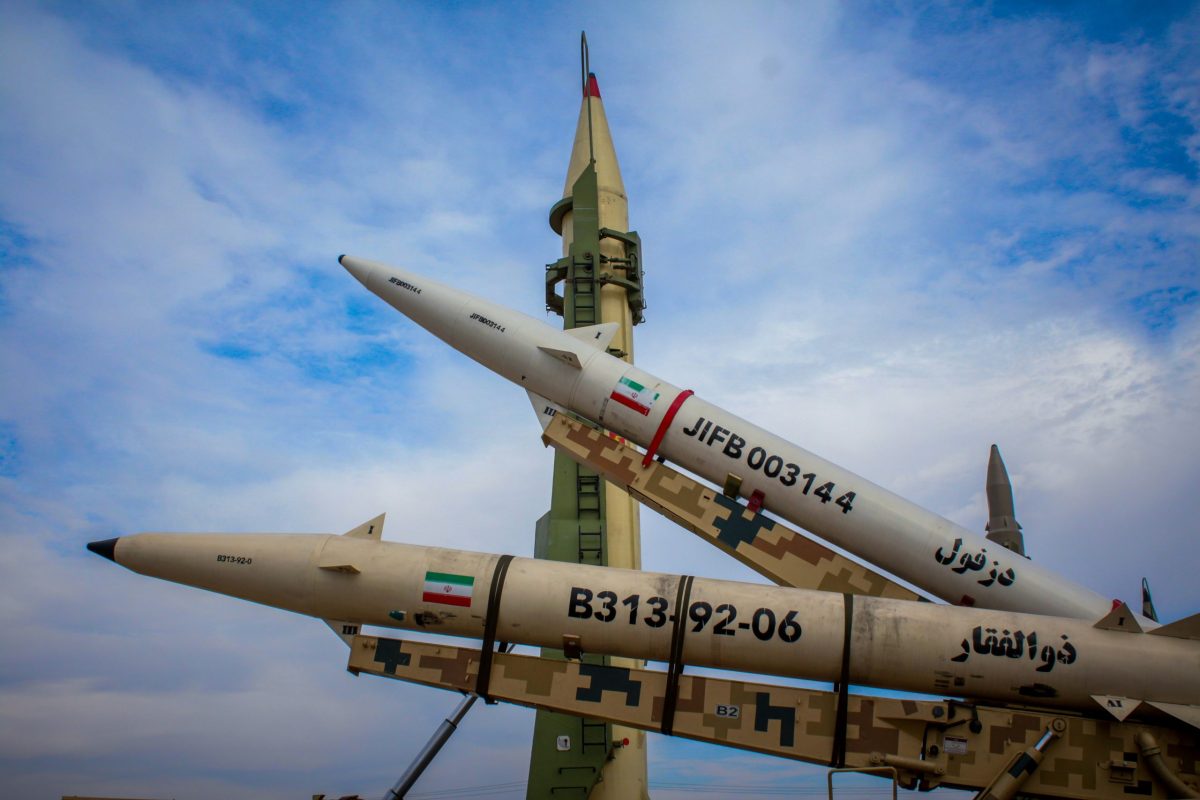
U.S. Central Command said U.S. forces began striking Islamic Revolutionary Guard Corps targets in Iran at noon Eastern Time on September 1 and later said the wave of strikes had been completed. CENTCOM said the targets included air defense sites, radar systems, maritime assets and facilities, mine-laying capabilities, and communications sites.
CENTCOM said the strikes followed recent attempted IRGC attacks on commercial shipping in the Strait of Hormuz and on U.S. service members in the region. President Donald Trump described the strikes as retaliation and warned that further Iranian action would be met with a stronger U.S. response.
Iranian state media reported explosions and damage in several southern locations, including areas near the Strait of Hormuz such as Bandar Abbas, Qeshm, Sirik, Chabahar, and Konarak. Iranian officials also reported additional strikes in Khuzestan province.
Iranian authorities and the Iranian Red Crescent Society said a U.S. missile strike or associated shrapnel hit a residential home in Kuhestak, in Sirik county of Hormozgan province, where a wedding ceremony was underway. The Red Crescent said four people were killed, including a child, and more than 50 people were injured. Some Iranian officials and later media reports put the wedding-site death toll at five and the number of wounded as high as 63 to 68. Hormozgan officials later identified four of the dead as a 4-year-old child, a 16-year-old, and two adults. The Red Crescent said some of the wounded were in critical condition and that the death toll could rise.
CENTCOM spokesman Tim Hawkins said the U.S. military was aware of the civilian-casualty reports, which he said originated from Iranian state media, and that it was looking into them. He said the U.S. military never targets civilians. The United States has not independently confirmed the wedding-site casualty figures.
Iran said it responded with missile and drone attacks on U.S. assets in Jordan, Bahrain, Kuwait, and Iraq. Jordan’s military said it intercepted 10 of 13 ballistic missiles and that the remaining three landed in remote areas. Bahrain and Kuwait said they activated air defenses against incoming drones. Kuwait reported a drone-related fire at a residential complex with no casualties. The IRGC claimed U.S. personnel were killed; U.S. officials said initial assessments showed no U.S. casualties.
The exchange ended a roughly one-month stretch without a comparable direct military exchange in a conflict that has lasted more than six months and has disrupted shipping through the Strait of Hormuz, a major route for global oil transport.
SOURCES: U.S. Central Command, Reuters, BBC, Associated Press, The Guardian, The New York Times, Iranian Red Crescent Society, Iranian state media