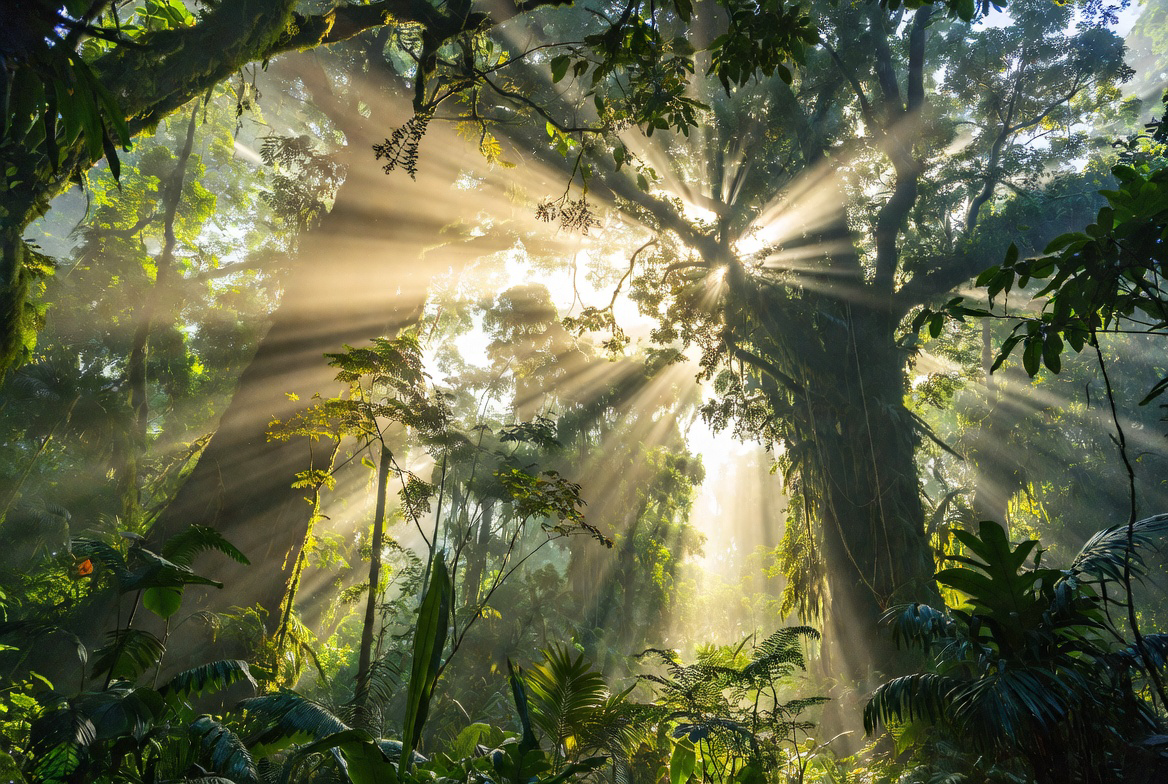
We all grew up believing trees grow out of the soil. Roots reach into the dirt, pulling up what they need to build towering trunks, branches, and leaves. But modern science reveals a far more surprising truth: the vast majority of a tree’s dry mass consists of carbon, oxygen, and hydrogen, with carbon entering primarily from carbon dioxide (CO₂) in the air and hydrogen coming from water.
Soil plays a vital supporting role by providing water, trace minerals, and anchorage. Yet it contributes only a tiny fraction of the actual building blocks. A giant oak or sequoia is largely “solidified air”, created through the elegant chemistry of photosynthesis.
The Classic Experiment That Challenged Old Ideas
In the early 1600s, Belgian scientist Jan Baptist van Helmont performed one of the first careful quantitative experiments in biology. He planted a 5-pound willow sapling in a pot containing 200 pounds of dried soil. For five years, he added only rainwater or distilled water—no extra soil or nutrients.
At the end:
– The tree had grown to about 169 pounds (a gain of roughly 164 pounds).
– The soil had lost just 2 ounces.
Van Helmont concluded the added mass came mostly from water. He was closer to the truth than earlier beliefs that plants “ate” soil, but he didn’t yet understand the role of atmospheric gases. The bulk of the gained mass actually came from carbon atoms fixed from CO₂ in the air.
How Photosynthesis Builds a Tree from Air and Water
Trees do not consume soil the way animals eat food. Instead, their leaves act as solar-powered factories through photosynthesis:
6 CO₂ (from air) + 6 H₂O (from soil) + sunlight energy → C₆H₁₂O₆ (glucose) + 6 O₂ (oxygen released)
The glucose produced serves as both energy and raw material. It is converted into cellulose and lignin—the primary compounds that form wood, bark, and fibers. Carbon atoms from atmospheric CO₂ make up roughly 45–50% of a tree’s dry biomass.
– A living tree is typically 40–60% water by weight.
– Carbon makes up roughly 45–50% of a tree’s dry biomass and enters primarily through atmospheric CO₂. Along with oxygen and hydrogen, these elements account for most of the tree’s dry mass; mineral nutrients from soil make up only a small fraction.).
– Soil minerals (such as nitrogen, phosphorus, and potassium) account for just 1–5% of the dry mass. They are essential for healthy growth but not the main source of bulk.
Nobel laureate Richard Feynman explained it memorably: Trees come “out of the air.” The carbon in wood originates as CO₂ from the atmosphere. When wood burns, the carbon reunites with oxygen, releasing stored sunlight energy and leaving only a small amount of ash from soil minerals.
Why the Misconception Persists—and Why the Reality Matters
We see roots embedded in dirt and naturally assume that’s where most growth originates. In reality, if trees drew the bulk of their mass from soil, mature forests would leave behind large craters—which they do not. Soil’s primary roles are to anchor the tree and supply water along with small amounts of nutrients.
This process positions forests as powerful “carbon sinks”. Trees pull CO₂ from the atmosphere and store it in wood for decades or centuries. Understanding the cycle highlights the value of reforestation and the consequences of large-scale deforestation.
The oxygen we breathe is a key byproduct of photosynthesis, and everyday items like wooden furniture or firewood were once atmospheric gas transformed by sunlight and water.
The Scale of This Natural Wonder
To produce just one kilogram of dry wood, a tree processes thousands of cubic meters of air to extract sufficient CO₂. Next time you see a tall tree, consider that you are looking at nature’s remarkable recycler—building solid, living architecture primarily from thin air, water, and sunlight.
SOURCES: USDA Forest Service; Cambridge University Press, van Helmont’s willow experiment; Richard Feynman, Fun to Imagine; peer-reviewed research on plant biomass composition and photosynthesis.