You are reading these words right now. Your eyes recognize the letters, your brain processes their meaning, and somewhere in that process, you become aware of what you’re reading.
But here’s something remarkable: scientists still cannot fully explain why that awareness exists.
Researchers can observe brain activity, identify regions involved in perception, and study what happens when consciousness changes during sleep or anesthesia. They can even investigate which patterns of neural activity accompany particular experiences.
Yet one fundamental question remains unanswered.
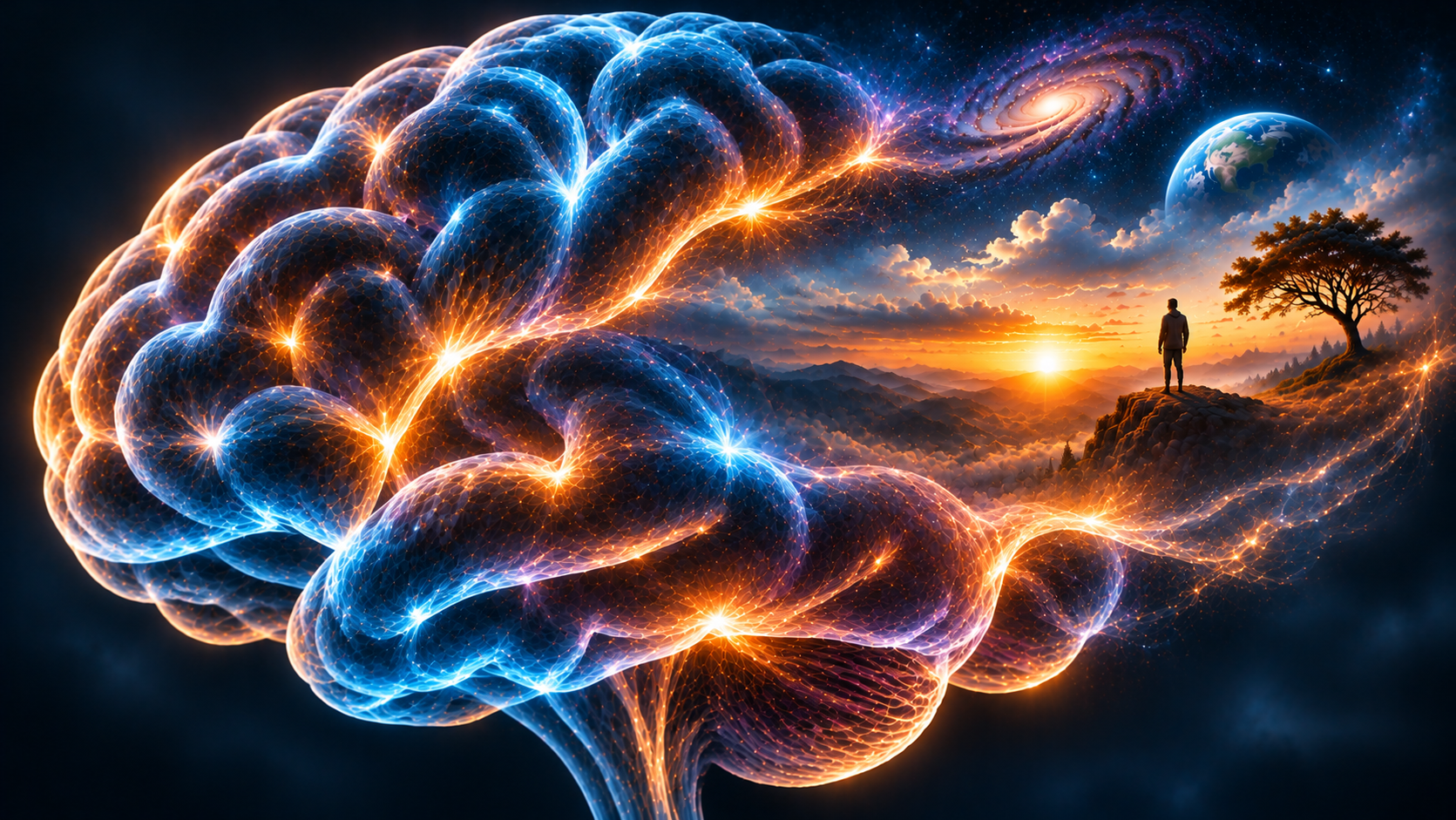
How does the physical activity of billions of nerve cells produce the feeling of being you?
It’s one of the deepest mysteries in modern science, and despite decades of research, there is still no universally accepted explanation.
What Exactly Is Consciousness?
Consciousness seems simple because we experience it constantly. But defining it scientifically is surprisingly difficult.
At its most basic, consciousness refers to subjective experience: the fact that there is something it feels like to see a colour, hear a song, experience pain, or have a thought.
Consider looking at a bright red apple.
Scientists can study how light enters your eyes, how signals travel through your visual system, and how different brain regions process colour and shape.
What remains difficult to explain is why those processes are accompanied by an actual experience of seeing red.
That distinction matters.
A brain can process enormous amounts of information without everything entering conscious awareness. Familiar actions, such as adjusting your posture or recognizing certain visual patterns, can involve processing that occurs largely outside awareness.
Consciousness involves more than information processing alone, at least as we ordinarily understand the term. It involves having an experience.
And explaining precisely how that happens is where the mystery begins.
The Brain Is Made of Physical Matter. So Where Does Awareness Come From?
The human brain contains roughly 86 billion neurons, interconnected through an extraordinarily complex network.
These cells communicate through electrical and chemical signals. Their activity supports perception, memory, movement, emotion, and thought.
Nothing about the individual components appears especially mysterious.
Neurons are biological cells. Their membranes, chemical messengers, and electrical properties can be studied using established scientific methods.
Yet when these cells operate together, the result includes something remarkable: a conscious person experiencing the world.
Scientists have established powerful connections between brain function and conscious experience.
Damage to particular brain regions can alter awareness, perception, or the sense of self. Drugs can change conscious experience. Anesthesia can profoundly disrupt awareness, while certain patterns of brain activity accompany dreaming and wakefulness.
These findings provide strong evidence that consciousness is intimately connected to brain function.
But identifying the brain activity associated with an experience is not necessarily the same as explaining why that activity produces an experience in the first place.
That gap is central to the debate.
The Hard Problem of Consciousness
In the 1990s, philosopher David Chalmers popularized a distinction between what he called the easy problems and the hard problem of consciousness.
The easy problems are not necessarily easy to solve. They include understanding how the brain processes information, directs attention, distinguishes sensory signals, and controls behaviour.
These questions are difficult, but researchers can investigate them through experiments and observations.
The hard problem asks something different.
Why should any of those physical processes feel like anything at all?
Imagine scientists eventually mapping every neuron involved when someone tastes chocolate.
They might explain how taste receptors respond, how the brain identifies sweetness, and how memories influence enjoyment.
But would that fully explain why chocolate has a particular taste from the person’s perspective?
Some philosophers and scientists argue that a complete understanding of brain mechanisms will ultimately explain subjective experience.
Others believe that even a perfect description of neural activity might leave something important unexplained.
There is no consensus on how to resolve this disagreement.
The challenge is not simply that scientists need more powerful equipment. It is also that researchers disagree about what would count as a complete explanation.
Scientists Can Observe the Brain, but Not Another Person’s Experience
One of the biggest obstacles is that consciousness is fundamentally personal.
You can describe what you see, hear, or feel. Scientists can measure your brain activity while you describe it.
But they cannot directly experience what you experience.
This creates a problem for a discipline built around objective measurement.
Consider two people looking at the same blue sky.
Researchers can compare their visual processing, ask them to identify colours, and examine patterns of brain activity.
But they cannot directly compare the private quality of blue as experienced by each person.
This does not mean consciousness is beyond scientific investigation.
Researchers use behavioural reports, brain recordings, carefully designed experiments, and studies of altered awareness to investigate conscious experience.
The difficulty is that these methods provide indirect evidence about something that is experienced from the inside.
That makes consciousness unusually challenging to study.
What Happens to Consciousness When We Sleep?
Sleep offers researchers a fascinating opportunity to study how awareness changes.
During ordinary wakefulness, people generally maintain a continuous awareness of their surroundings, although attention and perception constantly fluctuate.
During sleep, responsiveness to the outside world changes considerably.
Yet consciousness does not necessarily disappear.
Dreams can involve vivid images, emotions, conversations, and elaborate situations that feel real while they are happening.
Dreaming is especially common during rapid eye movement (REM) sleep, but conscious experiences can also occur during other sleep stages.
This reveals an important distinction: being conscious is not necessarily the same as being awake or responding to the environment.
Researchers can compare brain activity during wakefulness, dreaming, and periods when people report little or no experience.
These comparisons help identify neural patterns associated with different conscious states.
However, they have not yet produced a complete explanation of why those patterns are accompanied by subjective experience.
Anesthesia Reveals Another Piece of the Puzzle
General anesthesia provides another powerful way to investigate consciousness.
Anesthetic drugs can profoundly alter brain activity, awareness, memory, and responsiveness.
Researchers study these changes to understand how communication between brain regions relates to conscious experience.
Some evidence suggests that disrupted communication and information integration across brain networks are important features of anesthetic-induced unconsciousness.
But the relationship is complicated.
A person who is unresponsive may not necessarily lack every form of conscious experience. Some anesthetic states can involve disconnected experiences, such as dreams, even when the person does not respond to the outside world.
This distinction matters because scientists cannot always determine consciousness simply by observing behaviour.
Anesthesia research has helped reveal mechanisms associated with changes in awareness, but it has not settled the deeper question of why consciousness exists.
The Leading Scientific Theories of Consciousness
Researchers have developed several competing explanations for how consciousness relates to brain activity.
Two influential approaches are Global Neuronal Workspace Theory and Integrated Information Theory.
Global Neuronal Workspace Theory
This theory proposes that information becomes consciously accessible when it is made widely available across brain systems.
Much of the brain processes information through specialized networks without that information necessarily reaching awareness.
According to the theory, certain information can enter a global workspace, allowing multiple systems involved in attention, memory, reasoning, and decision-making to access it.
Imagine walking through a busy room.
Your brain processes countless sights and sounds. Most never become the focus of conscious attention.
But when someone calls your name, that information may become widely available to other brain systems, influencing what you notice, remember, and do next.
The theory attempts to explain how particular information becomes available for conscious processing.
An important unresolved question is whether this also fully explains the subjective feeling associated with that information.
Integrated Information Theory
Integrated Information Theory approaches consciousness from a different direction.
It proposes that consciousness is related to a system’s capacity to integrate information into a unified whole while retaining distinct possible states.
Your conscious experience does not ordinarily feel like a disconnected collection of colours, sounds, sensations, and thoughts.
Instead, these elements appear together as part of one experience.
The theory attempts to describe consciousness in terms of the causal organization of a physical system.
However, its central claims remain controversial.
Researchers disagree about how its mathematical framework should be interpreted, whether its predictions adequately explain consciousness, and how its claims can be tested.
Neither theory has achieved universal acceptance.
A Major Scientific Test Challenged Both Theories
In 2025, researchers published a major study in Nature directly comparing predictions from Global Neuronal Workspace Theory and Integrated Information Theory.
The investigation involved 256 participants and used several methods of recording brain activity, including functional magnetic resonance imaging, magnetoencephalography, and intracranial electroencephalography.
Researchers examined how the brain represented visual experiences and compared their findings with predictions established before the experiments.
The results supported some aspects of both theories.
However, they also challenged important predictions made by each.
For example, researchers did not find some of the sustained patterns of synchronization predicted by Integrated Information Theory. They also found limitations in the patterns of widespread activation and frontal representation predicted by Global Neuronal Workspace Theory.
The study did not establish that either theory was entirely wrong.
Instead, it demonstrated how difficult it remains to identify a single explanation that accounts for the available evidence.
It also showed the value of testing competing theories against the same experimental observations rather than examining them only in isolation.
The search for an explanation continues.
Could Consciousness Exist Without a Human Brain?
The mystery becomes even more complicated when scientists consider whether consciousness requires a biological brain.
Humans are conscious, and researchers investigate evidence of conscious experience in other animals.
But what properties must a system possess to have subjective experiences?
Does consciousness require neurons? Could a sufficiently complex artificial system develop it? Or does biological organization matter in ways that computers cannot easily reproduce?
These questions remain unresolved.
Artificial intelligence systems can process language, recognize patterns, solve problems, and produce responses that resemble human conversation.
However, performing sophisticated tasks does not, by itself, demonstrate subjective experience.
A computer might identify a red apple, describe its appearance, and explain how human vision works.
That does not establish that the computer experiences the colour red.
Scientists currently lack a universally accepted test for determining whether an artificial system has subjective experience.
Different theories of consciousness also lead to different expectations about which kinds of systems might be conscious.
Until researchers better understand the relationship between physical processes and subjective experience, questions about artificial consciousness will remain difficult to answer.
Why Solving Consciousness Matters
Understanding consciousness is more than an intellectual challenge.
It could have important consequences for medicine, neuroscience, and technology.
Consider patients who have experienced severe brain injuries.
Some patients cannot reliably communicate or respond to instructions, making it difficult for medical professionals to assess their awareness.
Improved methods of detecting signs of consciousness could help clinicians evaluate these patients and inform medical decisions.
Consciousness research could also improve our understanding of anesthesia, sleep, and disorders involving altered awareness.
Beyond medicine, a better scientific explanation could help researchers investigate whether different animals or artificial systems possess forms of subjective experience.
These questions carry significant ethical implications.
But answering them requires distinguishing what scientists can currently measure from what remains theoretical.
Will Scientists Ever Solve the Mystery?
There are reasons for optimism.
Neuroscience has advanced enormously in its ability to observe brain activity, investigate neural circuits, and study the mechanisms underlying perception and awareness.
Researchers can now compare competing theories using increasingly sophisticated experimental methods.
They can investigate how conscious perception differs from unconscious processing and how brain networks change across different states of awareness.
But the central challenge remains.
Even if scientists eventually identify the precise neural mechanisms necessary for consciousness, they will still need to determine whether those mechanisms explain why subjective experience exists.
Some researchers believe that question will become clearer as neuroscience advances.
Others argue that explaining subjective experience may require new conceptual approaches.
It is also possible that the disagreement partly reflects different understandings of what a scientific explanation should accomplish.
For now, no theory has resolved all these questions.
The Greatest Mystery May Be the One Inside Our Heads
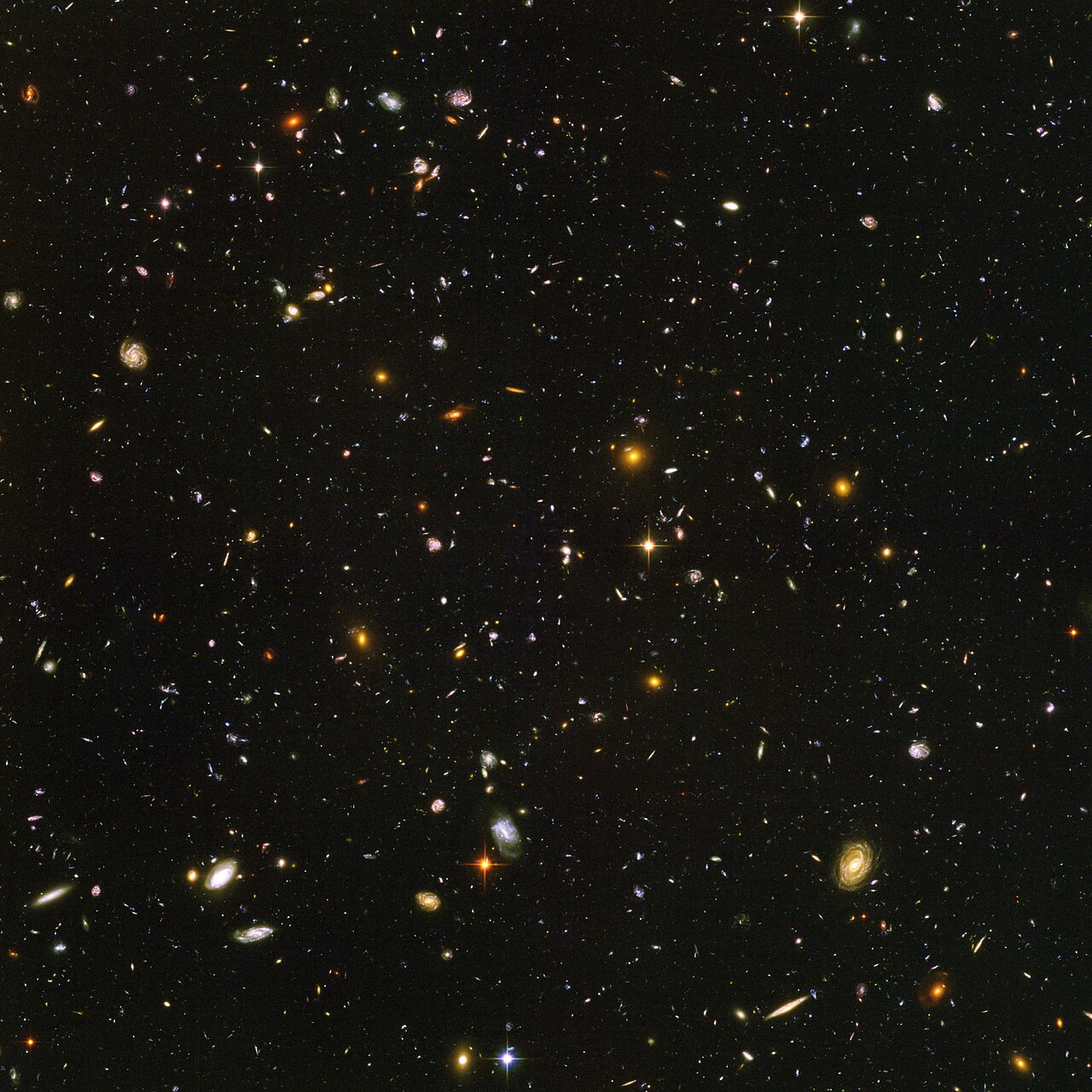
Human beings have discovered galaxies billions of light-years away, investigated the structure of atoms, and developed instruments capable of observing individual neurons.
Yet the experience that makes all those discoveries meaningful remains incompletely understood.
Every sight, sound, memory, and emotion is accompanied by a private perspective that scientists are still working to explain.
We know that brain activity is closely connected to consciousness. We have increasingly detailed theories about how information becomes available to awareness and how different neural systems contribute to experience.
What we do not yet have is a widely accepted explanation of why these physical processes are accompanied by the feeling of being someone.
And perhaps that is what makes consciousness such an extraordinary scientific mystery.
The very thing we use to understand the universe is something we still don’t fully understand itself.
SOURCES: Nature, Stanford Encyclopedia of Philosophy, Neuroscience of Consciousness, National Institutes of Health.