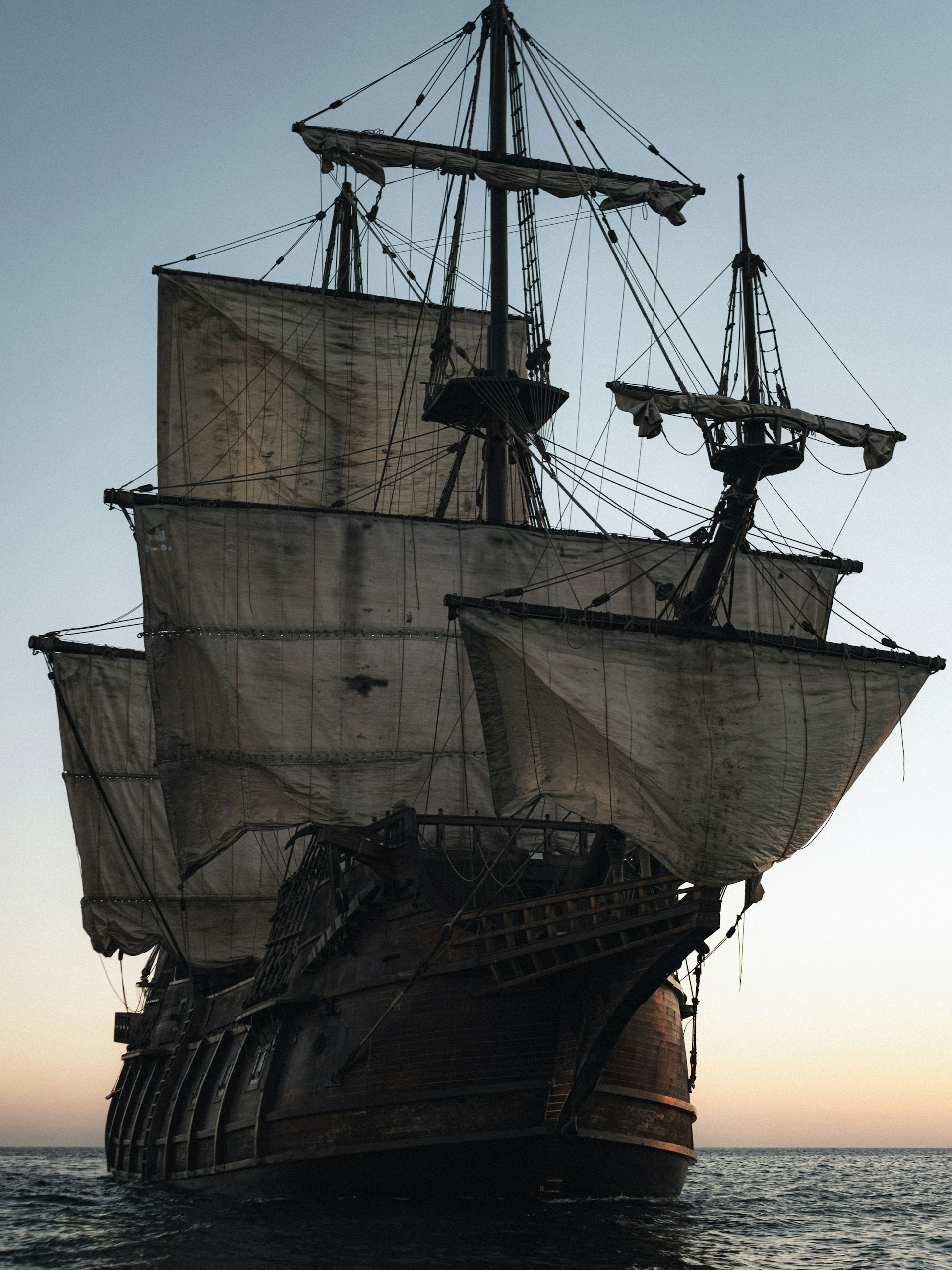
When people imagine the golden age of piracy, they usually picture cannon fire, boarding parties, and brutal fights on the open sea.
But for sailors living aboard wooden ships for weeks or months at a time, some of the greatest dangers were much less dramatic.
Sometimes, the challenge was simply staying alive between battles.
Fresh water was difficult to preserve on long voyages. Food spoiled. Sanitation was primitive. Crews lived in cramped conditions where illness could spread quickly. And without modern knowledge of nutrition or infectious disease, sailors had limited ways to prevent or treat many serious illnesses.
Pirates faced the same basic challenges as other seafarers of their time.
A crew might survive an encounter with an enemy warship, only to struggle with sickness, dehydration, or dwindling supplies.
In some circumstances, the danger wasn’t another ship at all.
It was the conditions aboard their own vessel.
Fresh water didn’t stay fresh for long
A sailing ship could carry large quantities of water, but keeping it drinkable throughout a voyage was a challenge.
Water was commonly stored in wooden casks below deck. Over time, it could become stagnant, develop an unpleasant taste or smell, or become contaminated through poor handling and storage.
Historical accounts from the U.S. Navy describe problems with shipboard water becoming so unpleasant that crews sometimes had to wait until they could obtain a fresh supply.
For sailors far from land, that could become a serious problem.
There were no modern water-treatment systems aboard pirate ships. Sailors lacked the reliable filtration, disinfection, and storage methods available today.
However, unpleasant-tasting water wasn’t necessarily dangerous, and water that looked clean wasn’t necessarily safe.
The real concern was contamination by disease-causing organisms, combined with the difficulty of obtaining replacement supplies.
The U.S. National Park Service notes that British sailors developed the tradition of drinking grog partly because mixing rum with water helped make unpleasant shipboard water more palatable.
That doesn’t mean every barrel of water aboard a sailing ship was deadly.
But it illustrates a basic reality of life at sea: something as ordinary as finding enough drinkable water could become a serious problem.
The real danger was bigger than the water itself
Bad water was only one part of the problem.
A wooden sailing ship was a difficult place to maintain hygiene.
Crews lived and worked in confined spaces for extended periods. Waste, spoiled provisions, vermin, and contaminated surfaces could contribute to unhealthy conditions.
If an infectious illness appeared aboard, close quarters could make controlling its spread difficult.
And before modern medicine, diseases that are often treatable today could become life-threatening.
Dysentery, for example, could cause severe diarrhea and dehydration. Depending on its cause, it could spread through contaminated food or water, or through poor hygiene.
Historical naval records contain numerous examples of serious illnesses affecting large portions of ship crews.
During an 1844–46 voyage of the USS Constitution, deteriorating conditions coincided with a serious outbreak of dysentery.
By the middle of December 1844, 43 men were on the sick list. The outbreak eventually afflicted as many as 150 men, and 13 died.
The Constitution was a U.S. Navy frigate, not a pirate vessel, and the voyage took place well after the golden age of piracy.
Nevertheless, the episode illustrates how severely illness could affect a crowded wooden ship before modern sanitation and medicine.
For pirates operating in the late 17th and early 18th centuries, the broader challenges of hygiene, limited medical care, and maintaining healthy crews were familiar features of maritime life.
And then there was scurvy
One of the biggest misconceptions about historical sailors’ illnesses is that everything came from dirty water.
It didn’t.
Some of the most devastating health problems aboard sailing ships had nothing to do with contaminated drinking water.
Scurvy was caused by a deficiency of vitamin C, which the body needs to maintain healthy connective tissues and perform other essential functions.
Without enough vitamin C, people could develop fatigue, swollen or bleeding gums, poor wound healing, and other serious symptoms.
If the deficiency continued, scurvy could become fatal.
The conditions aboard sailing ships made the disease especially difficult to avoid.
Long voyages depended heavily on preserved foods such as salted meat, dried provisions, and other supplies that could survive without refrigeration.
Fresh fruits and vegetables were much harder to preserve for extended periods.
A particularly striking historical example comes not from a voyage at sea, but from the French settlement on Saint Croix Island during the winter of 1604–05.
Seventy-nine members of Pierre Dugua’s expedition remained on the island through the harsh winter.
Thirty-five died, apparently from scurvy, while more than 20 others became seriously ill.
The settlers faced isolation, limited fresh food, and difficult winter conditions.
When the Passamaquoddy people were able to reach them in the spring, they traded game for bread, helping improve the survivors’ food supply.
The disaster occurred at a settlement rather than aboard a pirate ship. It therefore cannot tell us how frequently scurvy killed pirates.
But it demonstrates how dangerous prolonged nutritional deficiencies could become during an era when people often depended on preserved provisions and had little understanding of vitamins.
For sailors, including pirates, maintaining an adequate food supply was about more than avoiding hunger.
It could be a matter of survival.
Why sailors drank alcohol
The popularity of rum and other alcoholic drinks at sea can seem strange from a modern perspective.
But alcohol was an established part of maritime life, particularly in European naval traditions.
Spirits were relatively convenient to transport and store, and alcoholic beverages were included in some naval ration systems.
British sailors became particularly associated with grog, a mixture of rum and water, during the 18th century.
According to the National Park Service, the tradition helped stretch rum supplies while making unpleasant-tasting shipboard water easier to drink.
But there is an important misconception worth clearing up.
Adding rum to contaminated water did not automatically make it safe.
Although sufficiently high concentrations of alcohol can affect microorganisms, the diluted rum served as grog was not a reliable method of disinfecting drinking water.
Its historical significance was tied to rationing, naval discipline, and making water more palatable.
And while pirates are strongly associated with rum in popular culture, the formal British naval grog ration should not be treated as a universal pirate practice.
Pirate crews varied considerably in their habits, supplies, and circumstances.
The broader point remains: access to drinkable water was important enough to influence how sailors managed their daily provisions.
Pirates couldn’t always count on outside help
Pirates faced many of the same health risks as other sailors, but their circumstances could make obtaining supplies and assistance particularly complicated.
A naval vessel might have an organized supply system, access to established ports, or medical personnel aboard.
Pirate crews did not necessarily have comparable support.
Some pirates operated from coastal bases or maintained relationships with communities willing to trade with them. Others relied on captured supplies, opportunities to resupply ashore, or access to friendly ports.
Their ability to obtain provisions depended heavily on where they operated and whom they could safely approach.
A pirate ship could not necessarily enter any convenient harbour without risking capture or confrontation.
That made access to food, fresh water, and suitable places to repair vessels especially important.
If supplies ran low or illness weakened the crew, even a successful pirate expedition could become difficult to sustain.
Pirates therefore had to think about something far less glamorous than treasure:
Where would they get their next supply of fresh water?
The answer could determine how long they could remain at sea and where they needed to sail next.
The ship itself could become dangerous
The problem wasn’t simply what sailors drank.
It was where they lived.
Wooden sailing ships could be damp, crowded, and difficult to keep clean. Food could spoil, vermin could infest provisions, and maintaining sanitary conditions required constant effort.
The risks varied with the vessel, climate, voyage length, available supplies, and condition of the crew.
But several problems could reinforce one another.
Poor nutrition could weaken sailors. Contaminated food or water could cause gastrointestinal illness. Severe diarrhea could lead to dangerous dehydration.
Once enough sailors became sick, the consequences extended beyond individual health.
A sailing ship depended on its crew.
Someone had to handle the sails, steer, navigate, operate pumps, maintain equipment, and respond to emergencies.
If too many people became ill at once, the vessel itself could become harder to operate safely.
That created a dangerous cycle.
A weakened crew might struggle to reach a suitable port, obtain fresh supplies, or manage worsening conditions aboard.
For pirates, who also depended on having enough healthy sailors to pursue and capture vessels, widespread illness could threaten their ability to operate.
A ship didn’t need to be struck by a cannonball to become vulnerable.
Sometimes, losing too many healthy crew members was enough to put an entire voyage at risk.
The romantic image of piracy leaves out this part
Piracy was certainly dangerous because of violence.
Cannons, musket fire, sword fights, shipwrecks, and capture could all threaten a pirate’s life.
But surviving a pirate voyage required more than winning battles.
Crews needed food.
They needed water.
They needed to maintain their ships.
And they needed enough healthy sailors to keep everything functioning.
These everyday demands rarely receive the same attention as dramatic battles and buried treasure.
Yet they were fundamental to life at sea.
Pirates were not immune to the same environmental and medical limitations that affected merchant sailors and naval crews.
They lived in an era before modern antibiotics, reliable water treatment, refrigeration, and an understanding of vitamin deficiencies.
An illness that might be manageable with modern treatment could become a serious threat.
A shortage of fresh food could eventually produce dangerous nutritional deficiencies.
And a lack of safe drinking water could turn a routine voyage into a struggle for survival.
The sea imposed its own challenges, regardless of whether a ship sailed under a national flag or a pirate’s colours.
So was water really the pirates’ deadliest enemy?
Not literally, at least not in a way historians can reliably establish.
There isn’t enough dependable evidence to conclude that contaminated drinking water killed more pirates than naval forces, combat, storms, disease from other sources, or every other danger they faced.
Nor would it be accurate to attribute every illness aboard a pirate ship to drinking water.
But the underlying idea is important.
The basic necessities of life could become deadly problems at sea.
Water could become contaminated or difficult to obtain. Food could spoil. Fresh produce could run out. Poor sanitation could increase the risk of infectious disease.
And once illness spread through a crew, the consequences could be devastating.
For pirates, enemy warships were an obvious danger.
But contaminated supplies, dehydration, malnutrition, and disease could quietly weaken a crew without a single shot being fired.
The image of a pirate killed in a dramatic sword fight makes for a memorable story.
The reality of maritime survival was often much less glamorous.
For sailors of the age of sail, staying alive could depend on something as ordinary as having enough clean water to drink.
SOURCES: Naval History and Heritage Command, National Park Service